HC dismayed over trial court relying on victim’s polygraph test to discharge rape accused
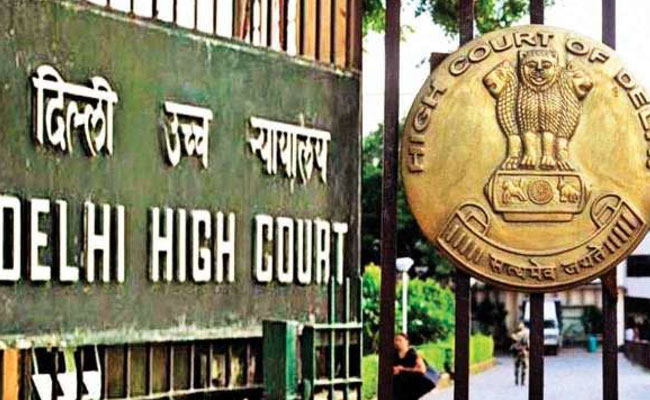
New Delhi (PTI): The Delhi High Court has expressed dismay over a trial court suggesting a polygraph test of a complainant woman and discharging the accused in a rape case relying on the result, saying it was against the mandate of law.
The high court said if criminal courts start discharging accused on the basis of a polygraph or lie detector test at the stage of charge itself, a criminal trial, instead of testing the veracity of the statement of the victim or prosecution proving its case beyond reasonable doubt, will be reduced to appreciation of a polygraph test and not the test of the material collected by the prosecution and the statements and testimonies of the victim.
Polygraph tests measure physiological arousal factors of the subject, including heart rate, blood pressure, respiration, perspiration, and skin conductivity, in a bid to broadly ascertain if the person was lying.
Justice Swarana Kanta Sharma noted with "dismay" that at the time of granting anticipatory bail to the accused, a suggestion was made to the investigating officer by the additional sessions judge that the prosecutrix (complainant woman) be made to undergo polygraph test with a view to testing the genuineness, authenticity and truthfulness of her statement in the rape case even when the charge sheet was not filed.
"The observations of the judge in the order dated March 6, 2019, at the stage of grant of anticipatory bail to the accused, were unwarranted and against the law laid down by the Hon'ble Apex Court regarding issuance of directions by a court for conducting polygraph test at the stage of hearing of bail applications," the high court said.
The high court was hearing a plea filed by the woman challenging the trial court's order discharging the accused.
The high court set aside the trial court's order to the extent it discharged one of the accused of the alleged offence of rape and two others for alleged offences of voluntarily causing hurt and common intention under the Indian Penal Code (IPC).
The high court said if courts start relying in a routine manner on polygraph tests, considering them as admissible and reliable at the stage of framing of charge itself, the criminal courts will be failing in their duty in following the laid down principles of criminal trial, its stages and what is to be considered and weighed at what stage.
It said a criminal court has to explore innumerable factors which could affect the truthfulness of testimony of a particular witness as also the accuracy of a particular test at the relevant stage of trial.
The high court said the trial court ignored that it cannot appreciate the authenticity of polygraph test or lie detection test at the stage of charge and that the criminal trial had to be run as per the provisions of CrPC, the Indian Evidence Act and judicial precedents, and could not have been relegated to be concluded summarily on the basis of the polygraph test or its result.
Let the Truth be known. If you read VB and like VB, please be a VB Supporter and Help us deliver the Truth to one and all.
AIITA welcomes Karnataka’s ban on obscene songs in school events
Bhatkal: The Karnataka unit of the All India Ideal Teachers Association (AIITA) has welcomed the Karnataka government’s decision to strictly ban school children from dancing to obscene songs during educational and cultural programmes in government, aided, and private schools across the state.
AIITA Karnataka State President M. R. Manvi congratulated the government for taking what he termed an important step to preserve the sanctity of education.
“Such decisions to safeguard the dignity of school children and uphold the values of education are the need of the hour. This rule should not be limited to government schools alone but must be strictly implemented in all private educational institutions as well,” he said.
He further urged the government to address other concerns within school programmes.
“The government should not only prohibit obscene dances in the name of school anniversaries, but also ensure that plays and dialogues that incite religious hatred are avoided. Schools should be centres of harmony, not platforms for spreading hatred,” he added.
According to a recent circular issued by the Department of School Education and Literacy, obscene dances are adversely affecting the mental health and moral values of students.
In this regard, schools have been advised to use songs that promote nationalism, positive thinking, the greatness of Kannada culture, and value-based traditions instead of inappropriate content during programmes.
The circular also emphasises that students should be dressed in decent attire.
AIITA also backed the department’s warning that disciplinary action would be taken against head teachers if such guidelines are violated. The association has further demanded that district Deputy Directors of Public Instruction strictly monitor the implementation of these rules.