HC judge recuses from hearing FB, Twitter, pleas against order to remove anti-Ramdev links globally
New Delhi(PTI): A Delhi High Court judge on Wednesday recused himself from hearing pleas by internet and social media giants, Facebook, Twitter and Google, challenging an order directing them to remove, block or disable on a global basis links to a video containing defamatory allegations against yoga guru Ramdev.
The matter came up for hearing before a bench of Justices Vipin Sanghi and Jasmeet Singh.
Justice Sanghi, who was heading the bench, recused from hearing the pleas and said they be listed on March 21 before another bench of which he is not a member.
Facebook, Twitter and Google have challenged the single judge's October 23, 2019 order directing them and Google's subsidiary YouTube to forthwith remove, block or disable on a global basis links to the video containing defamatory allegations against Ramdev.
The single judge had held that merely 'geo-blocking' or disabling access to the defamatory content to viewers from India, as agreed to by the social media platforms, would not be sufficient as users residing here can gain access to it by other means.
"There is an obligation upon the intermediary (social media platforms) to disable access, which would have to be read as meaning to completely disable access and not partially disable access," the court had said.
Observing that "the race between technology and the law could be termed as a hare and tortoise race - as technology gallops, the law tries to keep pace", the court had said the provisions of the Information Technology law have to be interpreted in a manner so as to ensure that judicial orders are effective and "not toothless".
The court had directed the social media platforms that all the offending material which has been uploaded from within India on to the computer network of the platforms "would have to be disabled and blocked on a global basis".
The court issued the direction after the social media platforms had said that while they have no objection to blocking the URLs and disabling the same, insofar as access in India is concerned, they were opposed to removal/blocking/disabling the defamatory content on a global basis.
The defamatory video contained excerpts of a book on Ramdev that were ordered to be deleted by the high court in September 2018.
The high court had on September 29, 2018 restrained the publisher and author of the book "Godman from Tycoon" from publishing it till the offending portions were deleted, the judge had noted.
In the October 23, 2019 judgement, the court had said: "Thus, the content of the video to the extent it contains paraphrasing of content which was directed to be removed from the book is held to be defamatory. A perusal of the video transcript and the offending portion of the book show the clear similarity and prima facie, establish that the video is derived from the book and hence is defamatory."
"In any event, this issue is moot in as much as the video begins by stating that it is based on the book. Thus, the defamatory nature of the video cannot be disputed."
Let the Truth be known. If you read VB and like VB, please be a VB Supporter and Help us deliver the Truth to one and all.
Congress using hijab issue to pacify minority anger, alleges Karnataka LoP R Ashoka
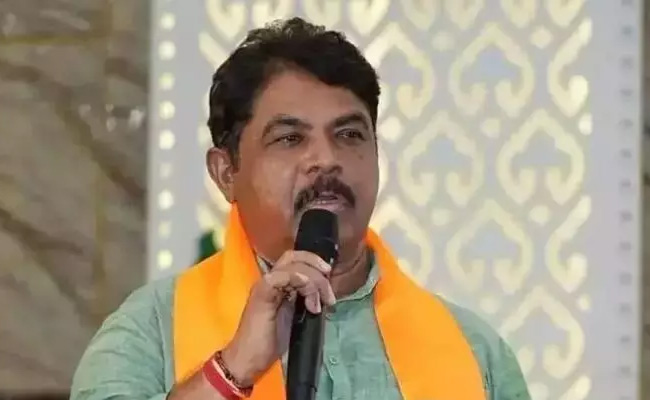
Bengaluru: Leader of Opposition in the Assembly R. Ashoka has accused the Congress government of using the hijab issue to placate what he described as discontent among minority voters after the Davanagere by-election.
In a post on X on Wednesday, Ashoka alleged that the state government, instead of addressing issues such as price rise, corruption, farmers’ distress and law and order, was attempting to retain its minority vote base by reviving the hijab issue.
Referring to the 2022 dress code introduced by the BJP government, which prohibited hijab in schools and colleges, Ashoka said the Karnataka High Court had upheld the policy and emphasised the importance of discipline in educational institutions.
He questioned the Congress government’s move to revisit the issue and asked whether setting aside the court-backed policy to benefit one community could be described as secularism.
Ashoka further alleged that while the government was willing to permit hijab, it continued to prohibit saffron shawls.
He accused the government of dividing students on religious lines rather than treating schools and colleges as spaces of equality.
Drawing a comparison with Mamata Banerjee’s government in West Bengal, Ashoka claimed that excessive appeasement politics had harmed the state and warned that the Congress in Karnataka could face a similar political response.
He said voters in Karnataka would teach the Congress a lesson for what he termed “vote-bank politics” and for compromising constitutional and judicial principles.