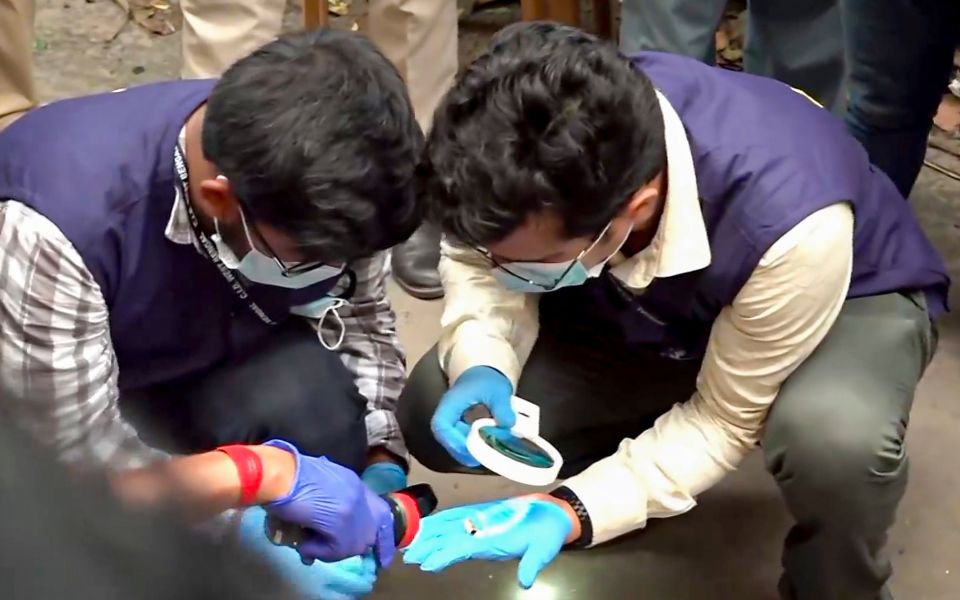
HC orders Mumbai civic body to demolish unauthorised construction at Narayan Rane's bungalow
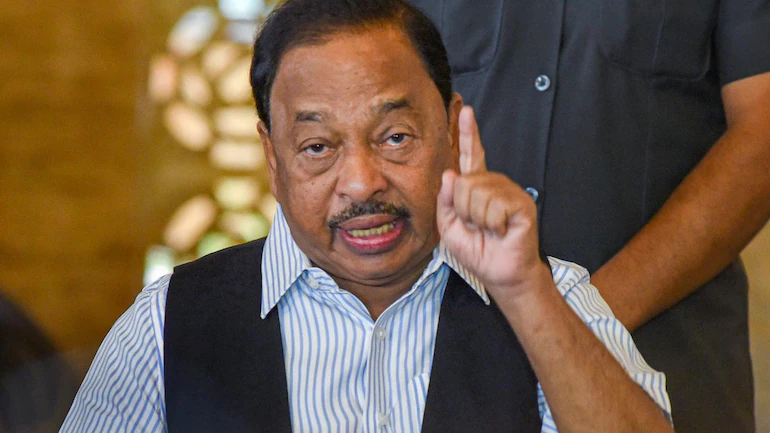
Mumbai, Sep 20: The Bombay High Court on Tuesday directed the Mumbai civic body to demolish the unauthorised construction at Union minister Narayan Rane's bungalow in Juhu area here within two weeks, noting it had violated the Floor Space Index and Coastal Regulation Zone rules.
"There is no dispute that the petitioner has carried out large scale unauthorised construction in blatant violation of the sanctioned plan and the provisions of law," a division bench of Justices R D Dhanuka and Kamal Khata said.
"The proposed retention/regularisation of unauthorised work, if accepted, will amount to encouragement of widespread/large scale violation of provisions of law and invite wrongdoer to carry out any extent of unauthorised construction in the city of Mumbai without any fear of penal action," the HC said.
The Brihanmumbai Municipal Corporation (BMC) had earlier told the court that it was willing to hear the second application for regularisation of unauthorised construction at the Juhu bungalow of Union Micro, Small and Medium Enterprises Minister Narayan Rane, even as the first application had been rejected.
The HC on Tuesday said if the BMC's stand is accepted, then any member of public in this city can first carry out large scale unauthorised construction and then seek regularisation.
The court in its judgment said it was "astonished " with this stand of the BMC.
Floor space index (FSI) is the maximum permissible floor area that can be built on a particular plot or/ piece of land.
The HC said the BMC cannot be permitted to consider and allow the second application filed by a company run by the Rane family seeking regularisation of the unauthorised construction as it would "encourage wholesale construction of unauthorised structures".
The HC said now the petitioner or even the BMC cannot be allowed to brush aside the finding of large scale unauthorised construction rendered by the corporation and accepted by this court while rejecting the first application for regularisation.
The court directed the BMC to demolish the unauthorised parts of the bungalow within a period of two weeks and submit a compliance report to the court one week thereafter.
The bench also imposed a cost of Rs 10 lakh on Rane and directed for the amount to be deposited towards the Maharashtra State Legal Services Authority within two weeks.
The petititoner's advocate Shardul Singh sought that the court stay its order for six weeks so that he could approach the Supreme Court in appeal.
The bench, however, rejected it.
The court dismissed the petition filed by Kaalkaa Real Estates, a company owned by Rane's family, seeking directions to the BMC to decide their second application uninfluenced by orders passed by civic body earlier.
The BMC had in June this year rejected the regularisation application, noting there were violations in the construction.
The company filed a second application in July, claiming it was seeking regularisation of a smaller portion as compared to what it had sought previously, and under new provisions of the Development Control and Promotion Regulation (DCPR) 2034.
The high court in its order said the BMC's stand that it could consider the second application for regularisation of the construction was inconsistent with its own order rejecting the first application. The bench noted that the HC had in June this year accepted the BMC's first order.
The court said the BMC has taken a "total u-turn" in the present case.
"The stand taken by the municipal corporation in our view is totally illegal, untenable, contrary to the provisions of the Mumbai Municipal Corporation Act, DCPR 2034 and the Maharashtra Regional Town Planning (MRTP) Act," the judgment said.
"If the regularisation application is allowed to be heard which the BMC is bent upon allowing, then it would lead to encouragement of wholesale construction of unauthorised structures," the court said.
The petitioner (company owned by Rane) has constructed three times the permissible limit of FSI and has not obtained clearances from the BMC, the fire department and also not taken environmental clearance, the bench said.
"The proposed retention/regularisation of unauthorised work, if accepted, will amount to encouragement of widespread/large scale violation of provisions of law and invite wrongdoer to carry out any extent of unauthorised construction in the city of Mumbai without any fear of penal action," the court said.
"The petitioners jointly with the municipal corporation cannot be allowed to nullify the effect of the order/bypass the order passed by the corporation and upheld by this court in the guise of making a second application," the HC said.
Let the Truth be known. If you read VB and like VB, please be a VB Supporter and Help us deliver the Truth to one and all.
Questioning religious practices will break religion, civilisation: SC in Dawoodi Bohras case
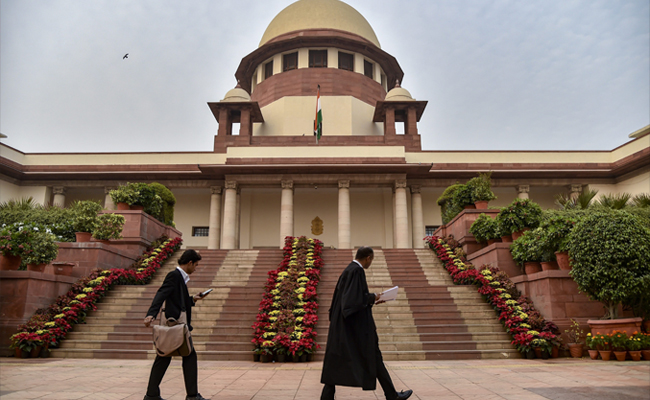
New Delhi (PTI): The Supreme Court on Thursday remarked that if individuals start questioning certain religious practices or matters of religion before a constitutional court then there will be hundreds of petitions questioning different rituals, leading to the breaking of religions and the civilisation.
The nine-judge Constitution bench is hearing petitions related to discrimination against women at religious places, including the Sabarimala temple in Kerala, and on the ambit and scope of the religious freedom practised by multiple faiths, including Dawoodi Bohras.
The bench comprises Chief Justice of India (CJI) Surya Kant and Justices B V Nagarathna, M M Sundresh, Ahsanuddin Amanullah, Aravind Kumar, Augustine George Masih, Prasanna B Varale, R Mahadevan and Joymalya Bagchi.
The Central Board of Dawoodi Bohra Community filed a PIL in 1986 seeking the setting aside of a 1962 judgment, which had struck down the Bombay Prevention of Excommunication Act, 1949 -- this law made excommunication of any community member illegal.
The 1962 Constitution bench judgment said, "It is evident from the religious faith and tenets of the Dawoodi Bohra community that the exercise of the power of excommunication by its religious head on religious grounds formed part of the management of its affairs in matters of religion and the 1949 Act in making even such excommunication invalid, infringed the right of the community under Article 26(b) of the Constitution."
Senior advocate Raju Ramachandran, representing a group of reformist Dawoodi Bohras, submitted that a practice which is conducted in response to secular and social actions of an individual cannot be the subject of Constitutional protection under Article 25 of the Constitution and consequently cannot be a ‘matter of religion’ under Article 26 of the Constitution.
Ramachandran told the court that a practice which may have a religious aspect but also significantly and adversely impacts fundamental rights is not immune to restriction under Article 25 of the Constitution or Article 26 of the Constitution.
Responding to the submission, Justice Nagarathna said that if everybody starts questioning certain religious practices or matters of religion before a constitutional court, then "what happens to this civilisation where religion is so intimately connected with the Indian society".
"There will be hundreds of petitions questioning this right that right, opening of the temple, and the closure of the temple. We are conscious of this," she said.
Adding to the response, Justice Sundresh said, "Every religion will break and every constitutional court will have to be closed.
"If the dispute between two entities are allowed then everybody will question everything. In your case there may be a civil wrong committed to you but in another case, another member will say I don't agree. It is regressive. To what extent can we go in a country like ours which is progressive and on the move is the question," he said.
Justice Nagarathna went on that what sets apart India from any other region is that "we are a civilisation" despite having so many pluralities and diversities?
Asserting that diversity is the country's strength, she added, "One of the constants in our Indian society is the relationship of human beings -- man, woman and child -- with the religion."
"Now, how a religious practice or a matter of religion is questioned, where it is questioned, whether it can be questioned, whether it has to be a question within a denomination for a reform or whether the state will have to do or you want the court to adjudicate upon all these aspects. This is troubling us.
"What we lay down, is for a civilisation that is India. India must progress despite all its economy, everything there is a constant in us. We can’t break that constant. That is what is troubling us ," she said.
Ramachandran replied that India is a civilisation under the Constitution and therefore nothing which goes against the grain of constitution can be continued in a civilised society.
He said that's where court's task come in and "it can't throw hands" and say there will be so many petitions.