HC seeks Centre's response on Kerala woman's plea to travel to Yemen to save daughter on death row
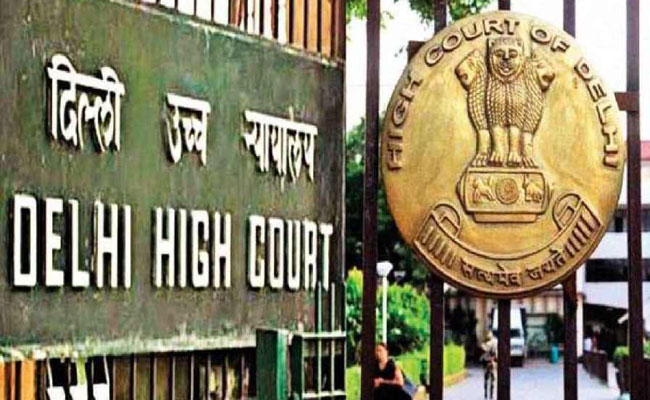
New Delhi (PTI): The Delhi High Court has sought the Centre's stand on a plea to permit the mother of a woman from Kerala, who is facing the death penalty in Yemen for the murder of a national, to travel to the country to save her daughter from gallows.
Justice Subramonium Prasad asked the Centre's counsel to file a status report within two weeks and listed the matter for further hearing on November 16.
The Centre's counsel sought some time to take instructions and file the status report.
The court was hearing a petition by the mother of Nimisha Priya, who has been sentenced to death in Yemen. The petitioner had approached the high court earlier as well for a direction to the authorities to facilitate diplomatic intervention as well as negotiations with the family of the victim to save her daughter's life.
In the present plea, petitioner Premakumari sought a direction to the authorities to permit her to travel to Yemen despite the travel ban for Indian nationals.
The petitioner said the only way to save her daughter from the gallows is to negotiate with the family of the deceased by paying blood money for which purpose she has to travel to Yemen but due to travel ban, she is unable to go there.
Blood money refers to the compensation paid by an offender or his kin to the family of the victim.
Last year, 'Save Nimisha Priya International Action Council' had approached the high court seeking a direction to the central government to "facilitate diplomatic interventions as well as negotiations with the family of victim on behalf of Nimisha Priya to save her life by paying blood money in accordance with the law of the land in a time bound manner".
The high court had refused to direct the central government to negotiate the payment of blood money to save the woman.
In the previous petition, it was stated that Priya was an Indian nurse working in Yemen and she was convicted in 2020 for the murder of the Yemini national.
It had said Priya was accused of murdering Talal Abdo Mahdi. Mahdi died in July 2017 allegedly of overdose after she injected him with sedatives to get her passport that was in his possession.
The plea had alleged that Mahdi had forged documents to show that he was married to her and that she was allegedly abused and tortured by him.
Though she appealed against the death penalty but it was rejected, it had said, adding that another chance of appeal before the Supreme Court there still exists but Priya is unlikely to be spared and therefore, her only hope to escape death sentence is if the victim's family accepts blood money.
Let the Truth be known. If you read VB and like VB, please be a VB Supporter and Help us deliver the Truth to one and all.
ICSE, ISC results: Girls outperform boys, pass rate over 99%
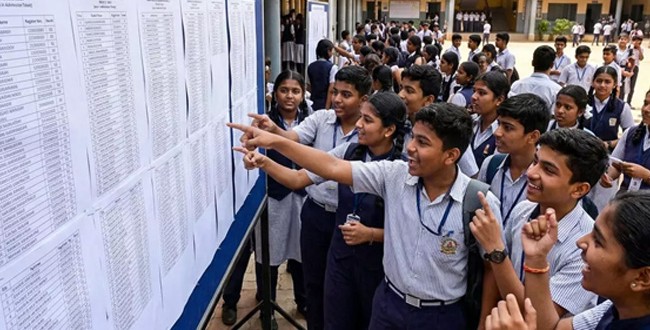
New Delhi (PTI): The Council for the Indian School Certificate Examinations on Thursday announced the Class 10 and Class 12 results for 2026, with overall pass percentages of 99.18 per cent and 99.13 per cent, respectively.
A total of 2,58,721 candidates appeared for the Indian Certificate of Secondary Education (ICSE), or Class 10, examination.
About 1,03,316 students took the Indian School Certificate (ISC), or Class 12, exam.
Girls outperformed boys in both examinations.
In ICSE, girls recorded a pass percentage of 99.46 per cent compared to 98.93 per cent for boys.
In ISC, girls achieved a 99.48 per cent pass percentage, while those of boys stood at 98.81 per cent.
Students can now access their scorecards on the official website cisce.org.