HC slaps Rs 1 lakh cost on ED for case on realtor, says probe agencies mustn't harass citizens
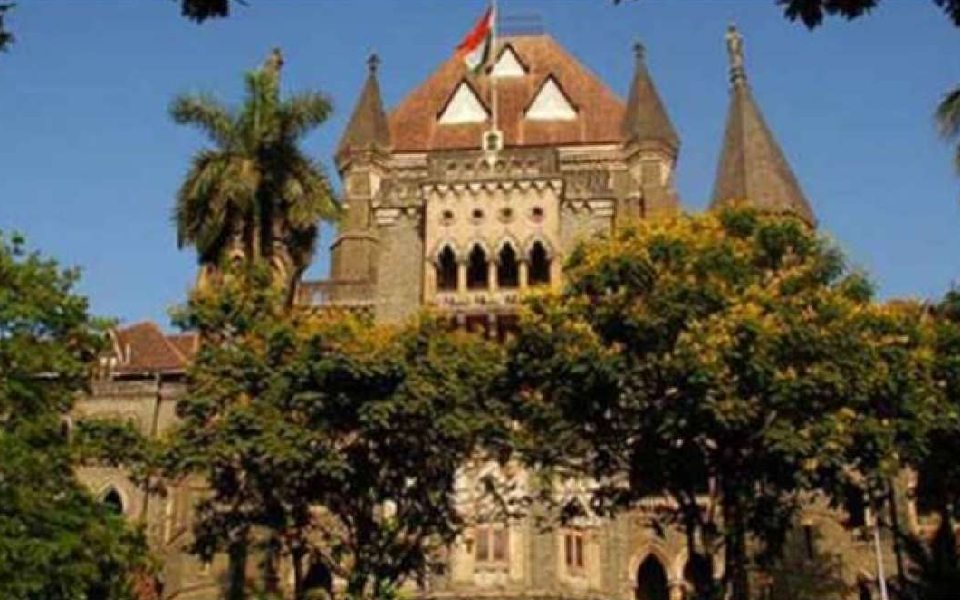
Mumbai, Jan 21 (PTI): The Bombay High Court on Tuesday imposed a cost of Rs 1 lakh on the Enforcement Directorate for initiating a money laundering probe against a realty developer without "proper application of mind", noting central agencies must conduct themselves within framework of law.
While imposing the fine on the ED, a single bench of Justice Milind Jadhav observed that a "strong message" needs to be sent to the law enforcement agencies to ensure citizens are not harassed.
The HC quashed process (summons/notice) issued to a Mumbai-based real estate developer, Rakesh Jain, by a special court in August 2014 based on a prosecution complaint filed by the anti-money laundering agency.
It was "high time that central agencies like the ED stopped taking the law in the own hands and harass citizens", Justice Jadhav maintained.
The ED had launched money laundering probe against Jain based on a police complaint lodged against him at the suburban Vile Parle police station by a property purchaser alleging breach of agreement and cheating.
Justice Jadhav, in his ruling, noted no case was made out against Jain and hence even the money laundering charges do not stand.
The HC said the action of the complainant as well as the ED in putting the criminal system into motion against Jain is "clearly malafide and calls for imposition of exemplary costs".
"I am compelled to levy exemplary costs because a strong message needs to be sent to the law enforcement agencies like ED that they should conduct themselves within the parameters of law and that they cannot take law into their own hands without application of mind and harass citizens," Justice Jadhav said.
The court directed the ED to pay the Rs 1 lakh cost to the HC library within four weeks. The bench also imposed a cost of Rs 1 lakh on the original complainant (purchaser) in the case. This cost would be paid to the city-based Kirtikar Law Library.
The HC pointed out that an offence of money laundering is committed by an individual with a deliberate design and a motive to enhance his gains, disregarding the interest of the nation and society as a whole.
"It is seen that conspiracy of money laundering is hatched in secrecy and executed in darkness. The present case before me is a classic case of oppression in the garb of implementation of the PMLA (Prevention of Money Laundering Act)," the judgment noted.
On the request of ED advocate Shriram Shirsat, the HC stayed its judgment for one week so that the agency could file an appeal in the Supreme Court.
Let the Truth be known. If you read VB and like VB, please be a VB Supporter and Help us deliver the Truth to one and all.
CJI's advice to aspirant: Join the bar, become a lawyer, don't hanker for judicial services post
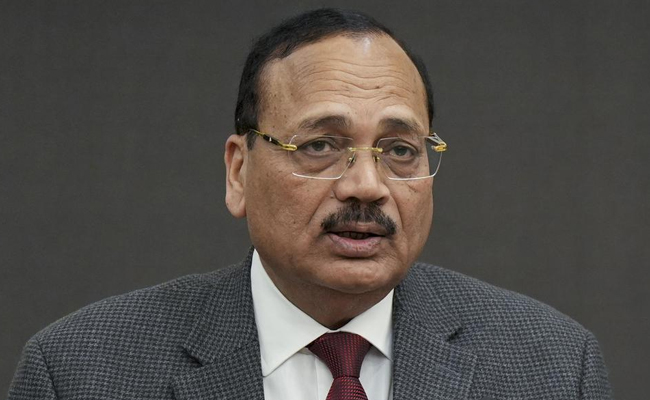
New Delhi (PTI): She came to the Supreme Court seeking a re-evaluation of her paper in the examination for joining judicial services as a magistrate. What she got instead was a rejection — and a candid confession by the Chief Justice that he too had wanted to join the judicial services in his youth but was advised by a senior judge to become a lawyer instead.
A bench comprising Chief Justice Surya Kant and Justice Joymalya Bagchi on Friday dismissed a plea filed by Prerna Gupta, the judicial services aspirant.
As Gupta pressed her case, the CJI intervened and said, "Let me share my personal story and I hope you will go happily as we cannot allow your petition."
He recounted his time as a final-year law student in 1984 when he wanted to become a judicial officer. As per requirement, he cleared the written test and was set to appear for an interview.
Judicial services is one of the two routes to become a judge after initially joining as a magistrate in lower court and thereafter rising through the ranks to become judge in a high court and possibly the Supreme Court.
The other route is to join the Bar, which means becoming a lawyer, and after building a reputation be picked from the Bar to become a judge at a senior level.
By the time the CJI's exam results came out, he had started practising at the Punjab and Haryana High Court when he was called for the interview.
The senior-most judge on the interview panel happened to be a judge before whom he had recently argued two significant matters.
"One of the matters was Sunita Rani vs Baldev Raj, where he had allowed my appeal in a matrimonial case and set aside the decree of divorce granted by the District Judge on the ground of schizophrenia," he noted.
Before the interview could take place, the judge called the young Surya Kant to his chamber and asked, 'Do you want to become a judicial officer?'
"I said 'yes.' He immediately said, 'Get out from (my) the chamber.'"
The courtroom fell silent as the CJI Justice described his initial heartbreak.
“I came out trembling. All my dreams were shattered. I thought he had snubbed me and that my career was over,” the CJI said.
However, the story took another turn the following day and the judge summoned him again, this time offering a piece of advice that would change the trajectory of his life.
“He said, ‘If you want to become (a judge), you are welcome. But my advice is, don’t become a judicial officer. The Bar is waiting for you,’” Justice Surya Kant recalled.
The CJI said he decided to skip his interview and didn't even tell his parents at first, fearing their disappointment, and instead chose to dedicate himself to his practice as an advocate.
“Now tell me did I make a bad right or bad decision,” the CJI asked and the litigant lawyer left the court with a smile on her face despite her case being dismissed.
Encouraging the petitioner to look toward the future rather than dwelling on the re-evaluation of a single paper, Justice Surya Kant said, "The Bar has much to offer."