HC to hear pleas challenging tribal consent process for Great Nicobar project
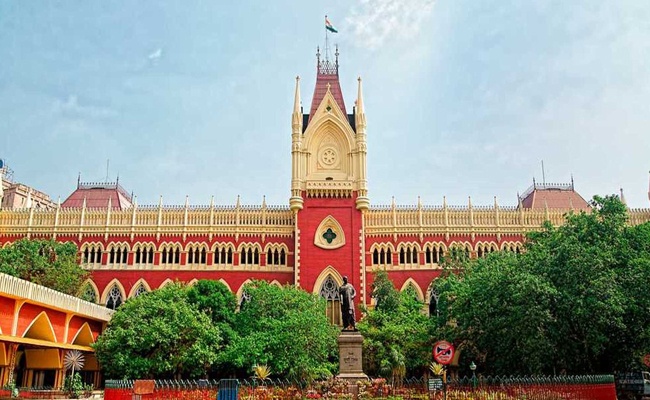
Kolkata: The Calcutta High Court’s Port Blair bench has agreed to hear petitions challenging the process through which consent was allegedly obtained for diversion of forest land for the Great Nicobar Island Development Project, after a petitioner claimed that resolutions cited by the administration were passed by settlers and not by the indigenous tribal communities protected under the Forest Rights Act.
According to a report published by The Indian Express, the division bench headed by Chief Justice Sujoy Paul overruled objections raised by the Centre on the maintainability of the petitions and agreed to examine the matter, according to an order made public on Friday.
The challenge was raised by former Union government secretary Meena Gupta, who has filed a public interest litigation alleging violations in the implementation of the Forest Rights Act, 2006, in connection with the diversion of 166.10 square kilometres of forest land for the mega project.
In her counter-affidavit, Gupta questioned the validity of three Gram Sabha resolutions submitted by the Andaman and Nicobar Administration as proof of tribal consent.
The administration had informed the court through an affidavit filed on April 9 that due procedure under the Forest Rights Act had been followed and that consent had been obtained through Gram Sabha meetings held at Campbell Bay, Govind Nagar and Laxmi Nagar on August 12, 2022.
However, the petitioner alleged that the meetings were attended by settlers from mainland India rather than members of the Nicobarese and Shompen tribal communities, whose rights are protected under the Act.
According to the affidavit, at least 60 names and signatures appeared repeatedly across two or more of the three Gram Sabha resolutions, despite the meetings being held at separate locations within a span of one hour.
The meetings were reportedly conducted at Campbell Bay at 10.30 am, Govind Nagar at 11 am and Laxmi Nagar at 11.30 am on the same day.
The petitioner also pointed out that the wording of the three resolutions was nearly identical and each unanimously approved diversion of forest land for the “holistic development” of Great Nicobar Island.
“As repeatedly submitted, the Gram Sabhas of the settlers are irrelevant under the FRA and they cannot consent to diversion of forest lands of the Nicobarese and Shompen tribes,” the affidavit stated.
The plea further alleged that committees mandated under the Forest Rights Act were constituted only two months before the Gram Sabhas were held, despite the law being in force for more than 14 years.
Questions were also raised over the composition of the sub-divisional level committee constituted to examine Gram Sabha resolutions.
The petitioner claimed the committee did not include the mandatory representation of two Scheduled Tribe members as required under the law.
According to the affidavit, only one member from the Great Nicobarese community was part of the committee, while two others represented Panchayati Raj institutions.
The petitioner also disputed the administration’s claim that the Andaman Adim Janjati Vikas Samiti represented the interests of the Shompen tribe during consultations linked to the project.
It argued that no organisation or individual could claim to represent a Particularly Vulnerable Tribal Group or provide consent on its behalf.
The islands administration has maintained before the court that tribal consent was obtained in accordance with legal procedures. The tribal council of Little and Great Nicobar Islands had earlier withdrawn its no-objection to the denotification of tribal reserve areas and later complained that forest rights claims had not been settled before project clearances were granted.
Let the Truth be known. If you read VB and like VB, please be a VB Supporter and Help us deliver the Truth to one and all.
AI, fake Army officer profiles and blackmail: UP cops bust extortion racket linked to man's suicide

Sonbhadra (UP) (PTI): The Sonbhadra police have busted with the arrest of five people an inter-state cyber crime racket involving blackmail, extortion and impersonation of Army and police officers on social media, which allegedly drove a man to suicide, officials said on Wednesday.
They said the deceased man was allegedly subjected to sustained online harassment and threats. Five accused from Rajasthan were arrested following a multi-state investigation involving technical surveillance, bank transaction analysis and scrutiny of CCTV footage, police said.
The development comes after complainant Ankita Pathak approached Sonbhadra SP Abhishek Verma on April 29, alleging that her husband Rajendra Pathak had died by suicide on the night of April 7-8 at their newly-constructed house.
Initially, the reasons behind the suicide were unclear. However, family members later examined the deceased's mobile phone and allegedly found chats, call records and evidence showing that unknown persons had been threatening and extorting money from him repeatedly.
Additional SP (Naxal) Rishabh Runwal told PTI that bank statements and mobile conversations revealed that Rajendra Pathak had transferred money multiple times to the accused and was allegedly under severe mental distress due to cyber harassment and blackmail.
"Taking the matter seriously, police registered a case at Robertsganj police station under provisions of the Bharatiya Nyaya Sanhita related to abetment and extortion-linked offences, and formed a joint investigation team comprising the cyber crime police station, Special Operations Group (SOG) and surveillance cell," Runwal, who supervised the investigation, said.
Investigators carried out technical analysis of the victim's mobile phone, including chats, calls and video calls, and found that the video calls had originated from Alwar district in Rajasthan.
Police also found that the bank account into which the money was transferred belonged to Maharashtra, while the cash withdrawals were being made from Bhiwadi in Rajasthan.
Based on electronic surveillance and technical evidence, a police team led by cyber police station in-charge Dhirendra Kumar Chaudhary travelled to Rajasthan. With assistance from local police, investigators analysed CCTV footage from bank ATMs and other locations to identify the accused, the officer said.
On May 10, police arrested five accused allegedly involved in different parts of the racket -- threatening victims, withdrawing money and arranging mule bank accounts and ATM cards, he said.
The arrested accused were identified as Afsil Khan, Noor Mohammad alias Nanda, Rashid, Washim and Barish, all residents of different areas of Rajasthan's Alwar and Khairthal-Tijara districts, he added.
Police said the gang operated in an organised manner and used fake social media identities with photographs of Army and police officers to intimidate victims.
According to investigators, the main accused, Afsil Khan, allegedly used artificial intelligence tools to create obscene videos and then threatened people using those fabricated clips to extort money.
Police said Nanda and Rashid withdrew extorted money through ATM machines. Their identities were established through CCTV footage obtained from a Maharashtra Bank ATM in Bhiwadi.
Investigators further found that accused Washim allegedly arranged fake documents to open bank accounts and procure ATM cards, while Barish allegedly helped provide mule accounts used for routing the money.
Police said the accused used to receive nearly 20 per cent commission on transactions routed through the mule accounts.
Five mobile phones, two ATM cards linked to mule accounts, SIM cards used in the operation and Rs 6,000 cash were recovered from the accused, police said.