'He is in a happy place now': Harish Rana's last rites conducted, family to donate his organs
Ghaziabad (UP) (PTI): Don't cry, he is in a happy place now, the parents of Harish Rana, the first person in India to be permitted passive euthanasia, said on Wednesday as they bid farewell to their son one last time.
Harish's last rites were conducted at the Green Park cremation ground in South Delhi on Wednesday morning, marking a quiet end to his 13-year ordeal.
In a final act of generosity, Harish's family consented to donate five of his organs.
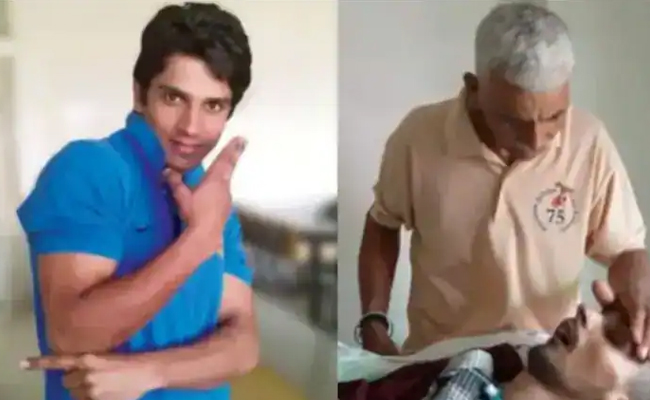
The 31-year-old man passed away on Tuesday after slipping into a coma in 2013, following a fall from a fourth-floor balcony while he was a B.Tech student at Panjab University.
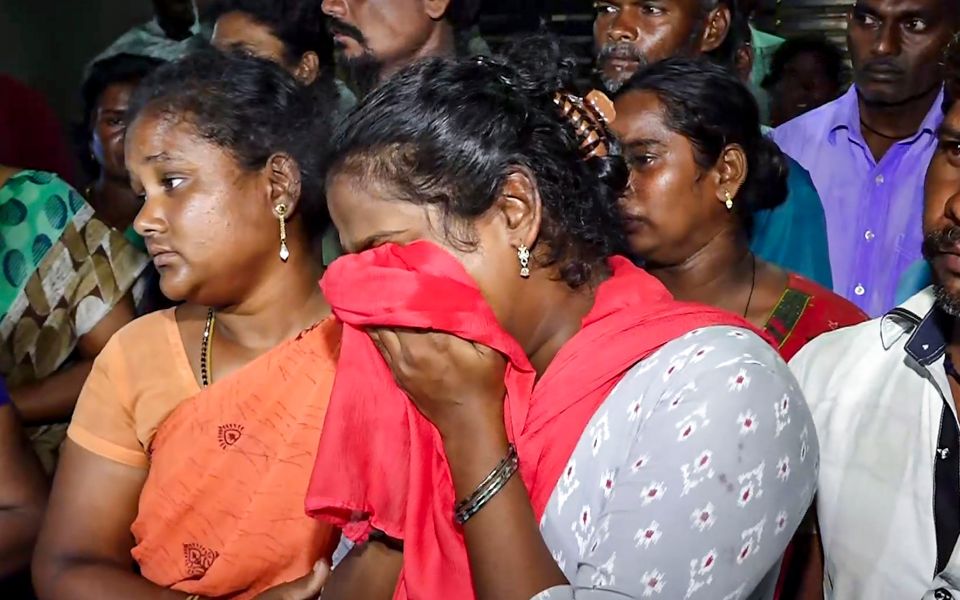
During the last rites, Harish's mother bid an emotional farewell to her son with folded hands and met those present, while his father Ashok Rana urged mourners not to cry, a neighbour told PTI over the phone.
Residents who attended the cremation described the atmosphere as deeply emotional. Tejas Chaturvedi, a resident of the Raj Empire Society, noted that many attendees were moved to tears during the ceremony. However, Ashok Rana continued to console others and encouraged them to remain strong in their moment of grief.
"Let no one weep. I am praying that my son may depart in peace. Wherever he is born next, may he receive God's blessings," he said.
Uttar Pradesh Congress chief Ajai Rai, who visited the cremation ground to pay his respects, told PTI that the family had confirmed donation of five of Harish's organs. "Harish might be gone, but he will continue to live on through the beneficiaries of his organ donation. The family has set an example before the entire nation," Rai told PTI over the phone.
Family members, along with representatives of the Brahma Kumaris, a spiritual movement led by women, attended the cremation to offer their prayers for Harish. Residents from the Raj Empire Society in Ghaziabad, where the Rana family lives, also came to show their support, joining a diverse group of NGOs, AIIMS staff, relatives, and friends.
Harish's body was transported to the cremation ground in an ambulance, and the platform was covered in rose petals. Many mourners paid their last respects with folded hands, and some placed saffron garlands on the body before it was laid upon the pyre. Ashish Rana, Harish's younger brother, lit the pyre, accompanied by his sister, Bhavna.
Sister Lovely of the Brahma Kumaris, who has been associated with the family and travelled to the cremation ground, said that meditative chants were performed during the last rites. "The body is leaving the mortal world, but the soul is immortal and has begun a new journey," she said.
"The family decided to donate Harish's eyes," Sister Lovely told PTI.
Additionally, Sister Lovely shared that a 'bhog' (offering) and prayer ritual will be held by the Brahma Kumaris in the coming days, where food items that Harish enjoyed will be prepared. "Harish could not eat for over a decade. Now the soul is free. In a symbolic gesture, we will offer the food that his body loved," she said.
Earlier, neighbours and well-wishers spoke of the family's unwavering commitment to caring for Harish despite the emotional and financial challenges they faced over the years. His parents, Ashok Rana and Nirmala Devi, described the decision to allow passive euthanasia as "extremely painful but necessary."
According to sources, the family is scheduled to return to their Ghaziabad residence after completing the last rites and related rituals.
Harish was shifted to the palliative care unit at AIIMS Delhi earlier this month from his Ghaziabad home following a landmark Supreme Court order permitting the withdrawal of life support for him. He passed away on Tuesday.
The apex court had clarified that passive euthanasia in his case would involve withdrawal of artificial nutrition, such as the feeding tube, while continuing palliative care to allow a natural death with dignity. Medical boards had concluded that his condition was irreversible.
Let the Truth be known. If you read VB and like VB, please be a VB Supporter and Help us deliver the Truth to one and all.
Women’s Reservation Bill: K'taka CM accuses PM Modi of adopting 'double standard'
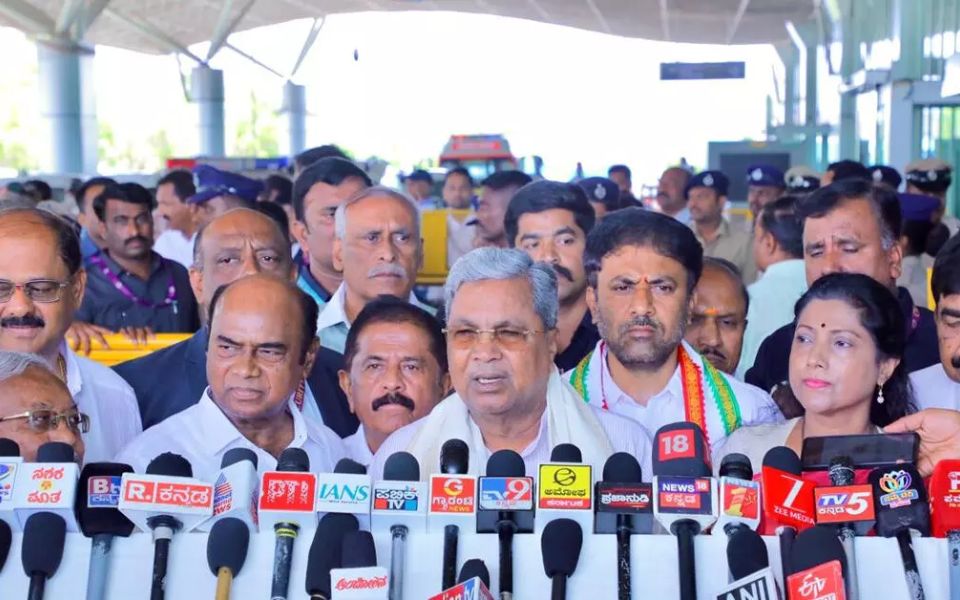
Mysuru (Karnataka) (PTI): Karnataka Chief Minister Siddaramaiah on Monday accused Prime Minister Narendra Modi of adopting a “double standard” on women’s reservation, alleging that the Centre had delayed implementation despite having the opportunity to act earlier.
Addressing reporters here, Siddaramaiah said the BJP and Modi had earlier opposed welfare guarantees and were now replicating them, while also questioning the timing and intent behind the women’s reservation move.
“That’s what I call double standards. Narendra Modi is not for social justice. If he was, this would have been done long ago. How many years has he been in power? It’s been 12 years. Why hasn’t it been done so far?” he asked.
The Chief Minister reiterated that the Congress had consistently supported women’s reservation and accused the Centre of "politicising" the issue.
“We spoke about women’s reservation. The Prime Minister asked me what our stand was. I said we are in favour of women’s reservation,” he said, referring to recent discussions with the PM.
He maintained that delimitation should only be carried out after a fresh Census to ensure equitable representation among states.
“In my view, delimitation should be done after a new census. That is why we opposed it. We have not opposed women’s reservation. We have always supported it,” he said.
Highlighting Congress’ past role, he said, “Who brought the 73rd and 74th amendments? Rajiv Gandhi and the Congress party. Those amendments ensured 50 per cent reservation for women in local bodies. Why would we oppose it?”
Siddaramaiah further questioned the union government’s delay in implementation. “Narendra Modi indulged in politics and got it passed in 2023. Why didn’t he implement it immediately? Then why did he wait so long? He could have implemented it immediately. If he is committed to women’s reservation, he should have implemented it,” he said.
On the linkage between delimitation and reservation, he asked, “Why did the Centre link it with delimitation? Why did it go for a constitutional amendment?” adding that such a move could disadvantage southern states that have successfully controlled population growth.
“Southern states have controlled population well, but northern states haven’t. Naturally, it benefits them and disadvantages us,” he said.
Responding to BJP’s criticism that women would “teach Congress a lesson,” Siddaramaiah said, “They are doing politics. If Modi had brought this earlier, who would have opposed women’s reservation?”
On electoral prospects elsewhere, he said he had no direct information on Tamil Nadu but was optimistic about ruling DMK's victory.
"According to the information I have, DMK and its alliance are likely to win,” while asserting that Kerala would also be won by the opposition.
In a major setback to the BJP-led Central government, a Constitution Amendment Bill to implement 33 per cent reservation for women in legislatures in 2029 and increase the number of Lok Sabha seats to 816 was defeated on Friday, with the ruling dispensation asserting that the struggle to give the rights to women will continue.
While 298 members voted in support of the bill in Lok Sabha, 230 MPs voted against it. Out of 528 members who voted, the bill required 352 votes for a two-third majority.
According to the Constitution (131st Amendment) Bill, Lok Sabha seats were to be increased to 816 from the current 543 to "operationalise" the women's reservation law before the 2029 parliamentary polls, following a delimitation exercise based on the 2011 Census.
Seats were also to be increased in state and Union territory assemblies to accommodate 33 per cent reservation for women.