Himachal: 3 students booked for woman's ragging, college professor for sexual harassment
Shimla/Dharamshala (PTI): Three students of a government college in Himachal Pradesh's Dharamshala have been booked for ragging and voluntarily causing hurt while a professor has been booked for sexual harassment of a 19-year-old woman who died on December 26, police said on Friday.
The woman student died during treatment at a Ludhiana hospital on December 26 and the case was registered on Thursday following a complaint by the father of the victim.
In his complaint, the deceased student's father alleged that his daughter was beaten by three seniors, Harshita, Aakriti and Komolika, on September 18, 2025, while a college professor, Ashok Kumar, indulged in obscene acts with her.
Due to the beating and harassment, the student was hospitalised and she died during treatment, the complaint said. The father of the deceased woman alleged that following these incidents, his daughter went into severe mental stress and fear, leading to a rapid deterioration in her health.
He said that a police complaint could not be lodged earlier as his daughter was traumatised and had to be hospitalised.
A case under sections 75 (sexual harassment), 115(2) (voluntarily causing hurt), 3(5) (common intention) of the Bharatiya Nyaya Sanhita (BNS) and Section 3 of the Himachal Pradesh Educational Institution (Prohibition of) Ragging Act 2009 has been registered and investigations are underway, the police said.
Confirming that a case has been registered, Kangra Superintendent of Police (SP) Ashok Ratan said that all the allegations are being thoroughly investigated. Medical records, video evidence and statements of all concerned are being examined, he said.
The case gained momentum after a video of the victim on her deathbed went viral on social media. In the video, the victim accused the professor of indecent acts, mental harassment and intimidation when she protested against his behaviour.
The police said that a complaint was initially received through the Chief Minister's Sankalp Seva Helpline and an investigation team but the student's statement could not be recorded as she was unwell at the time. The police later recorded the statement of the victim's father.
Preliminary investigations by the police pointed out that the deceased student was enrolled in the college in 2024. She allegedly faced ragging by some students and failed her BA first-year examination.
She subsequently stopped attending college after the results were declared in July 2025. Her name was struck off the college rolls on August 21, 2025.
The student is believed to have visited the college again in September seeking admission, where she was informed that she would be admitted to the second year only if she cleared the re-evaluation, failing which she would have to re-enrol in the first year.
Meanwhile, the accused professor has denied all allegations levelled against him. Some teachers have come in support of the professor.
The professor said that the student had studied under him in a previous academic session and was not his student in the current session.
ABVP state secretary Nancy Atal said that the accused should be brought to book to ensure that such incidents do not occur in future.
A delegation of the Communist Party of India (Marxist) led by former mayor of Shimla Municipal Corporation, Sanjay Chauhan, on Friday submitted a memorandum to the director general of police here demanding an impartial inquiry into the case by a senior police officer.
Chauhan said that as the woman belonged to the Dalit community, the case should be probed from relevant aspects.
A social activist, Ravi Kumar Dalit, sat on a dharna at the Ridge here demanding a judicial inquiry into the case. Talking to reporters, he said that the law and order situation has deteriorated in the state.
Himachal Scheduled Caste Commission Chairperson Kuldeep Kumar told PTI that a report in this regard has been sought from Kangra SP.
Questioning the role of the police in the case and the "delay" in the investigation, he warned to sit on a dharna outside the chief minister's official residence if a judicial probe was not ordered in the case.
Let the Truth be known. If you read VB and like VB, please be a VB Supporter and Help us deliver the Truth to one and all.
India-bound LPG tanker clears Hormuz
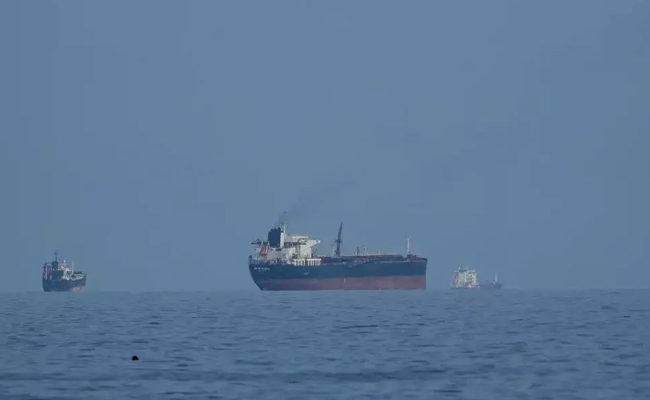
New Delhi (PTI): A tanker carrying liquefied petroleum gas (LPG) for India has sailed out of the Strait of Hormuz and is now headed towards the country, an official statement said on Sunday.
The Marshall Islands-flagged LPG carrier MT Sarv Shakti, loaded with 46,313 tonnes of LPG and staffed by 20 crew, including 18 Indians, cleared the key shipping chokepoint on May 2 and is expected to reach Visakhapatnam on May 13, it said.
The cargo -- enough to meet half a days requirement of the country -- will partly tide over supply constraints being faced since the start of the West Asia conflict more than two months back.
Ship-tracking data showed its position in Oman Gulf on Sunday evening.
The very large gas carrier has previously made runs between the Persian Gulf and Indian ports, has been chartered by state-owned Indian Oil Corporation (IOC).
Sarv Shakti is the first India-linked tanker to cross the war zone since a weeks-old US blockade of ships tied to Iran began, pushing transits through Hormuz back down to almost zero.
There are as many as 14 Indian flagged or India-owned vessels still stranded on the west side of the Strait of Hormuz.
The statement said no incident involving Indian-flagged vessels has been reported in the past 24 hours. The Ministry of Ports, Shipping and Waterways is working closely with the Ministry of External Affairs, Indian missions and maritime stakeholders to ensure crew welfare and uninterrupted operations.
The Directorate General of Shipping (DG Shipping) control room has handled 8,373 calls and more than 17,965 emails since activation, including 38 calls and 127 emails in the last 24 hours.
India has also facilitated the repatriation of more than 2,953 seafarers so far, including 31 in the past day from across the Gulf region.
Port operations across the country remain normal with no congestion reported, the statement added.