Himachal’s Sammoo village does not celebrate Diwali due to centuries-old 'curse’; Here’s why
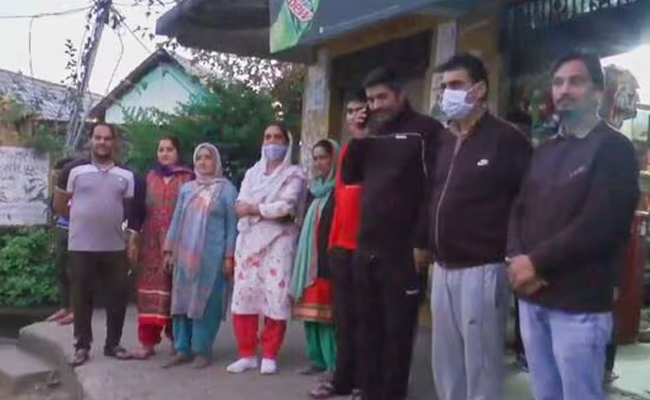
Hamirpur: The residents of Sammoo village in Hamirpur district located in Himachal Pradesh are continuing a centuries-old tradition of not celebrating Diwali. No houses are lit during the festival, no special dishes are prepared, and no sounds of crackers are heard.
This is an ancient custom that people have been following for ages due to the fear of a curse from a woman who committed Sati on Diwali, according to a PTI report.
The legend goes that, many years ago, the woman who had left for her parent's home to celebrate Diwali received news that her husband, a soldier in the king's court, had died. The woman, who was pregnant, was devastated and burnt herself on her husband's pyre. It is believed she cursed the villagers, declaring that they would never again be able to celebrate Diwali.
As a result, the village has not celebrated the festival since, with elders reportedly warning younger generations that celebrations would invite misfortune, disaster, and deaths.
Bhoranj panchayat pradhan Pooja Devi stated that since she got married and moved to this village, she has never witnessed Diwali being celebrated. “Even if the villagers settle outside, the curse of the women won’t leave them. Some years ago, a family from the village settled far away were preparing some local dishes for Diwali when their house caught fire. The people of the village only worship Sati and light diyas in front of her,” Pooja Devi was quoted as saying by the news agency.
The report also cited another village elder, who has lived through more than 70 Diwalis without celebration, mentioning that whenever someone attempts to celebrate, tragedy strikes the village.
“For hundreds of years, people have refrained from celebrating Diwali. On the day of Diwali, if a family, even by mistake, bursts crackers and makes dishes at home, then disaster is sure to happen,” the report quoted another villager.
The people in the village have tried a lot of measures, such as havans and yagyas, to get rid of the curse. However, nothing has reportedly worked.
Let the Truth be known. If you read VB and like VB, please be a VB Supporter and Help us deliver the Truth to one and all.
Sujit Nair raises concerns over speculation of DMK-AIADMK understanding to block TVK
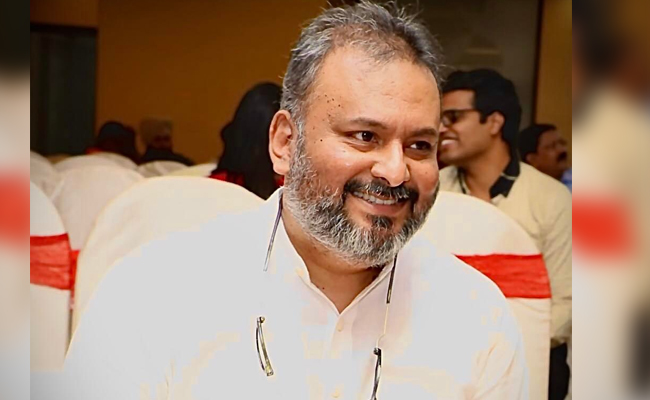
Chennai: Journalist and political commentator Sujit Nair has expressed concern over speculation that the Dravida Munnetra Kazhagam and the All India Anna Dravida Munnetra Kazhagam could explore a post-poll understanding to prevent Vijay-led Tamilaga Vettri Kazhagam from forming the government in Tamil Nadu.
In a social media post, Sujit Nair said the election verdict in Tamil Nadu reflected a clear public demand for political change and argued that the mandate should be respected irrespective of political preferences.
Referring to reports and political discussions surrounding a possible understanding between the DMK and AIADMK, he said he hoped such developments remained only speculative conversations and did not turn into reality.
Nair stated that if such an alliance were to take shape, it would raise serious questions about ideological politics in the country. He said TVK had emerged through a democratic electoral process and that the legitimacy to govern in a parliamentary democracy comes from the people’s verdict.
According to him, attempts to prevent an electoral winner from forming the government through unexpected political arrangements may be constitutionally valid, but many people could view them as politically opportunistic.
He further said that such a move could particularly affect the political image of the DMK, which has historically projected itself around ideology, social justice and opposition politics. Nair said that in ideological terms, the DMK appeared closer to TVK than to the AIADMK, and joining hands with its long-time political rival only to remain in power could weaken its broader political narrative.
He added that the same questions would apply to the AIADMK as well, as the party had spent decades positioning itself against the DMK and such an arrangement could create discomfort among its cadre and supporters.
Drawing a comparison with Maharashtra politics in 2019, Nair said he had expressed similar views when the Shiv Sena formed an alliance with the Indian National Congress and the Nationalist Congress Party after the Assembly elections.
He said post-poll alliances between long-standing political rivals often create a public perception that ideology and electoral mandates become secondary when political power equations come into play.
Nair also said such developments increase public cynicism towards politics and reinforce the belief among voters that ideology is often sidelined after elections.
He maintained that the Tamil Nadu verdict was emphatic and said respecting both the spirit and substance of the mandate was important for the credibility of democratic politics.