Himanta Biswa Sarma takes u-turn ahead of Assam polls, says miya Muslims not BJP’s enemies
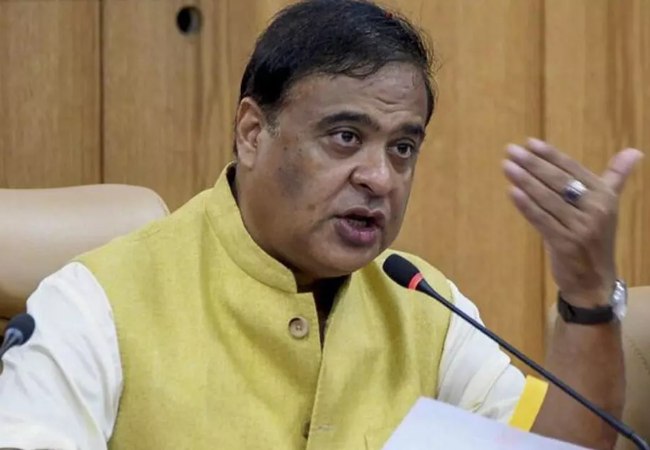
New Delhi: Assam Chief Minister Himanta Biswa Sarma said the Bharatiya Janata Party (BJP) does not consider Miya Muslims in the state as its enemies, but expressed concerns over what he described as certain practices among sections of the community.
The remarks come ahead of the 2026 Assam Legislative Assembly election expected to be held in April.
“The Miya people are not our enemies,” Sarma said, adding that the party’s objections were centred on issues he described as “love jihad, land encroachment, child marriage and fertiliser jihad”. The last allegation refers to claims that some farmers use harmful chemicals in crops meant for mass consumption.
Sarma also said that the BJP would not view the community as adversarial if such concerns were addressed.
Responding to a question on Thursday, about whether a Miya Muslim could be given a BJP ticket in the upcoming elections, he said the party was open to fielding any candidate. A candidate with a sense of patriotism and the one who supports slogans like “Bharat Mata Ki Jai” and “Vande Mataram” will be welcomed.
He also outlined the BJP’s approach in Muslim-dominated constituencies, saying the party would contest a limited number of such seats and that candidate selection would be based on winnability rather than religion. “Selection of candidates will not be based on religion,” he said.
In Assam, the term “Miya” has historically been used as a derogatory expression for Muslims of Bengali origin, who are often accused of being undocumented migrants from Bangladesh. The word originates from a common honorific used among South Asian Muslims but has now been long used as a slur in the state.
In recent years, members of the community have begun reclaiming the term as a self-identifier for Muslims whose families migrated to Assam from Bengal during the colonial period.
Sarma’s comments on Thursday marked a shift in tone from several statements he made in recent weeks that drew criticism. He had earlier said it was his responsibility to “make them suffer” and claimed he had directed BJP workers to submit applications seeking the removal of Miya Muslim names from electoral rolls.
Last week, the Gauhati High Court issued notices to the Centre and the Assam government while hearing petitions seeking action against Sarma for alleged hate speech against the community.
Earlier in February, Supreme Court declined to entertain separate petitions seeking the registration of an FIR against the chief minister on similar allegations.
Let the Truth be known. If you read VB and like VB, please be a VB Supporter and Help us deliver the Truth to one and all.
Rupee falls 11 paise to 94.27 against US dollar in early trade

Mumbai (PTI): The rupee depreciated 11 paise to 94.27 against US dollar in early trade on Monday driven by persistent dollar demand and a broader shift toward safe-haven assets.
Forex traders said the Indian rupee has hit a rough patch, falling for five consecutive sessions, weighed down by a combination of factors such as the RBI loosening its grip on currency rules and rising oil prices caused by global tensions.
Moreover, investors are becoming cautious again, with foreign institutions pulling money out of the market after a brief period of buying amid rising geopolitical uncertainty.
At the interbank foreign exchange market the rupee opened at 94.25 against the US dollar, then lost some ground and touched 94.27 against the US dollar in initial trade, registering a fall of 11 paise over its previous close. On Friday, the rupee had settled at 94.16 against the American currency.
ALSO READ: Death toll in Mundathikode fireworks explosion rises to 16
Meanwhile, the dollar index, which gauges the greenback's strength against a basket of six currencies, was down 0.09 per cent at 98.44.
Brent crude, the global oil benchmark, was trading higher by 1.16 per cent at USD 106.55 per barrel in futures trade.
A mix of softer economic signals and renewed, even if fragile, hopes of diplomacy pulled the dollar lower again, CR Forex Advisors MD Amit Pabari said, adding that for Rupee, on one hand, a softer dollar offers relief. On the other, uncertainty remains the dominant force.
Meanwhile, India’s forex reserves have crossed USD 703 billion as of April 17, reflecting a consistent build-up of buffers.
"For now, the rupee continues to lean toward gradual weakness. Uncertainty remains the dominant force, shaping both global flows and local reactions," Pabari said.
He further noted that any dips are likely to be bought into, with the 92.80–93.20 zone acting as a strong support. On the upside, 93.50 to 94.50 is expected to define the near-term range.
On the domestic equity market front, the 30-share benchmark index Sensex was trading 518.96 points or 0.68 per cent higher at 77,183.17, while the broader Nifty was trading up 131.30 points or 0.55 per cent at 24,029.25.
Foreign Institutional Investors offloaded equities worth Rs 8,827.87 crore on Friday, according to exchange data.