Hoist Tricolour from Red Fort to mark Azad Hind anniversary, Netaji kin writes to Modi
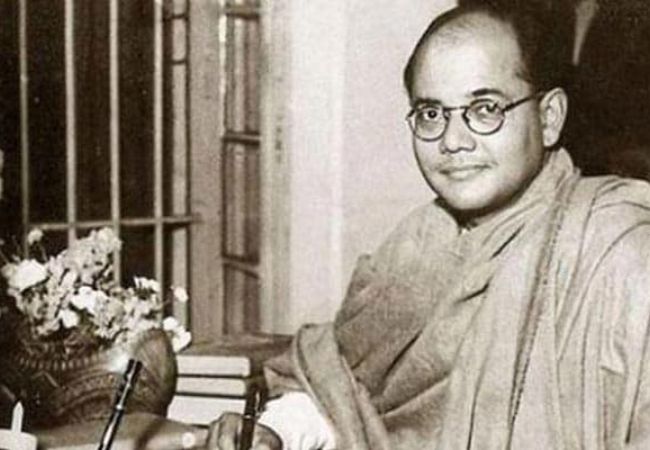
Kolkata (PTI): Family members of Netaji Subhas Chandra Bose on Thursday urged Prime Minister Narendra Modi to repeat the hoisting of the National Flag from Red Fort on October 21 to mark the establishment of the Provisional Government of Azad Hind - the first free Government of United India - as it was done seven years ago, and make it an annual affair.
In an email communication sent to the Prime Minister's Office with a copy marked to National Security Advisor Ajit Doval, Convenor of The Open Platform for Netaji, Chandra Kumar Bose, appealed to Modi that while the nation celebrates the 82nd Anniversary of the establishment of the Azad Hind Government in 12 days, the Tricolour hoisting from Red Fort be made "mandatory".
"On the 75th Anniversary of the establishment of the Azad Hind Government, on 21st of October 2018, it was appreciated, that flag hoisting was done by you, Hon'ble Prime Minister, at the Red Fort to give recognition and to honour the martyrs and soldiers of the Azad Hind Fauz, who sacrificed their lives for India's freedom," Bose, also Netaji's grand nephew and a former BJP politician, wrote.
"As 21st of October 2025, is approaching, it is our humble request on behalf of the Bose family and people of our great nation, that flag hoisting at the Red Fort on 21st October must be made mandatory every year," he added.
The Provisional Government of Free India or, simply, Azad Hind, was a short-lived Japanese-controlled provisional government which was established in exile in Japan-occupied Singapore during World War II on October 21, 1943 under the leadership of Netaji Subhas Chandra Bose.
It was part of the political movement originating in the 1940s outside India with the aim of allying with the Axis powers to liberate India from British rule.
Shortly after the formation of the provisional government, Free India declared war against the Allied forces on the Indo-Burma Front. Its military wing, the Indian National Army (INA), or the Azad Hind Fauj, went into action against the British Indian Army as part of the Imperial Japanese Army in the Imphal-Kohima sector.
Despite INA's initial success at the Battle of Imphal where it breached the British defence in Kohima and marched up to Moirang in Manipur, it suffered a subsequent catastrophic defeat in the hands of the Allied forces, prompting both the Japanese and the INA to retreat.
Let the Truth be known. If you read VB and like VB, please be a VB Supporter and Help us deliver the Truth to one and all.
Two children drown in farm pond in Karnataka

Tumakuru (Karnataka) (PTI): Two children died after slipping and falling into a farm pond near Benakanahalli on Sunday, police said.
The deceased have been identified as Suchitra (11) and her brother Ravindra (9) from Kasapura village in Midigeshi hobli.
According to police, preliminary information suggests that the children had gone to graze goats.
They are believed to have slipped and fallen into the farm pond while attempting to drink water.
The bodies have been sent to Madhugiri Public Hospital for post-mortem.
A case has been registered at the Midigeshi police station.