Holi bonfire: Effigies of Masood Azhar, Hafiz Saeed put up at Patna neighbourhood
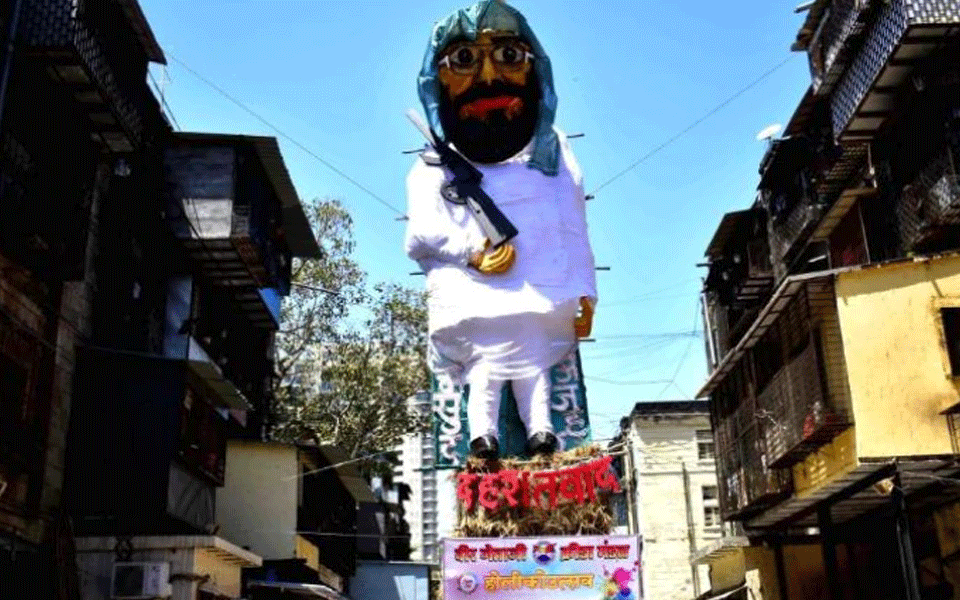
Patna, Mar 20: While burning 'Ravana' in a Holi bonfire is a common sight every year, residents of a neighbourhood in the Bihar capital this time have put up effigies of jaish-e-mohammed chief Masood Azhar and Mumbai attack mastermind Hafiz Saeed in the streets for torching them as part of the festive ritual.
The effigies have been mounted on top of a huge pile of timber and broken twigs on a street in Kadam Kuan's Nawal Kishor Road, and would be burnt tonight to mark 'Holika Dahan' or the eve of Holi.
The pile faces a shop on the street side, selling colours, 'pichkaris' (water toy guns) and fancy masks, while an image of a jawan in combat fatigue and pointing a gun, has been put up on an electric pole in the corner of the road.
"People from the local area have put effigies to show solidarity with the spirit that terror activities originating from Pakistani soil would not be tolerated by India and its people.
"Pictures of both the terrorists have been pasted on the faces of the effigies," a local shopkeeper, who did not wish to be named, said.
While Saeed, the head of the Jamaat-ud-Dawa and mastermind of the November 2008 Mumbai terror attack is a designated terrorist, a fresh move has been made at the UN to designate JeM chief Azhar as a global terrorist.
The fresh proposal to designate Azhar under the 1267 Al Qaeda Sanctions Committee of the UN Security Council was moved by France, the UK and the US, in the wake of the Pulwama terror attack in Jammu and Kashmir in which 40 CRPF personnel were killed.
A placard each have also been slung around the necks of the two effigies, bearing the slogan 'Pakistan Murdabad'.
At the bottom of the effigies a placard reading, "Pakistan this is just a trailer...", has been kept. The message in Hindi is apparently a reference to the recent air strike by India on terror camps in Pakistan's Balakot region that had escalated tensions between the two countries.
Bonfires are put up on the eve of Holi as a part of a festive ritual to symbolically burn 'Holika' or perform 'Holika-dahan' by setting afire wood, dried leaves, twigs and other inflammable articles.
In Patna, the piles, locally called 'agja' have been put up on various prominent roads and inner streets to mark the festival. State pollution authorities have appealed to people to not burn plastic objects or polythene bags as part of the bonfire.
Let the Truth be known. If you read VB and like VB, please be a VB Supporter and Help us deliver the Truth to one and all.
Mamata asks TMC nominees not to leave counting centres as EC data shows BJP leading
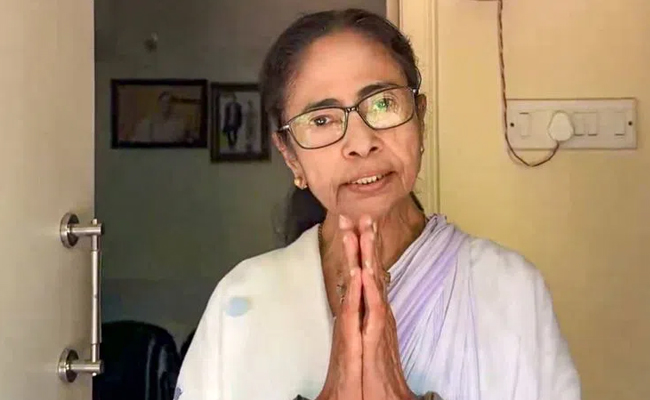
Kolkata (PTI): West Bengal Chief Minister Mamata Banerjee on Monday urged TMC candidates and agents to remain vigilant and not to leave counting centres, alleging that there was a "game plan" by the BJP and the Election Commission to show the saffron party taking a lead in the early trends of counting.
In a video message issued during the counting of votes, the TMC supremo appealed to party workers to stay put and not to lose morale.
"I appeal to everyone that neither TMC candidates nor counting agents should abandon counting centres," she said.
As trends on the Election Commission website indicated the BJP leading in 188 seats against the TMC's 94, Banerjee maintained that her party was still ahead in a significant number of constituencies.
"We are still ahead in 170 seats, but I request everyone not to lose hope," she said, adding that there were "around 70 to 100 seats where we are leading, but they are not sharing the data of those seats".
"A false narrative is being spread," she alleged.
The chief minister accused the Election Commission of "not declaring results or leads" in areas where the TMC was ahead.
"This is a game plan by the EC and the BJP as it (poll panel) is not declaring results or leads in areas where we are leading," she said.
Banerjee also alleged irregularities in the counting process at some locations.
"In several places, counting has been stopped after the first two to three rounds. In Kalyani, we have caught seven machines with severe anomalies," she claimed.
She further alleged that TMC workers were being "harassed with the help of central forces" and that party offices were being "vandalised and forcefully captured".
"With the help of central forces, they are harassing and torturing AITC workers. Our offices have been vandalised," she said, also alleging that voter list revision exercises were "purposefully done to target seats where we were strong".
Seeking to reassure party workers, Banerjee said more rounds of counting were yet to take place and urged them to stay firm.
"Fourteen to eighteen rounds of counting will happen. You will surely emerge victorious. Don't be afraid; fight like tigers," she said.
Her remarks came as counting trends suggested that the BJP was leading in 188 seats and had crossed the halfway mark of 148 in the 294-member assembly, pointing to a potential shift in the state's political landscape.
Counting for 293 constituencies was underway with postal ballots, followed by EVM votes.
Officials cautioned that trends could change as more rounds are counted, and final results would be known later in the day.
জরুরি বার্তা pic.twitter.com/Uc82oihwEL
— Mamata Banerjee (@MamataOfficial) May 4, 2026