Holi comes once a year, Friday Namaz 52 times: Sambhal cop's remarks spark row
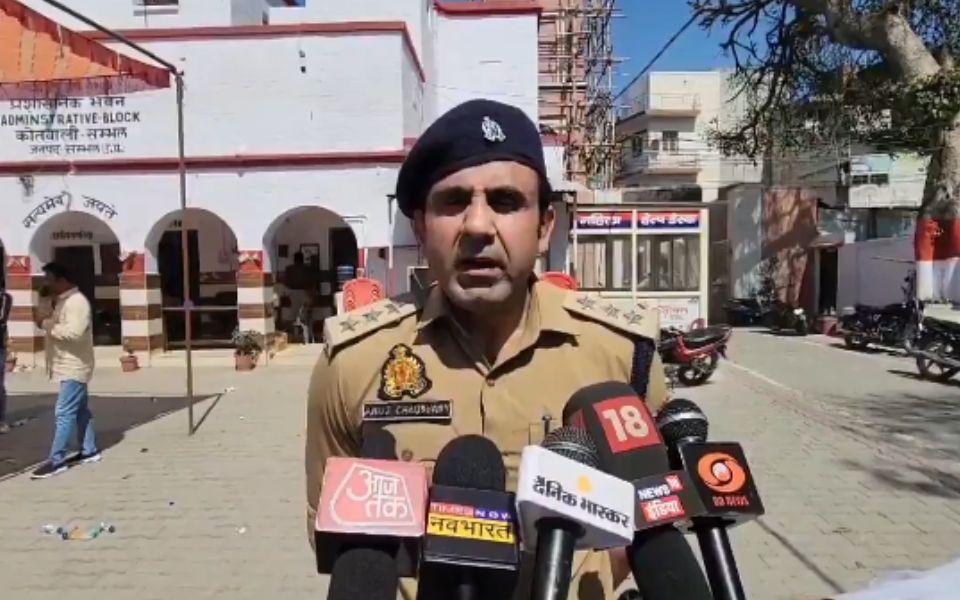
Sambhal (UP), Mar 6 (PTI): A Sambhal police officer on Thursday said those uncomfortable with Holi colours should remain indoors as the festival comes once a year, sparking criticism from the opposition parties which demanded action against him saying his remarks show "bias" and are not befitting of an officer.
A peace committee meeting was held on Thursday at the Sambhal Kotwali police station in view of the upcoming Holi festival, which coincides with Friday prayers during the holy month of Ramzan.
"Holi is a festival that comes once a year, whereas Friday prayers take place 52 times in a year. If anyone feels uncomfortable with the colours of Holi, they should stay indoors on that day. Those who step out should have a broad mindset, as festivals are meant to be celebrated together," Sambhal Circle Officer (CO) Anuj Chaudhary told reporters after the meeting.
He emphasised the need for communal harmony and strict vigilance to maintain law and order. He said that peace committee meetings had been going on for a month at various levels to ensure smooth celebrations.
Chaudhary urged both communities to respect each other's sentiments and also appealed to people to avoid forcibly applying colours on those who do not wish to participate.
"Just as Muslims eagerly await Eid, Hindus look forward to Holi. People celebrate by applying colours, sharing sweets, and spreading joy. Similarly, on Eid, people prepare special dishes and embrace each other in celebration. The essence of both the festivals is togetherness and mutual respect," he said.
"This applies to both communities. If someone does not want colour, they should not be forced," he said.
Reiterating the administration's commitment to maintaining peace, he warned that any attempt to disturb communal harmony would be dealt with strictly.
Samajwadi Party spokesperson Sharvendra Bikram Singh condemned the remarks and said officers "should not act as BJP agents".
"The officers are imitating what they hear from the chief minister to stay in his good books. Action should be taken against those who make such statements and openly display their bias. This is condemnable, and officers should not act as BJP agents," he said.
Uttar Pradesh Congress Media Committee Vice Chairman Manish Hindvi said, "An officer, regardless of who they are, must be secular; only then can governance function properly in this country. Otherwise, it will lead to anarchy."
"If people from a particular religion have expressed discomfort with the playing with colours, the officer's duty is to ensure that there is no atmosphere of fear or insecurity.
"There should be an arrangement where both Holi is celebrated and Namaz is offered peacefully. Saying that Holi comes once a year while Friday prayers happen 52 times and that those who dislike colours should stay indoors is a political statement.
"Those who engage in vote-bank politics make such remarks. As an officer, one cannot make such statements; otherwise, tomorrow they might say they will only ensure the security of Hindus and not Muslims. The statement made by this police officer is highly condemnable. I believe action should be taken against him as per the officers' code of conduct," Hindvi added.
On November 24 last year, violence erupted in Sambhal's Kot Garvi locality during protests against a court-ordered survey of a Mughal-era Jama Masjid. The incident led to the death of four people, while several others sustained injuries.
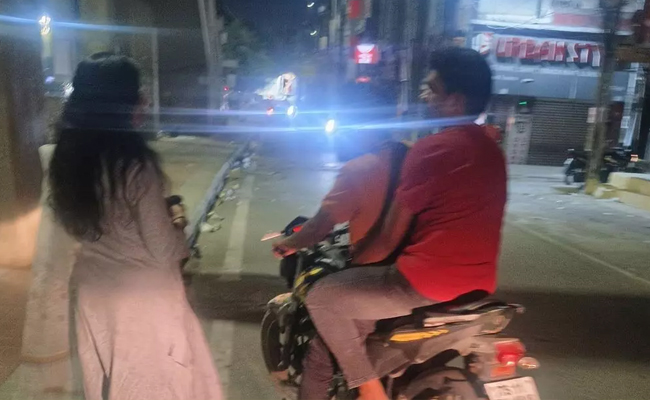
"Friday prayers take place 52 times while #Holi is celebrated once a year. If anyone in the #Muslim community feels use of Holi colour on them is profanity, it's better they don't step out of the homes"
— Hate Detector 🔍 (@HateDetectors) March 6, 2025
- #UPPolice DSP #AnujChaudhary in #Sambhal, #UttarPradesh.#Holi2025 pic.twitter.com/qBv84qhPjw
Let the Truth be known. If you read VB and like VB, please be a VB Supporter and Help us deliver the Truth to one and all.
Sujit Nair raises concerns over speculation of DMK-AIADMK understanding to block TVK
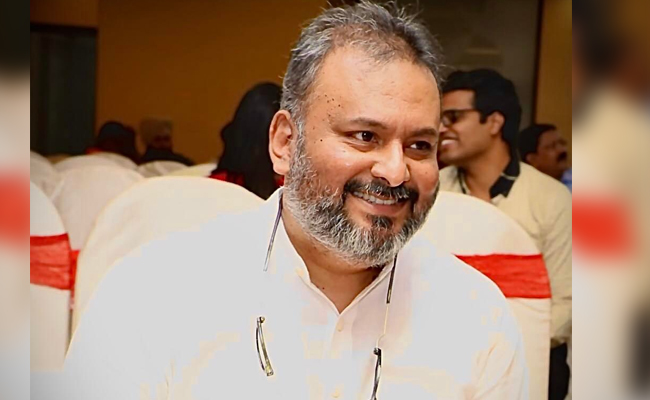
Chennai: Journalist and political commentator Sujit Nair has expressed concern over speculation that the Dravida Munnetra Kazhagam and the All India Anna Dravida Munnetra Kazhagam could explore a post-poll understanding to prevent Vijay-led Tamilaga Vettri Kazhagam from forming the government in Tamil Nadu.
In a social media post, Sujit Nair said the election verdict in Tamil Nadu reflected a clear public demand for political change and argued that the mandate should be respected irrespective of political preferences.
Referring to reports and political discussions surrounding a possible understanding between the DMK and AIADMK, he said he hoped such developments remained only speculative conversations and did not turn into reality.
Nair stated that if such an alliance were to take shape, it would raise serious questions about ideological politics in the country. He said TVK had emerged through a democratic electoral process and that the legitimacy to govern in a parliamentary democracy comes from the people’s verdict.
According to him, attempts to prevent an electoral winner from forming the government through unexpected political arrangements may be constitutionally valid, but many people could view them as politically opportunistic.
He further said that such a move could particularly affect the political image of the DMK, which has historically projected itself around ideology, social justice and opposition politics. Nair said that in ideological terms, the DMK appeared closer to TVK than to the AIADMK, and joining hands with its long-time political rival only to remain in power could weaken its broader political narrative.
He added that the same questions would apply to the AIADMK as well, as the party had spent decades positioning itself against the DMK and such an arrangement could create discomfort among its cadre and supporters.
Drawing a comparison with Maharashtra politics in 2019, Nair said he had expressed similar views when the Shiv Sena formed an alliance with the Indian National Congress and the Nationalist Congress Party after the Assembly elections.
He said post-poll alliances between long-standing political rivals often create a public perception that ideology and electoral mandates become secondary when political power equations come into play.
Nair also said such developments increase public cynicism towards politics and reinforce the belief among voters that ideology is often sidelined after elections.
He maintained that the Tamil Nadu verdict was emphatic and said respecting both the spirit and substance of the mandate was important for the credibility of democratic politics.