Hooligans liable to compensate the victims of violence: SC
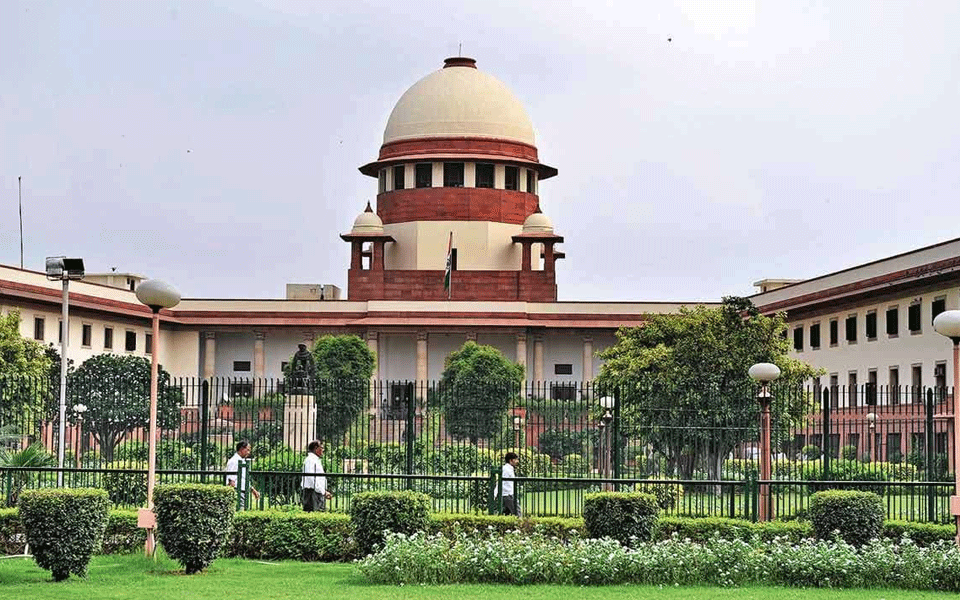
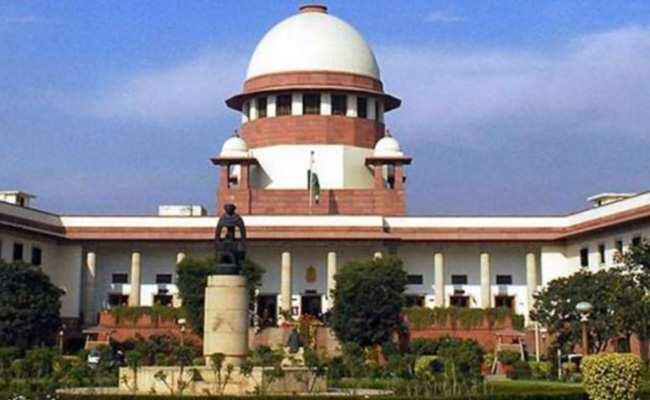
New Delhi, Oct 1 : Issuing guidelines including video-recording of vandalism and hooliganism, the Supreme Court on Monday ruled that whoever causes damage to public or private property will be made liable to compensate the victims of violence.
A bench of Chief Justice Dipak Misra, Justice A.M. Khanwilkar and Justice Dr D.Y. Chandrachud said the authorities must ensure that arrests of miscreants found on the spot are done in right earnest.
It was the last judgement delivered by the current Chief Justice Dipak Misra in which he has directed the state governments to set up rapid response teams preferably district-wise and specially train them to deal with mob violence and deploy these teams around vulnerable cultural establishments.
The order came on a public interest litigation filed by Kodungallur Film Society, which had sought framing of guidelines to deter acts of vandalism.
"This Court has time and again underscored the supremacy of law and that one must not forget that administration of law can only be done by law-enforcing agencies recognised by law," the court said.
"Nobody has the right to become a self-appointed guardian of law and forcibly administer his or her own interpretation of the law on others, especially with violent means. Mob violence runs against the very core of our established legal principles since it signals chaos and lawlessness. The state has a duty to protect its citizens against illegal and reprehensible acts of such groups," the court said.
Observing loss to property during such incident, the court directed authorities to video-record the events and, if required, hire private video operators to record the events or request the media for information on the incident.
Claims arising out of such acts of violence should be dealt with in the manner prescribed under the destruction of public and private properties, the court said, directing police officers to file first information reports and complete investigation as far as possible within the statutory period.
"Any failure to file FIRs and conduct investigations within the statutory period without sufficient cause should be considered as dereliction of duty on behalf of the officer concerned and can be proceeded against by way of departmental action in right earnest," the court said.
As liability of person causing violence, the court ordered agencies to take appropriate action against such persons and the leader of the organisations involved in such acts under provisions of the Indian Penal Code.
The court also directed the governments to set up special helplines, create and maintain a cyber information portal on its website and on its internet-based applications for reporting instances of mob violence and destruction of public and private properties.
It also ordered that the authorities may consider taking appropriate steps as per law including to impose reasonable restrictions on the social media and internet-based communication services or mobile applications.
The court directed that authorities to take coordinated efforts and issue messages across various audio-visual mediums including local TV channels, radio stations, social media like Twitter to restore peace and to control rumours.
The court directed nodal officers to coordinate with local emergency services, including police stations, fire brigades, hospital, medical services and disaster management authorities during incidents of mob violence in order to have a comprehensive and consolidated response to the situation.
The authorities must consider the use of non-lethal crowd-control devices, like water cannons and tear gas, which cause minimum injury to people but at the same time, act as an effective deterrent against mob force, the court said.
Let the Truth be known. If you read VB and like VB, please be a VB Supporter and Help us deliver the Truth to one and all.
Bihar: Over 150 children fall ill after consuming 'mid-day meal' in Saharsa

Saharsa (PTI): More than 150 children were taken ill after allegedly consuming food that was part of the mid-day meal in a school in Bihar’s Saharsa district, a senior official said on Thursday.
The incident occurred at a middle school in Baluaha village of the district.
The official said that 115 children were undergoing treatment at the Sadar Hospital, while around 50 students were admitted to Mahishi Public Health Centre.
“We received information that several children fell ill after consuming the mid-day meal in Baluaha. The children were initially treated at the primary health centre, but later, many were referred to the Sadar Hospital,” Saharsa District Magistrate Deepesh Kumar told reporters.
“According to doctors, the health condition of the children has improved, but they will be kept under observation for some time. There is no need to panic. Some kids are having mild fever. They are being treated accordingly,” Kumar said.
Meanwhile, family members of some children claimed that a snake was found in the container in which cooked pulses was stored at the school.
Of the 545 students present in the school, 200 had already eaten their meals by the time the snake was spotted, and later complained of stomach ache and vomiting, they said.
Regarding the claims, the DM said food samples have been collected from the school.
“We will be able to comment on this only after the results of the tested samples arrive,” he said.