Hope speaks a universal language; fight for dignity, democracy same: Rahul Gandhi in Colombia
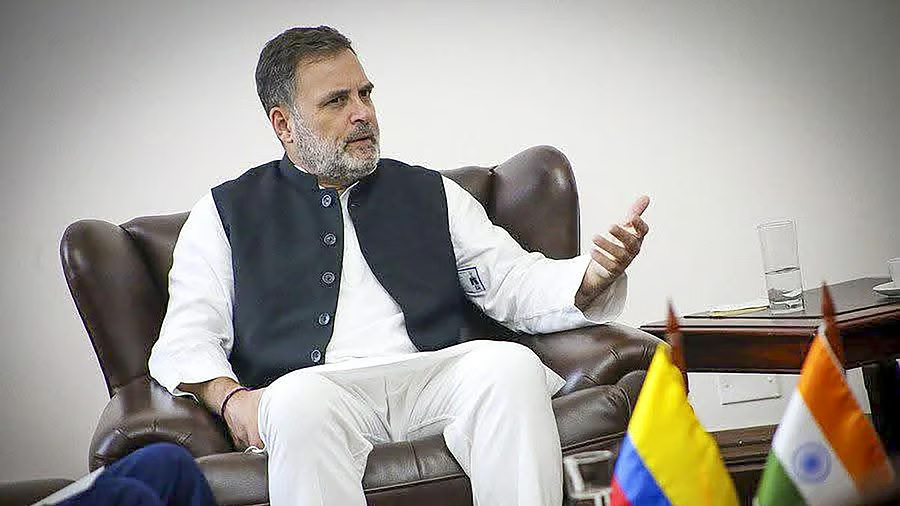
New Delhi (PTI): Congress leader Rahul Gandhi, who is currently in Colombia, on Saturday said hope has a universal language and the fight for dignity and democracy is one and the same.
Gandhi shared pictures of his visit to Colombia and his interaction with students there on his YouTube channel.
"From the vibrant streets in Colombia's comunas and the classrooms of University of Medellin, to the heartfelt conversations with students in Lima, Peru, this journey through South America has been filled with warmth, joy, and ideas.
"I met artists who use colour as resistance, and students who dream fearlessly. Their spirit of creativity and courage was truly inspiring," he said in his post along with pictures.
"At every step, I was reminded that hope speaks a universal language, and that across continents, our fight for dignity and democracy is one and the same," he also said.
Gandhi is on an over a week-long visit to four Latin American countries - Colombia, Brazil, Peru and Chile.
The Leader of Opposition in Lok Sabha is expected to interact with political leaders, students, and businessmen during his visit.
He will be holding meetings with presidents and senior leaders across multiple countries, strengthening democratic and strategic ties, the party said.
Gandhi will engage with business leaders to explore opportunities as India seeks to diversify trade and partnerships in the wake of US tariffs, it also said.
He will interact with university students in Brazil, Colombia, and beyond, fostering dialogue with the next generation of global leaders.
The crucial visit carries historical resonance, the Congress said, adding that India and South America have long shared bonds through the Non-Aligned Movement, solidarity in the Global South, and a commitment to a multipolar world order.
Gandhi's outreach continues this tradition while opening new avenues of cooperation in trade, technology, sustainability, and people-to-people exchanges, the Congress said.
It underscores the essential role of India's democratic opposition in shaping international partnerships and advancing India's global presence, the party has also said.
Let the Truth be known. If you read VB and like VB, please be a VB Supporter and Help us deliver the Truth to one and all.
NIA registers case to probe recovery of 79 crude bombs in poll-bound West Bengal
New Delhi (PTI): The National Investigation Agency (NIA) on Sunday registered a case to probe recovery of 79 crude bombs in poll-bound West Bengal, officials said.
The move came following a directive by the Union Home Ministry in this regard, they said.
In pursuance to the home ministry's order, the anti-terror agency on Sunday registered a case, which was originally filed at Uttar Kashi police station, Bhangar division, Kolkata on Saturday, and took up the investigation, an NIA spokesperson said in a late night statement.
"The case pertains to recovery of 79 crude bombs and other incriminating materials by Kolkata police, which were being stored at a spot, thereby endangering human life and property," the spokesperson said.
Earlier in the day, the Election Commission had directed the West Bengal Police to launch a special drive to arrest those involved in illegal manufacturing of crude bombs in the poll-bound state, an official said.
It asserted that all cases related to the making of any such explosive would be probed by the National Investigation Agency, the official said.
The directive came after the police recovered a large number of crude bombs from the house of a person, allegedly a TMC worker, at Bhangar in South 24 Parganas district, days ahead of the second and final phase of the assembly polls in the state.
The explosives were recovered during a search at the residence of Rafikul Islam following specific inputs, the official said.
The poll panel also issued a warning to senior police officers across the state over any lapse in maintaining law and order before the April 29 polling.
The first phase of the assembly elections in West Bengal was held on April 23, while the second phase will take place on April 29. Votes will be counted on May 4.
A record 93.19 per cent turnout has been recorded in the first round of polling. Bhangar will vote in the second phase.