Hormuz Strait disruptions have caused huge economic impact, energy instability in region: Navy chief

Mumbai (PTI): The Strait of Hormuz disruptions have caused severe economic impact and energy instability in the region, Indian Navy chief Admiral D K Tripathi said on Thursday amid the war in West Asia.
Speaking at an event where INS Sunayna, an offshore patrol vessel, set sail from Mumbai as Indian Ocean Ship (IOS) Sagar, the admiral said competition at sea has no longer remained confined to oil and energy.
It is now expanding towards resources that will shape future growth - such as rare earth elements, critical minerals, new fishing grounds and even data, he said.
The West Asia crisis began on February 28 after a joint attack by the US and Israel on Iran.
Iran's strikes on its neighbours along with its chokehold on the Strait of Hormuz have disrupted the world's energy supplies with effects far beyond West Asia.
"With the conflict in West Asia well into its fifth week, the disruptions in the Strait of Hormuz have caused severe economic impact and energy instability in the region," Tripathi said.
There is significant increase in the marine survey, deep-sea research activity, and Illegal Unreported and Unregulated Fishing (IUU), often encroaching upon the sovereign rights of littoral nations and exploiting gaps in monitoring and enforcement, he said.
Alongside these, threats such as piracy, armed robbery and narco-trafficking backed by unimpeded access of advanced technology to non-state actors, have also become more complex and challenging to counter, the Navy chief pointed out.
Last year alone, the Indian Ocean Region witnessed a staggering 3,700 maritime incidents of varying nature, the admiral said.
Additionally, narcotics seizures in the region exceeded USD 1 billion USD in 2025, highlighting the persistence and spread of such challenges in the region, he said.
Let the Truth be known. If you read VB and like VB, please be a VB Supporter and Help us deliver the Truth to one and all.
Over 20 injured as private bus overturns in Charmadi Ghat
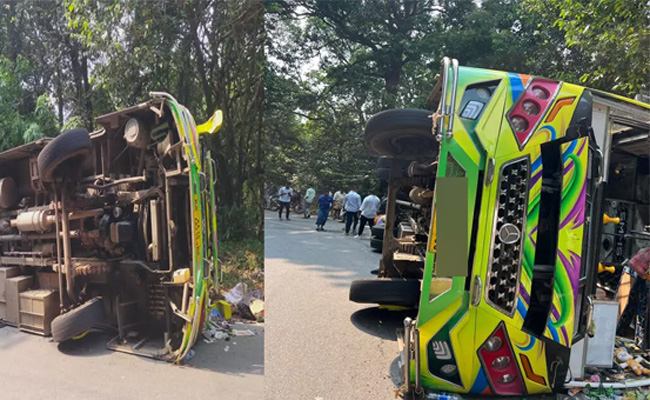
Mangaluru (PTI): More than 20 passengers were injured after a private bus overturned at a bend in the Charmadi Ghat on Sunday, police said.
The accident occurred at a curve when the driver reportedly lost control of the vehicle.
The passengers, all from Andhra Pradesh, were returning after attending a wedding in Dharmasthala.
Those seriously injured were shifted to Wenlock District Hospital, while others with minor injuries were treated at nearby private hospitals.
Residents assisted in the rescue operations. Traffic police from Belthangady visited the spot and are investigating the incident.