Hospitals cannot admit critically ill patients in ICU if they or kin refuse: Govt guidelines
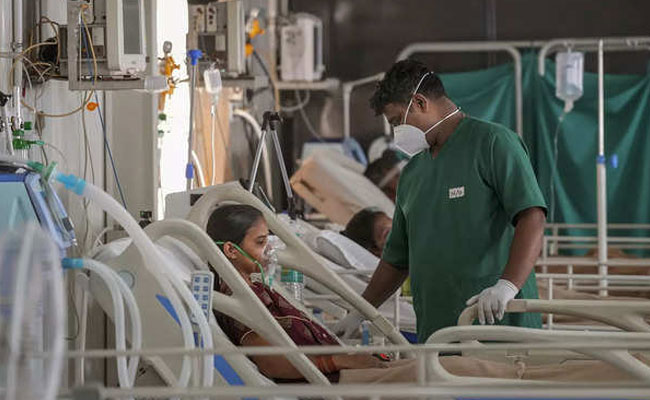
New Delhi (PTI): Hospitals cannot admit critically ill patients in the intensive care unit in case of refusal by them and their relatives, the Union Health Ministry has said in its recent guidelines on ICU admissions.
The guidelines compiled by 24 experts further recommended that when no further treatment is possible or available in a disease or in terminally ill patients if the continuation of therapy is not going make an impact on the outcome, especially survival, then keeping in ICU is futile care.
Further, anyone with a living will or advanced directive against ICU care should not be admitted to ICU.
Besides, low priority criteria in case of pandemic or disaster situation, where there is resource limitation, should be taken into account for keeping a patient in the ICU.
Criteria for admitting a patient to ICU should be based on organ failure and need for organ support or in anticipation of deterioration in the medical condition, the guidelines stated.
Altered level of consciousness of recent onset, hemodynamic instability, need for respiratory support, patients with acute illness requiring intensive monitoring and/or organ support or any medical condition or disease with anticipation of deterioration have been listed as criteria for ICU admission.
Patients who have experienced any major intraoperative complication like cardiovascular or respiratory instability or have undergone major surgery also feature among the criteria.
"The following critically ill patients should not be admitted to ICU -- patient's or next of ?kin's informed refusal to be admitted in ICU, any disease with a treatment limitation plan, anyone with a living will or advanced directive against ICU care, terminally ill patients with a medical judgement of futility and low priority criteria in case of pandemic or disaster situation where there is resource limitation (e.g. bed, workforce, equipment)," the guidelines stated.
Return of physiological aberrations to near normal or baseline statu, reasonable resolution and stability of the acute illness that necessitated ICU admission, patient/family agreeing for ICU discharge for a treatment-limiting decision or palliative care have been mentioned in the ICU discharge criteria.
According to the guidelines, blood pressure, pulse rate, respiratory rate, breathing pattern, heart rate, oxygen saturation, urine output and neurological status among other parameters should be monitored in a patient awaiting an ICU bed.
Let the Truth be known. If you read VB and like VB, please be a VB Supporter and Help us deliver the Truth to one and all.
Dalit outfits call state-wide hartal over dental student’s death
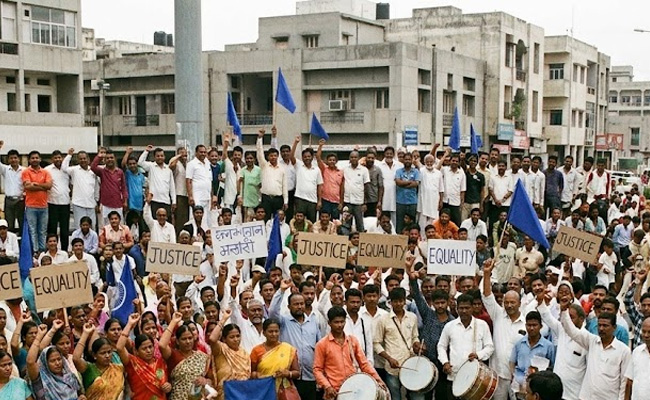
Thiruvananthapuram (PTI): Various Dalit organisations on Monday announced a state-wide hartal seeking justice in the death of Kannur Dental College student Nithin Raj.
The hartal will be observed on Tuesday from 6 am to 6 pm.
As many as 52 Dalit organisations, including Justice for Nithin Raj Action Council, have announced the strike.
Organisations requesting cooperation for the strike said that no vehicles will be forcibly stopped and that all essential services are exempted.
Raj, a first-year BDS student at a private dental college in Anjarakkandy in Kannur district, was found critically injured after falling from a building on April 10 and later succumbed to his injuries.
Police have registered a case against two faculty members on charges of abetment of suicide and under provisions of the SC/ST (Prevention of Atrocities) Act, following allegations by the student’s family that he was subjected to caste- and complexion-based harassment.
Kerala Pinnokka Samudaya Munnani (KPSM), one of the organisations supporting the hartal, alleged in a statement that police had shown apathy in the investigation and were attempting to protect the accused in the case.
KPSM state president K V Padmanabhan and general secretary S Anwar alleged that the probe into Raj’s death was being deliberately misdirected and delayed.
While the family has firmly alleged that caste discrimination and mental harassment by faculty members led to the student’s death, police were attempting to divert the investigation towards loan app borrowings, they claimed.
The organisation alleged that this was a planned move to shield the real accused.
KPSM further alleged that by deliberately delaying the arrest of the accused teachers, police enabled them to secure anticipatory bail.
They said there was no confidence in the present police investigation and demanded that the case be handed over to an independent agency at the earliest.