How fake news syndicate triggered Gauri Lankesh's murder
'Forbidden Stories' explores unexplored aspects of Gauri Lankesh's killing and its aftermath
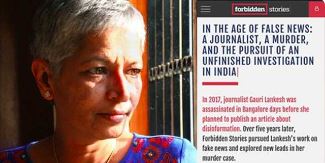
Forbidden Stories, an online platform that works towards providing a secure way for journalists and reporters to publish their stories bypassing any form of censorship, on Monday, February 14, released a story on the fake news industry and how it killed Gauri Lankesh, the popular Karnataka journalist who was assassinated in September 2017. The project was named “Story Killers”.
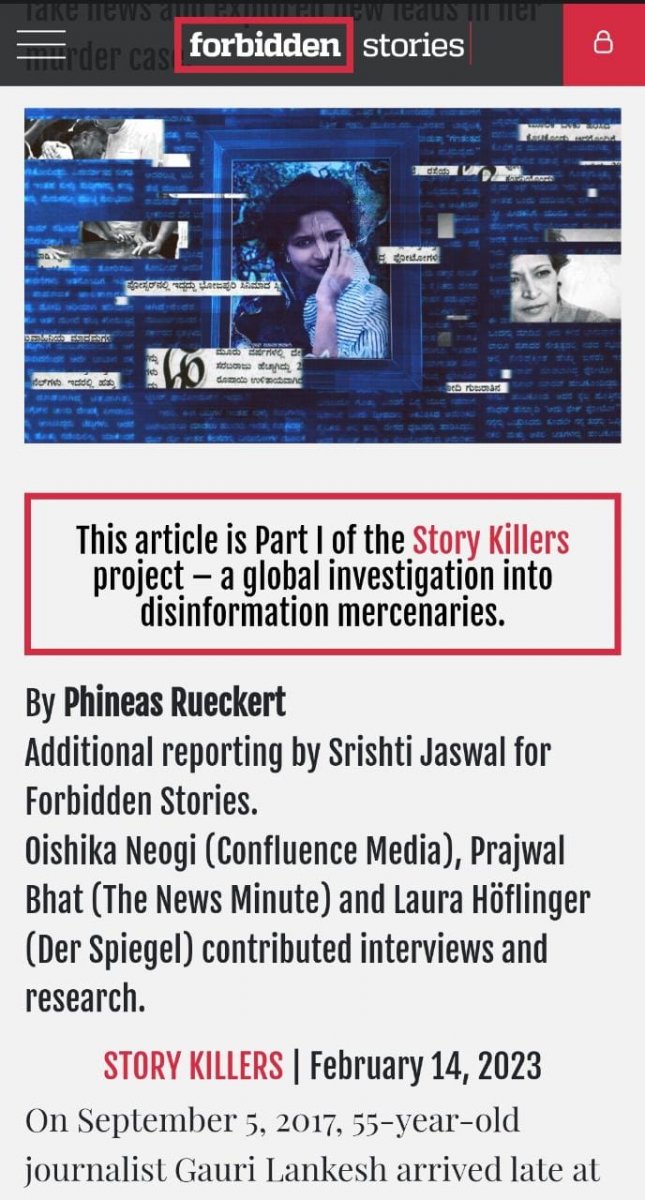
The story asserted that one of the major reasons Gauri Lankesh was gunned down by the far-right-wing fringe group was because of her fight against the peddlers and peddling of fake news and misinformation, majorly on the internet.
Referring to the facts of the case, Forbidden Stories stated Gauri was working extensively on exposing the disinformation syndicate in the country and days before she was killed she was working on the editorial of her website Gauri Lankesh Patrike. The editorial, which turned out to be her last editorial was titled “In the Age of False News”.
“Lankesh elucidated how “lie-factories” – websites that traffic in rumors and half-truths – spread disinformation in India. She detailed a viral rumor about censorship of a Hindu idol by the opposition party, tracing it to one of the most virulent of these sites called Postcard News, run by a local entrepreneur named Mahesh Vikram Hegde. The rumor, she elaborated, was further spread by the ruling Bharatiya Janata Party (BJP) and other politically-motivated individuals who “used the fake news as their weapon,” she wrote.” the Forbidden Stories stated about Gauri Lankesh’s last editorial.
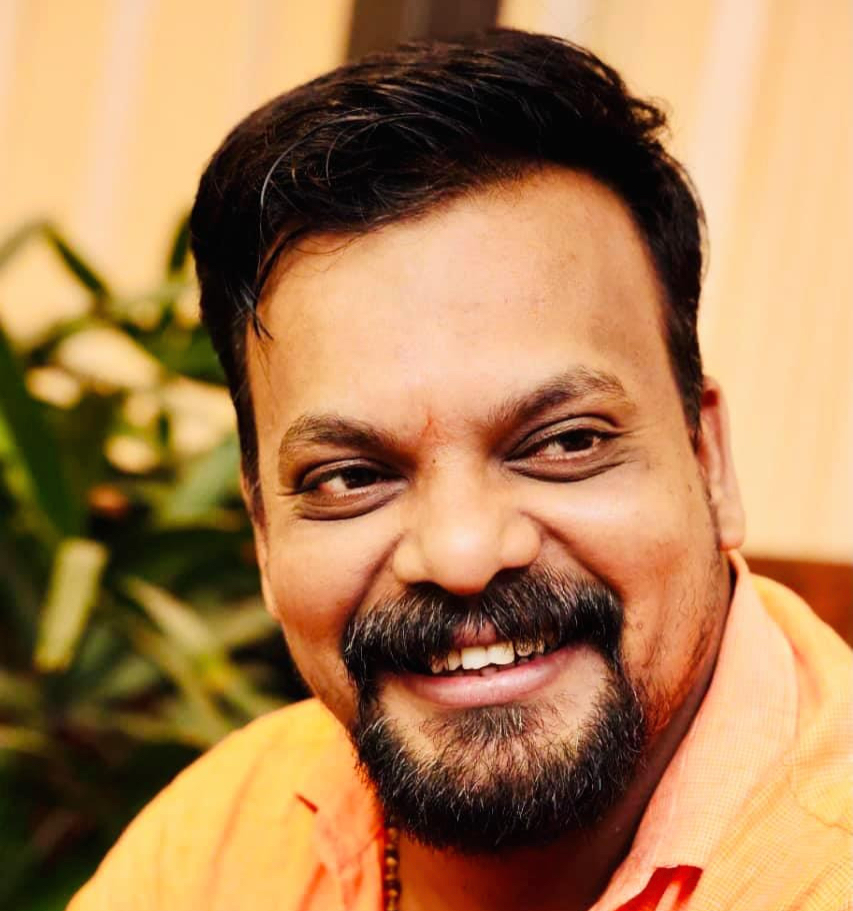
Mahesh Vikram Hegde, founder of Postcard News
“Lankesh’s murder soon sent shockwaves across India. Hundreds of mourners attended her funeral, holding signs reading, “I am also Gauri.” Within a couple of years, police investigators arrested 17 suspects, all associated with the Hindu nationalist cult Sanatan Sanstha, its affiliate Hindu Janajagruti Samiti (HJS), and other fringe religious groups. (An 18th suspect is still at-large.) Members of this unnamed syndicate plotted the assassination for over a year, obtaining weapons, training hired guns, and tracking Lankesh’s daily movements, according to police sources.” the Forbidden Stories further added.
Forbidden Stories, whose mission is to continue the work of threatened, imprisoned, or assassinated journalists, pursued Lankesh’s unfinished work. Starting from Lankesh’s premise – that disinformation has become both industrial and weaponized – Forbidden Stories gathered a consortium of 100 journalists from 30 media outlets to investigate the global disinformation-for-hire market as part of the “Story Killers” project. From India to South America to the heart of Europe, journalists peeled back the layers of a growing and unregulated market, ranging from small-time fake news peddlers to multinational mercenaries selling disinformation campaigns aimed at subverting democracies.
The story also particularly focused on how a viral 2012 YouTube video of Lankesh spread across social media and was later shown to the people who allegedly killed her as “justification” for her murder.
“Friends said that by the end of her life, Lankesh seemed unwell: her paper was losing subscribers and accruing debt because Lankesh refused to take on advertisers, and she had become the target of near-constant online harassment by far-right networks connected to the BJP. The trolling would peak after Lankesh would give a speech or post personal photos online that far-right activists used to portray her as a “loose” woman. The character assassination intensified toward the end of her life, with negative content cross-posted on popular right-wing Facebook pages.
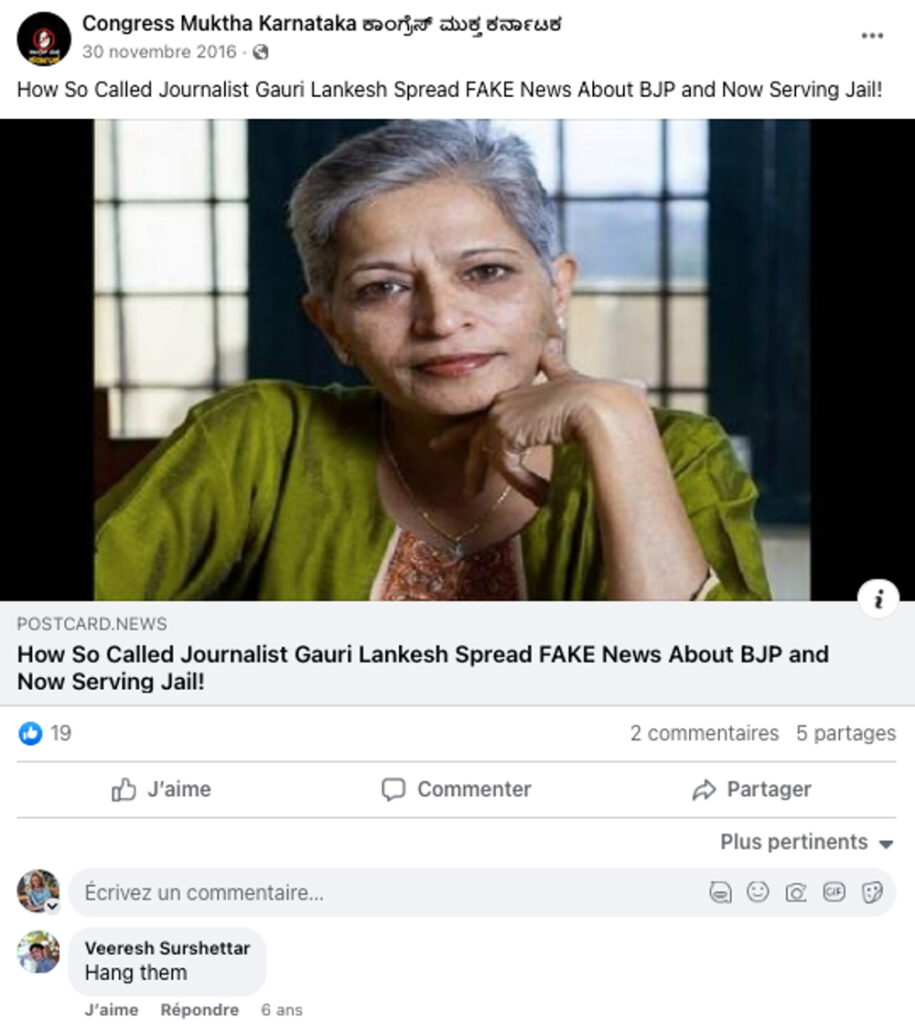
In one widely shared post, Postcard News, which Lankesh named in her editorial, described her as a “known Hindu hater.” The article, which linked to a now-removed YouTube video of a speech Lankesh had given in 2012 and was allegedly shown to at least 5 of her presumed assassins, was shared on social media by Postcard co-founders Mahesh Vikram Hegde and Vivek Shetty.” The investigative piece pointed.
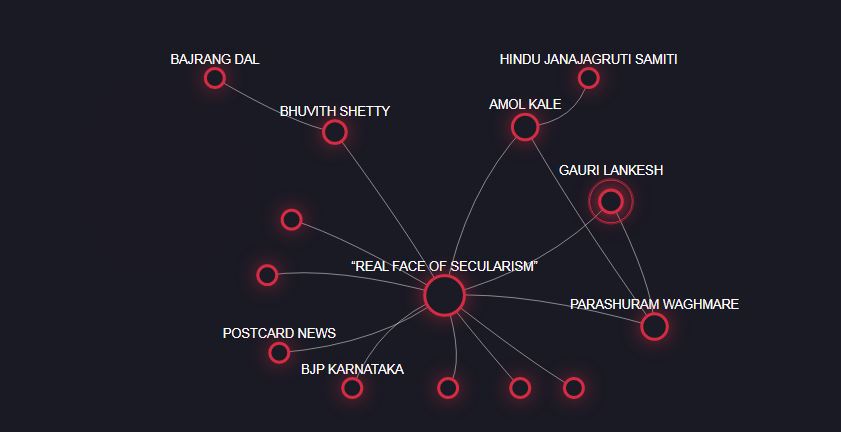
PC: Forbidden Stories
Journalists and experts said that Bangalore-based Postcard News, run by Mahesh Vikram Hegde, is still one of the biggest players in India’s right-wing media ecosystem. Hegde, a Hindu social media influencer who, like other mid-level, right-wing media players, is legitimized by a Twitter follow from Prime Minister Narendra Modi. In the years following Lankesh’s death, Postcard News incessantly shared misleading information about the murder investigation, seeking to deflect blame onto left-wing groups Lankesh had worked with, and away from the Hindu nationalist outfit connected to the murder.
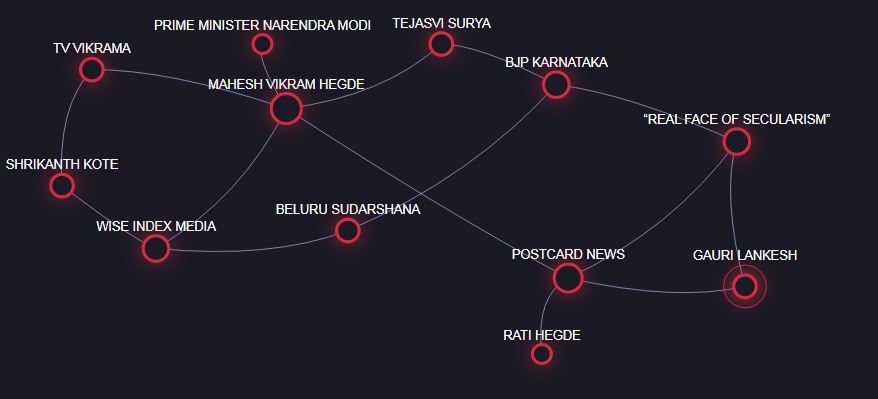
PC: Forbidden Stories
“Picking up where Lankesh left off, Forbidden Stories investigated Postcard News. We found that in the years following Lankesh’s killing, Hegde grew closer to the BJP, co-founding a company that lists an active BJP advisor as a director. Hegde’s media empire, which also includes a popular YouTube channel called TV Vikrama, took off and has over 300,000 subscribers. Hedge’s growth is despite a 2018 lawsuit filed against him for spreading fake news and two police complaints for publishing defamatory content and circulating a possible forged document.” Forbidden Stories’ piece added.
It also asserted that in August 2021, Mahesh Vikram Hegded co-founded a PR firm named Wise Index Media with Beluru Sudarshana one of the advisors to Karnataka’s Chief Minister Basavaraj Bommai being listed as one of its directors. The story also added that CM Bommai and former CM BS Yeddyurappa who had also appointed Sudarshana as his advisor, both refused to comment on the matter.
“On his personal website, Hegde brags about having played a “pivotal role” in Modi’s 2019 reelection campaign. He also appears to have used Wise Index Media as a fundraising vessel for the BJP. In September 2022, he called on temples to make donations to celebrate Modi’s 72nd birthday in a series of social media posts. A handful of these temples drew out checks to Wise Index Media.” It further added.
The story quoted Emma Briant, a fellow at Bard College who studies information warfare, saying “manipulating the truth has swelled into a billion-dollar business with hundreds, possibly thousands, of service providers worldwide.” “There is a huge range of unregulated industry practices that would widely be considered unethical but not illegal,” she added.
Writing about the proceeding of Gauri’s murder trial, the website added “Journalists and lawyers who spoke with Forbidden Stories described an exceptionally well-run investigation – rare in a country with one of the highest levels of impunity for crimes against the press. A “special investigative unit” created to probe the case got to work quickly: matching bullet casings to similar crimes committed in the past few years, matching empty cartridges to a 7.65mm pistol, and identifying the getaway vehicle through CCTV footage. From there, it took six months to arrest an initial suspect: Naveen Kumar. Several months later, investigators filed a roughly 10,000-page chargesheet, naming 17 additional suspects – one of whom is still at large.
The group of assassins, they determined, were part of an “organized crime syndicate” operating across states in southern India. The syndicate is accused of several high-profile bomb attacks in the early 2000s across Goa, the coastal state neighboring Karnataka. Through forensics, investigators tied Lankesh’s death to the murder of three other public intellectuals, also allegedly killed by this group’s members.
Amol Kale, the presumed mastermind of the murder, selected right-wing activists at religious gatherings and trained them to become killers. Parashuram Waghmare, known as “builder” for his compact form, is believed to have pulled the trigger.
According to case files, Kale trained the hired guns over a months-long indoctrination process that included meditation, arms training, and religious education. They were made to read Lankesh’s articles and watch videos of her speeches. At least five members of the syndicate were shown the video of Lankesh’s 2012 speech, in which she is heard questioning Hinduism’s roots. Waghmare, the hired gun, could cite lines from the video, suggesting he had been shown the video “repeatedly,” according to a local police investigator who spoke with Forbidden Stories anonymously.
At a meeting in a rented safe house, the plotters decided Lankesh had to be killed “at any cost,” the case file reads. “If left unchecked she would cause disrepute and create a bad opinion about Hindu Dharma in the society,” they allegedly concluded.
According to local police sources, the video – downloaded onto Kale’s laptop from YouTube – was one element in a “gradual indoctrination” process. But this video, Forbidden Stories found through a forensic analysis conducted in partnership with researchers at Princeton’s Digital Witness Lab, spread widely across Indian far-right groups, contributing to an intense and vitriolic character assassination that painted her as anti-Hindu well before the plan to assassinate her had been hatched.
Using open-source tools, researchers found evidence of eight different YouTube links that were shared widely on Facebook, including three that had more than 100 million interactions (likes, shares, and comments). In 2014, the official page for the BJP in Karnataka shared the video with a warning: “The next time we hear such speeches we should give a fitting legal reply.”
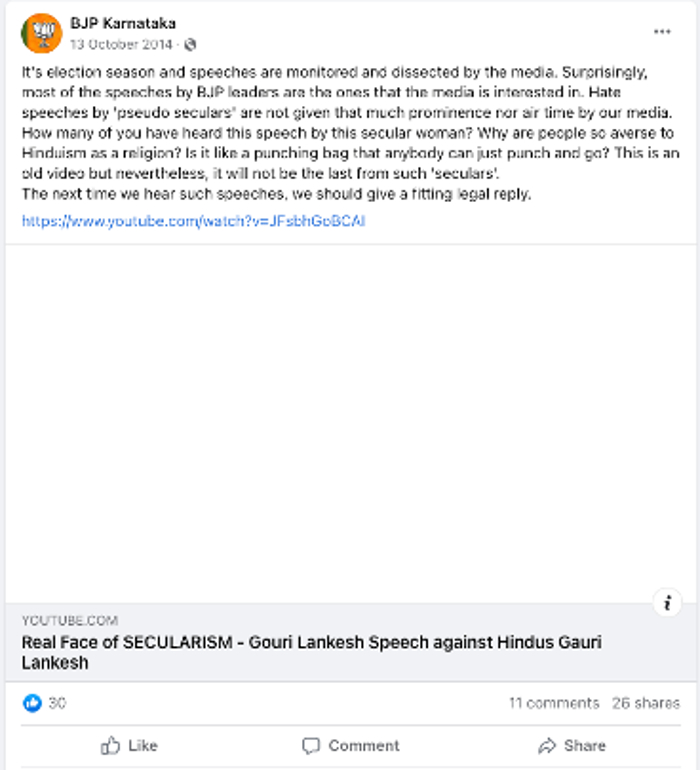
Forbidden Stories concluded the investigative piece by remarking “Lankesh was scheduled to appear in court 10 days after her assassination for a lawsuit against her alleging the speech had disrupted communal harmony. “[I] am facing a case because of this speech,” she wrote on Twitter several months earlier. “I stand by every word I said.” She never had the chance to stand before the court or defend herself in the eyes of the public, either.
The story was written by Phineas Rueckert with additional reporting by Srishti Jaswal for Forbidden Stories. Oishika Neogi (Confluence Media), Prajwal Bhat (The News Minute) and Laura Höflinger (Der Spiegel) have also contributed interviews and research for the story.
Let the Truth be known. If you read VB and like VB, please be a VB Supporter and Help us deliver the Truth to one and all.
BJP has history of ‘contradictory alliances’, says BK Hariprasad
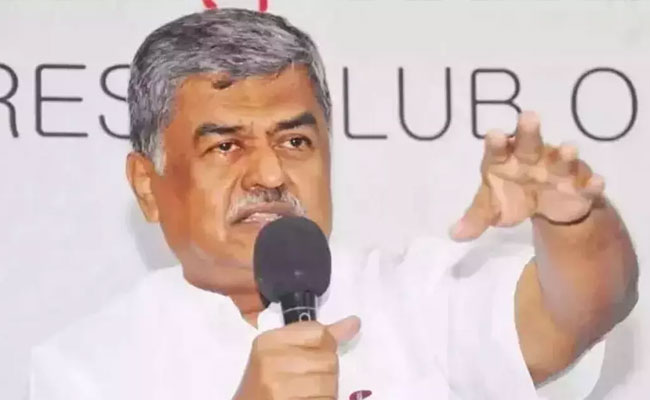
Bengaluru: Congress MLC B. K. Hariprasad has launched a sharp attack on the BJP, accusing the party of hypocrisy over its criticism of alliance politics in Tamil Nadu.
In a post on X on Friday, Hariprasad said BJP leader B. L. Santhosh criticising the Congress party’s alliance politics in Tamil Nadu was “not just laughable, but the height of political contradiction.”
He said the Congress has always joined hands with like-minded parties to protect secular and democratic values in the country.
Hariprasad questioned the BJP over several of its past and present alliances across the country. Referring to Jammu and Kashmir, Punjab, Tripura, Bihar and Maharashtra, he accused the BJP of sharing power with parties it had earlier criticised.
He alleged that the BJP had aligned with separatist and corruption-linked political forces in different states for political gains.
“The BJP, which speaks against alliances today, should first look at its own political history,” he said, adding that the party’s record was full of “contradictions and changing stands.”
Hariprasad also accused the BJP of using central agencies such as the Enforcement Directorate, Income Tax Department and CBI as political tools to target opposition leaders, topple governments and influence electoral mandates.
He further claimed that the people of Tamil Nadu had strongly rejected the BJP and its ideology in the recent election.
“Congress forms alliances to protect the Constitution, secularism and national unity, while the BJP enters into alliances only for power,” he said.