How Yashasvi found inner Jais-Wall to add another arrow in India’s ODI quiver

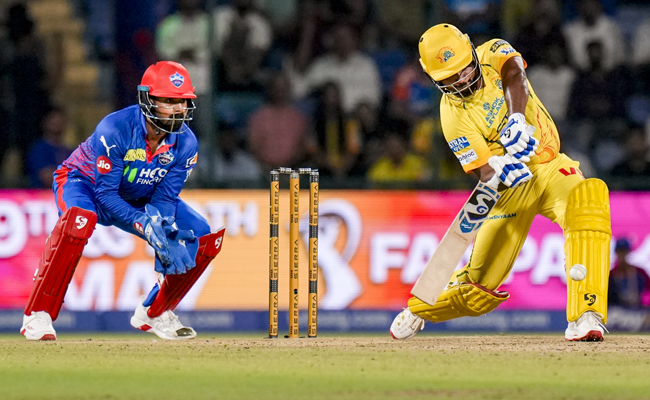
Visakhapatnam (PTI): Over 0.6: Yashasvi Jaiswal shouldered the arms as Marco Jansen’s tempting ball outside the off-stump found a safe passage to Quinton de Kock’s gloves.
Jaiswal did not attempt to play the cut. Jansen had a knowing smile, and De Kock clapped in mock appreciation.
It was a significant moment in the series-deciding third ODI against South Africa, which India eventually danced to a 9-wicket win. It was the earliest sign of Jaiswal’s transformed mindset.
It was an open statement: Tonight he would not be playing that edgy 'Jais-ball' from ball one, and will make most of a chance that came his way because of an injury to Shubman Gill, the original opener and also the regular skipper of the side.
That edginess and urge to dominate bowlers had consumed Jaiswal at Ranchi and Raipur, but here he eschewed all such thoughts.
When Proteas new ball bowlers tightened their lines, Jaiswal responded by leaving the ball and showing the patience to carry his bat. He seemed to have understood the rhythm of one-day cricket better now.
Head coach Gautam Gambhir touched on it.
"When you come into white-ball cricket from red-ball cricket, you think you have to bat aggressively. But you don't have to play aggressively because if you split the one-day format into 30 overs and 20 overs, it will be very easy. If you play 30 overs as ODIs, and the quality that Jaiswal has, if he bats for 30 overs, he will be batting close to 100. Even after that, you have 20 overs left, which you can look at as a T20 match."
It is only about finding a template. This was just Jaiswal's fourth game. The moment he figures out which tempo he needs to bat in one-day cricket, the sky is the limit," Gambhir said.
Jaiswal’s maiden ODI hundred here pre-validated Gambhir’s view.
The 23-year-old’s first fifty came in 75 balls, while getting some expert guidance from Rohit Sharma at the non-striker's end.
But the next 50 runs arrived in 35 balls, as the left-hander played a more familiar game.
In the phase between 22 and 26.1 overs, Jaiswal faced 11 balls and struck six boundaries to make a total 27 runs.
It was a thrilling maximisation of the platform he laid for himself with patience early on.
The calculated acceleration might have made Virat Kohli, with whom Jaiswal added 116 runs here, proud as this was an innings straight out of his playbook.
Patience will also be Jaiswal's biggest ally in the next few months as he wouldn't know when his next ODI appearance will be. Skipper Gill is fit for New Zealand series in January and after that India play a ODI game in July 2026 during the away series against England where Jaiswal can only fit in if one among skipper and veteran KL Rahul get injured.
Gill and, possibly, Shreyas Iyer too will be back for the ODI series against New Zealand next month, and Jaiswal is currently not in the national T20I scheme of things.
So, he might just have to play the waiting game. But Gambhir looked at the larger picture of creating a stronger pool of players for bigger assignments in future.
“Look, try and give them opportunities wherever we can because we still want a reasonable group of players — probably around 20-25 players before the (2027) World Cup. But once your captain and vice-captain is back, obviously they are your starters.
“But yes, what they had to do, they've done. More importantly, I think they need to keep themselves motivated because they should be ready whenever they get that opportunity, and grab that,” Gambhir explained.
Jaiswal ticked a box in the third ODI with his maidan ton and Ruturaj Gaikwad chipped in with a hundred at Raipur, leaving Gambhir pleased as punch.
“It's important that young boys come into the setup, grabbing their opportunities. Yashasvi…we’ve seen how much quality he has, especially what he does in Test cricket.
“Obviously, it's just the start of his career in white ball cricket. Hopefully, he has a massive future ahead,” he added.
And it will be closely knitted with India’s too.
Let the Truth be known. If you read VB and like VB, please be a VB Supporter and Help us deliver the Truth to one and all.
CM Siddaramaiah alleges ‘criminal conspiracy’ in Sringeri recount, vows legal action
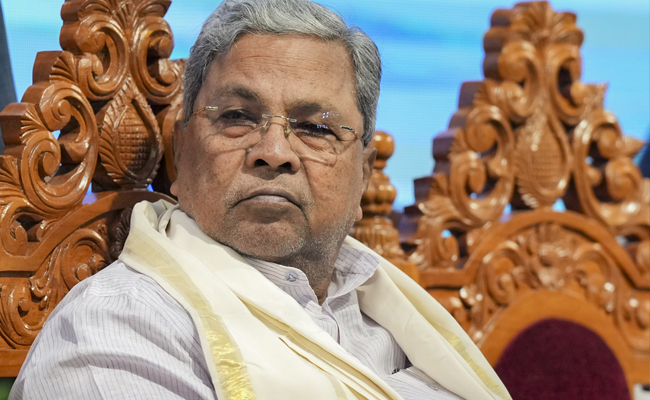
Bengaluru (PTI): Alleging a “criminal conspiracy” by BJP candidate D N Jeevaraj in the Sringeri Assembly poll recounting, Karnataka CM Siddaramaiah on Tuesday said the outcome was manipulated after valid postal ballot votes in favour of Congress leader T D Raje Gowda were tampered with during the recounting process.
Following a Karnataka High Court order on an election petition filed by Jeevaraj, challenging Raje Gowda’s election, the reverification and recounting were conducted on Saturday.
After the reverification and recount of postal ballots for the Sringeri Assembly constituency, votes polled in favour of Raje Gowda were reduced by 255, the returning officer said.
A report on the matter has been submitted to the Election Commission of India for further action, the officer added.
Congress leader Raje Gowda had won the 2023 Assembly polls from Sringeri by 201 votes, defeating his nearest rival Jeevaraj.
Addressing a press conference in Bengaluru, Siddaramaiah said the High Court had directed the recounting of postal ballots and that irregularities were noticed during the exercise conducted on May 2.
“This is a clear case of criminal conspiracy,” Siddaramaiah said, alleging that valid votes cast in favour of Raje Gowda were altered after being accepted by counting agents of all parties, including Congress, BJP, and JD(S).
He claimed that during the recounting of postal ballots, 255 votes were initially accepted as valid by all agents but were later tampered with by subordinate officials.
“There is a second mark on the votes polled in favour of Raje Gowda. They had accepted these as valid votes. Subsequently, another mark was made by officials. This is a clear case of criminal conspiracy,” he said.
When asked who was behind the alleged conspiracy, the CM replied, “It was hatched by Jeevaraj and others. It is planned.”
Siddaramaiah further alleged that the returning officer acted improperly by declaring the result despite the presence of an Election Commission observer during the recounting.
“Immediately after the counting, the returning officer announced the result. He should not have done so; this is against the law,” he said.
He pointed out that Raje Gowda had originally won by 201 votes, but after the recounting, the BJP candidate was declared the winner by 52 votes.
“The BJP has committed a criminal act of conspiracy. This is not vote chori but vote dacoity,” he alleged.
The CM said a police complaint had already been filed by Raje Gowda’s election agent, Sudhir Kumar, and emphasised the need for electoral integrity.
“We want transparency and free and fair elections. That is what our Constitution mandates,” he added.
Stating that the government would pursue legal remedies, Siddaramaiah said, “We are preparing an appeal challenging the returning officer’s announcement in a court of law.”
Responding to a separate query on elections in other states, the CM said there appeared to be an anti-incumbency factor in West Bengal, while results in Tamil Nadu were “surprising,” adding that Vijay’s party was emerging as the largest there.
Following the victory of party candidates in Bagalkote and Davanagere South, Siddaramaiah expressed confidence about future electoral prospects in Karnataka.
“Even in 2028, we will win the Assembly elections. We will come back,” the CM said.
Siddaramaiah added that he would order a forensic examination into the alleged tampering of postal ballots.