Huge difference in EVM purchase figures between ministry, EC: RTI replies
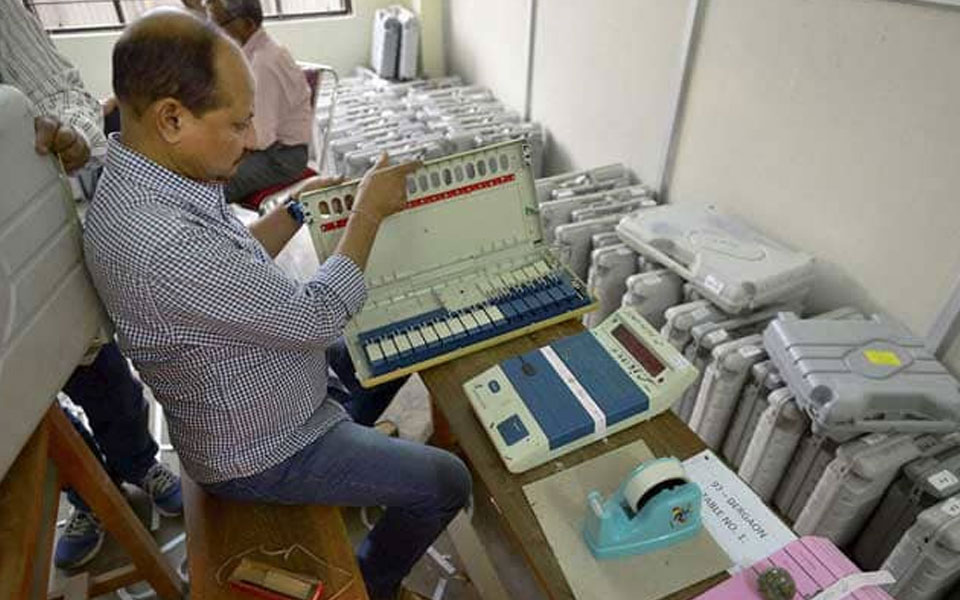
Mumbai, Oct 1: Figures given by the Union Law Ministry and the Election Commission of India (ECI) on purchase of electronic voting machines (EVMs) from public sector manufacturers have thrown up glaring differences, according to replies received under the right to information (RTI) law.
The discrepancies are now part of a public interest litigation (PIL) before the Bombay High Court.
According to an RTI reply given by the Law Ministry on November 1, 2017, to Mumbai activist Manoranjan Roy, 13,95,306 balloting units (BUs) and 9,30,716 control units (CUs) of EVMs were purchased, totalling to 23,26,022 pieces.
Just a month later, on December 11, 2017, ECI's RTI reply said that it had received a total of 38,82,386 pieces from the two public sector undertakings which manufacture EVMs. Bharat Electricals Ltd (BEL), Bengaluru, supplied 10,05,662 BUs and 9,28,049 CUs, totalling 19,33,711 pieces, while Electronics Corporation of India Ltd (ECIL), Hyderabad, supplied 10,14,644 BUs and 9,34,031 CUs -- a total of 19,48,675 pieces.
This total from the two companies -- 38,82,386 pieces -- is higher by 15,56,364 pieces from the figure of 23,26,022 pieces cited by the Union Law Ministry -- barely a month earlier.
The ECI had issued two different Letters of Intent (LoI) to BEL and ECIL for supplying large quantities of EVMs. On August 2, 2016, it ordered 5,50,000 BUs and 5,45,000 CUs, totalling 10,95,000 pieces -- half the order went to BEL and the rest to ECIL.
Again, on March 3, 2017, the ECI issued LoIs to the two companies for supplying a total of 4,10,000 BUs and 3,14,000 CUs, totalling 7,24,000 pieces, for the year 2017-2018. Accordingly, BEL supplied 2,05,000 BUs and 1,57,000 CUs (total: 3,62,000 piece), while ECIL supplied 2,17,653 BUs and 35,858 CUs (total: 2,71,653).
Compared to the LoIs issued, the final figure supplied fell short by 90,347 pieces, the exact status of which is not clear, said Roy.
Surprisingly, despite having a large number of new EVMs in stock, the ECI said on September 25 that it will henceforth deploy only voter verifiable paper audit trail machines, or VVPATs, for all future parliamentary and assembly elections in the country.
"In order to meet the requirement of 100 per cent VVPATs for all polling stations for the upcoming Lok Sabha Election in 2019, the EC placed an order of 17.45 lakh VVPATs to BEL and ECIL. Till date, 9.45 lakh units have been produced by them. Both PSUs have assured the Commission that the remaining VVPAT units (eight lakh) will be manufactured and supplied to the various States/UTs comfortably before end of Nov 2018," the ECI said in a statement.
In its reply, the Union Law Ministry had said that between 1989-2010, the ECI had received a total of 16,10,430 EVMs, and from 2010-2017, the ECI had received 18,05,182 BUs and 11,82,367 CUs.
However, the ECIL said in an RTI reply on June 29, 2017, that between 1989-2010, it supplied 8,09,806 BUs and 8,09,806 CUs to ECI, plus 10,000 VVPATs in 2014-2015.
In 2004-2005, it had delivered 91,050 BUs and 91,050 CUs to various State Election Commissions (SECs), and between 2014-2017, it delivered 1,09,075 BUs and 2,94,337 CUs to the SECs.
"What is the reason behind such huge differences in the figures given by the Union Law Ministry and ECI? Since the ministry would rely on data provided by the ECI, it is the latter which must clarify on the issue," Roy said.
These RTI documents form part of a voluminous PIL filed by Roy, raising crucial questions on how EVMs were delivered "by post" and "by hand", and other relevant issues.
Filed in March this year, the PIL will come up for further hearing on October 3. It is being argued by a team of lawyers including counsel S.P. Chaudhari, P. Pawar and Santosh Saroj, instructed by Pawar & Company.
At the last hearing on September 19, a division bench of Justice S.S. Kemkar and Justice S.V. Kotwal had served notices to the ECI, Union Home Ministry, IT Department, Maharashtra Government, ECIL and BEL to respond.
Let the Truth be known. If you read VB and like VB, please be a VB Supporter and Help us deliver the Truth to one and all.
Will vacate one of two assembly seats won in 10 days: BJP''s Suvendu
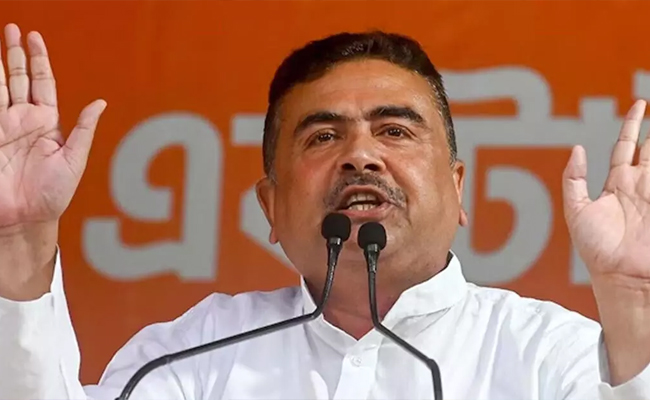
Kolkata (PTI): BJP leader Suvendu Adhikari, who defeated West Bengal Chief Minister Mamata Banerjee in Bhabanipur and secured Nandigram for three times in a row in the recent assembly polls, said on Wednesday that he would vacate one of the two constituencies within 10 days.
Adhikari also asserted that the party's central leadership would decide which constituency he would retain.
"I will vacate one seat within 10 days. The party will decide which one I retain. I will not forget my responsibility towards the people of Bhabanipur and Nandigram," he said.
Adhikari on Monday defeated Banerjee in Bhabanipur by over 15,000 votes, puncturing what was long seen as her safest political refuge and delivering a decisive psychological blow to the TMC, amid a sweeping BJP surge across West Bengal.
Addressing party workers and supporters in Nandigram in Purba Medinipur district, the BJP leader appealed to them not to take out victory processions immediately and instead maintain peace.
"Do not take out victory rallies now. Maintain peace and discipline. Celebrate after May 9, after taking permission," he told party workers.
State BJP president Samik Bhattacharya on Wednesday announced that the oath-taking ceremony of the new government will be held on May 9 at Brigade Parade Ground.
Referring to alleged attacks on BJP workers during the TMC regime, Adhikari said he would not forget the “atrocities" faced by them and assured them of taking appropriate action against perpetrators through legal processes.
"I was part of the 2011 ‘poribartan’ (change), and now I am part of the real change. I offer my gratitude to the people of Nandigram," Adhikari said.
He was referring to the TMC's victory in 2011 when the Mamata Banerjee party dismantled the 34-year Left Front regime in the state.
Adhikari offered prayers at a Hanuman statue in Nandigram and remembered the BJP workers, who had died in political violence.
"We will work in such a way that the BJP government in Bengal stays for 100 years," he said, expressing hope that the BJP’s vote share in the state would rise from the current 46 per cent to 60 per cent in future elections.
The BJP leader also assured residents of Nandigram of improved drinking water supply and better hospital and education infrastructure.