Human Rights Watch raises concerns over India's Olympic bid ahead of IOC's 140th annual session
Says IOC has “Opportunity to press for human rights reforms” ahead of India’s 2036 Olympics bid
Highlights discriminatory laws, policies by Modi govt against religious minorities, Muslims
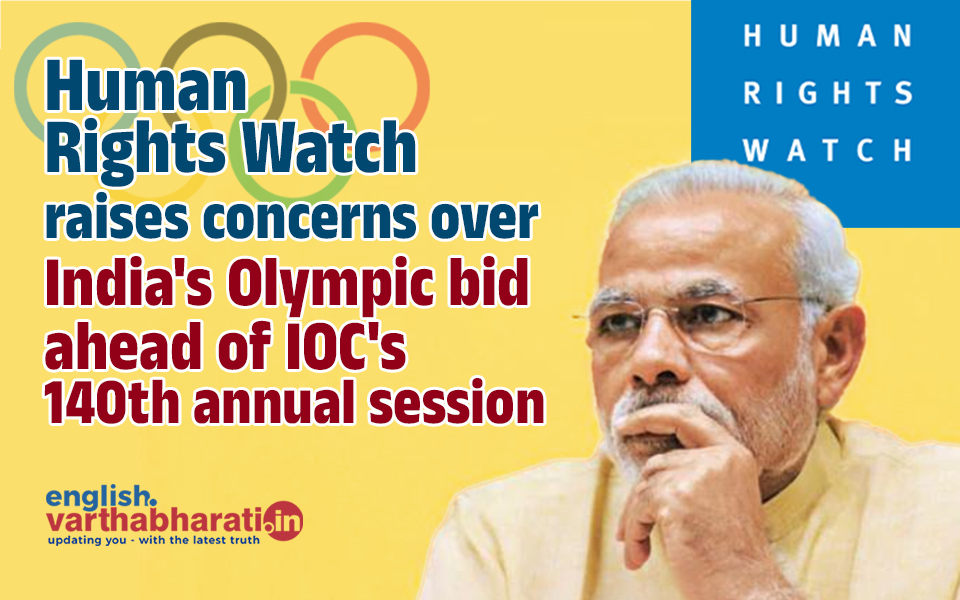
Mumbai: Human Rights Watch, an international human rights organization, has expressed concerns about India's bid to host the 2036 Summer Olympic Games. The statement comes ahead of the 140th annual session of the International Olympic Committee (IOC) scheduled to be held from October 15 to 17 in Mumbai, India.
India, under the leadership of Prime Minister Narendra Modi, is expected to announce its bid to host the Olympics for the first time in history. However, Human Rights Watch highlighted the poor human rights conditions in the country, including attacks on media freedom and the lack of protections for Indian athletes, as potential barriers to hosting the prestigious global event.
The organization raised concerns about discriminatory laws and policies adopted by the Modi government, particularly against religious minorities, including Muslims. The statement emphasized the systematic discrimination against minority groups and the suppression of opposition voices, activists, protesters, and journalists through intimidation, threats, and politically motivated criminal cases.
“With the Modi government’s Olympics bid, the IOC has a key opportunity to press for human rights reforms and justice for affected Indian athletes. If governments want the prestige that goes along with hosting sports’ biggest event, the IOC needs to ensure that all future hosts do human rights due diligence and remedy rights abuses in their country, including stopping the abuse of athletes and the targeting of journalists,” the official HRW statement added.
In May, the Sport & Rights Alliance and the IOC condemned the treatment of female athletes during a protest in Delhi against Wrestling Federation of India president Brij Bhushan Singh, who is also a member of Modi's Bharatiya Janata Party (BJP). The athletes were demanding justice and safety for female athletes who had filed police complaints of sexual abuse against Singh. The incident raised concerns about the safety and protection of athletes in India.
Human Rights Watch highlighted that mega-sporting events have often been used by governments to mask poor human rights records, a practice commonly known as "sportswashing." The organization called on the IOC to ensure that future hosts of the Olympics adhere to human rights standards and address rights abuses in their countries. The IOC has adopted a human rights framework aligned with the United Nations Guiding Principles on Business and Human Rights.
During the upcoming IOC session in Mumbai, the IOC Executive Board is set to propose amendments to the Olympic Charter to reinforce its commitment to eliminating all forms of discrimination within the Olympic Movement. Human Rights Watch sees this as an opportunity for the IOC to advocate for human rights reforms and justice for affected Indian athletes.
The IOC's role, according to Human Rights Watch, is to ensure that host nations conduct thorough human rights due diligence and take necessary measures to rectify any human rights abuses, including the mistreatment of athletes and the targeting of journalists.
Let the Truth be known. If you read VB and like VB, please be a VB Supporter and Help us deliver the Truth to one and all.
National Synodal Assembly 2026 begins in Bengaluru with over 220 delegates
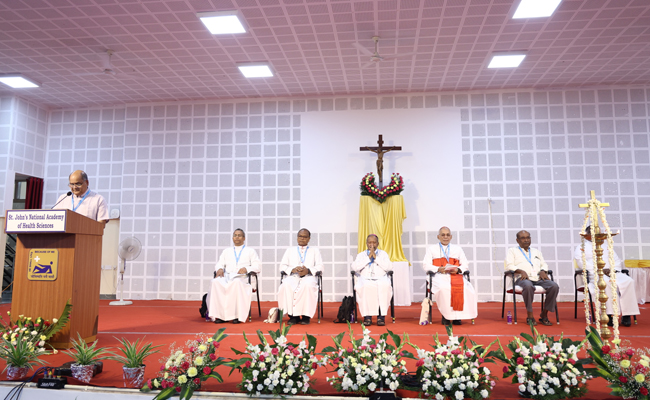
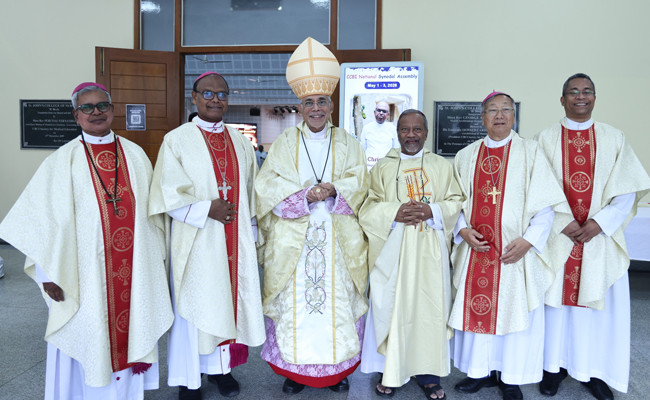
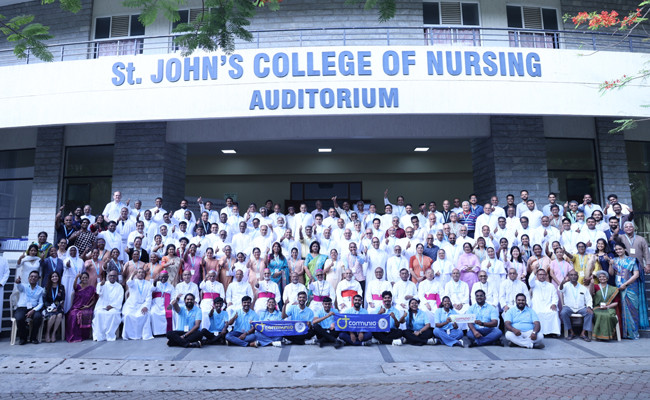
Bengaluru: The Conference of Catholic Bishops of India (CCBI) on May 1 inaugurated its National Synodal Assembly 2026 at St. John’s Medical College, bringing together more than 220 delegates from across the country under the theme Synodal Pilgrims of Hope.
The assembly is part of the global synodal process initiated in 2021 by Pope Francis, which calls for greater participation, dialogue and shared responsibility within the Church. In India, the process has involved consultations at diocesan, regional and national levels.
Participants at the assembly include two Cardinals, 25 Bishops, 65 priests, more than 20 women religious, and over 100 lay faithful, including youth and women leaders.
The gathering began with a Eucharistic celebration led by Filipe Neri Ferrão. In his homily, he described the assembly as a moment of grace and discernment and called on delegates to walk together in prayer, listening and missionary commitment.
He spoke about the importance of the Risen Christ in the mission of the Church and urged the faithful to be witnesses of the Gospel. Referring to the conversion of St Paul, he said every baptised person has a role in spreading the message of Christ. He also highlighted the example of St Joseph the Worker, stressing the dignity of labour and the call to holiness in everyday life.
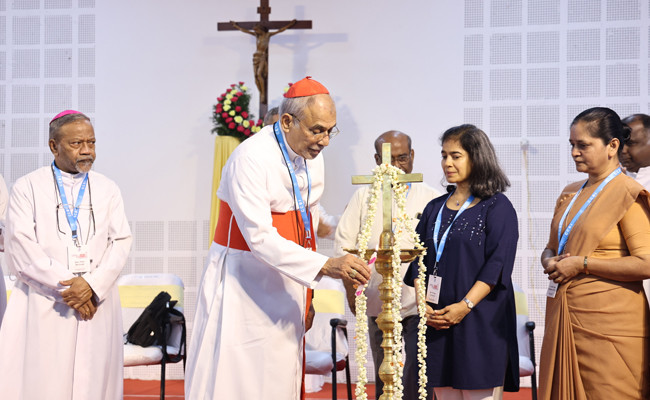
The formal inauguration included the invocation of the Holy Spirit through Veni Creator Spiritus and the lighting of the ceremonial lamp. Deputy Secretary General Fr. Stephen Alathara welcomed the delegates and described the gathering as a spiritual journey.
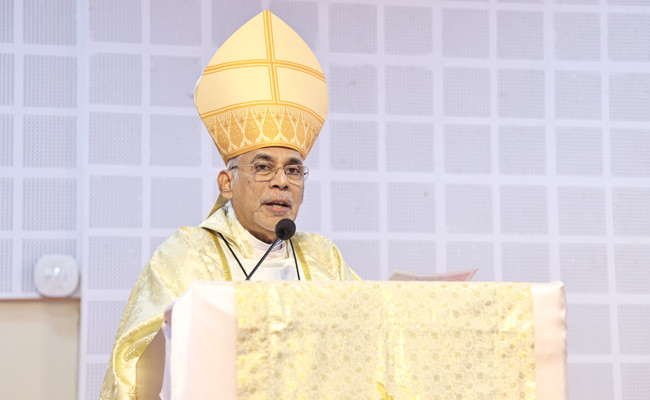
In his presidential address, Cardinal Ferrão referred to the CCBI pastoral plan titled Journeying Towards a Synodal Church: Mission 2033 and called on participants to build on the vision outlined at the 36th Plenary Assembly held in Bhubaneswar in 2025.
Delegates will reflect on four key themes identified from 16 pastoral priorities: interreligious dialogue and peacebuilding, inclusion of the excluded, poverty and integral ecology, and support for children and youth.
The discussions are being conducted through a method of spiritual conversation aimed at encouraging listening, dialogue and collective decision-making. The focus is on translating these discussions into practical actions within the Church.
The assembly also looks ahead to the Jubilee Year 2033, which will mark 2,000 years of the Redemption, and aims to strengthen the Church’s mission in the coming years.
Further consultations are scheduled for September 2026, with the process expected to conclude at the 38th Plenary Assembly of the CCBI in January 2027.
Organisers said the assembly seeks to strengthen unity within the Church and promote participation of all sections, including women and youth, in shaping its future direction.