Hungarian writer Laszlo Krasznahorkai wins Nobel Prize in literature
_vb_78.jpeg)
Stockholm (AP): Hungarian writer Laszlo Krasznahorkai, whose philosophical, bleakly funny novels often unfold in single sentences, won the Nobel Prize in literature Thursday for his “compelling and visionary oeuvre.”
Krasznahorkai follows in the footsteps of literary greats including Ernest Hemingway, Albert Camus and Toni Morrison in winning the prestigious award.
The literature prize has been awarded by the Nobel committee of the Swedish Academy 117 times to a total of 121 winners. Last year's prize was won by South Korean author Han Kang for her body of work that the committee said “confronts historical traumas and exposes the fragility of human life.”
The literature prize is the fourth to be announced this week, following the 2025 Nobels in medicine, physics and chemistry.
The winner of the Nobel Peace Prize will be announced on Friday. US President Donald Trump is considered a long shot despite recently telling United Nations delegates “everyone says that I should get the Nobel Peace Prize.”
The final Nobel, the Nobel Memorial Prize in Economic Sciences, is to be announced on Monday.
Nobel Prize award ceremonies are held on December 10, the anniversary of Alfred Nobel's death in 1896. Nobel was a wealthy Swedish industrialist and the inventor of dynamite who founded the prizes.
Each prize carries an award of 11 million Swedish kronor (nearly USD 1.2 million), and the winners also receive an 18-carat gold medal and a diploma.
Let the Truth be known. If you read VB and like VB, please be a VB Supporter and Help us deliver the Truth to one and all.
BCI urges CJI to take action against Andhra HC judge for sending young lawyer to 24-hour custody
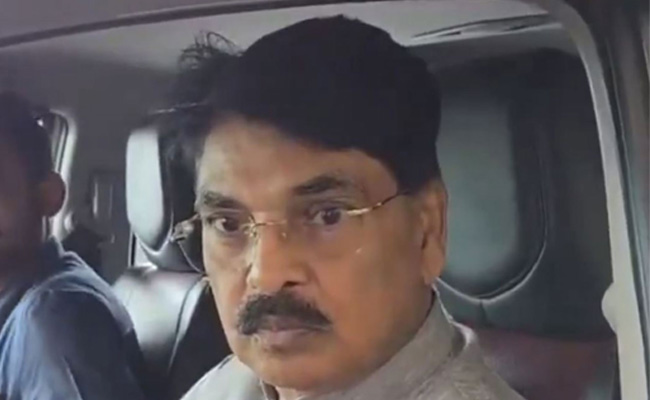
New Delhi (PTI): The Bar Council of India on Wednesday sought the urgent intervention of Chief Justice of India Surya Kant following a "deeply disturbing" incident where a judge of the Andhra Pradesh High Court reportedly sent a young advocate to
24-hour judicial custody over a procedural lapse.
The Bar Council of India (BCI) Chairperson and senior advocate Manan Kumar Mishra, in a formal representation, termed the conduct of Justice Tarlada Rajasekhar Rao "grossly inappropriate" and "damaging to the confidence of the Bar".
“I most respectfully request your Lordship to kindly take immediate institutional cognizance of the matter and call for the video recording of the proceedings, the order passed, and the surrounding circumstances.
“I further request that appropriate administrative action may kindly be considered, including withdrawal of judicial work from the learned Judge pending review, his immediate transfer to some far off High Court, and his nomination for appropriate judicial training/orientation on court management, judicial temperament, Bar-Bench relations, and proportional exercise of contempt/judicial authority,” Mishra wrote.
This representation is made to preserve the “dignity, moral authority and public confidence of the judiciary”, he said, adding, “Judges command the highest respect not by fear, but by fairness, patience, restraint and constitutional humility”.
The communication urged the CJI to intervene at the earliest to ensure that the faith of Bar, particularly young advocates, in the protective and corrective role of the judiciary is restored.
The controversy stems from proceedings on May 5.
According to the BCI, a video circulating online shows Justice Rao rebuking a young advocate who was unable to produce a specific order copy during a hearing.
The letter said that despite the advocate "repeatedly seeking pardon and mercy" and claiming he was in physical pain, the judge remained "unmoved".
The judge allegedly told the lawyer, "now you will learn," and mocked his experience before directing the Registrar and police personnel to take him into custody for 24 hours.
The BCI chairperson said that the judge’s actions lacked proportionality and fairness.
"The dignity of the court is not enhanced when a lawyer is made to beg for grace in open court and is still sent to custody for a procedural lapse," the letter said.
"A young lawyer... is an officer of the Court, still learning, still growing, and entitled to correction without humiliation," it added.
The bar body said that such actions create a "chilling effect" on the legal fraternity, particularly among junior members, and undermine the mutual respect required between the Bench and the Bar.