''I am ahimsavadi,'' says BJP leader accused of threatening Rahul Gandhi
_vb_92.jpeg)
Thrissur (Kerala)(PTI): BJP leader Printu Mahadevan, accused of making a death threat to Congress leader Rahul Gandhi during a TV channel discussion, rejected the allegations on Wednesday, saying he was an 'ahimsavadi' (non-violent person) and had never threatened anyone.
Speaking to reporters here, Mahadevan said he was a teacher and a "non-violent person who had never made provocative statements or issued death threats."
He alleged that his remarks during the television debate on the recent violence in Ladakh were "distorted" by the channel with an "agenda" to defame him and damage his political career.
Mahadevan, who was arrested on Monday night and released on bail after being produced in court, also claimed that the police "hunted" him and intimidated his family by entering his house under the pretext of searching for him.
He said his party had stood by him during this difficult time. "I am speaking out only to clarify my stand and state the facts," he added.
Meanwhile, the opposition Congress-led UDF continued to criticise the ruling CPI(M) for the "delayed action" against the BJP leader, while the Left party hit back, saying the opposition was raising "non-issues" as it had nothing else to say.
At the same time, BJP state president Rajeev Chandrasekhar said the party did not approve of Mahadevan’s remarks and had conveyed the same to him.
"One of our spokespersons said something in anger, in passion, and we told him it was not correct. He has accepted that," Chandrasekhar said.
"Ours is a battle of ideology, of development. We put forward the politics of performance. We do not intend to carry out politics of personal enmity against anyone," he added.
Mahadevan had, during a panel discussion on September 26 about protests in Bangladesh and Nepal, allegedly said that such protests were not possible in India as people here supported Prime Minister Narendra Modi. He reportedly added that if Rahul Gandhi had similar aspirations, "bullets will pierce his chest".
On September 29, Mahadevan appeared before police along with a few party members and was arrested. He was later released on bail.
Let the Truth be known. If you read VB and like VB, please be a VB Supporter and Help us deliver the Truth to one and all.
BJP urges Bengaluru Police Commissioner to cancel event supporting Umar Khalid
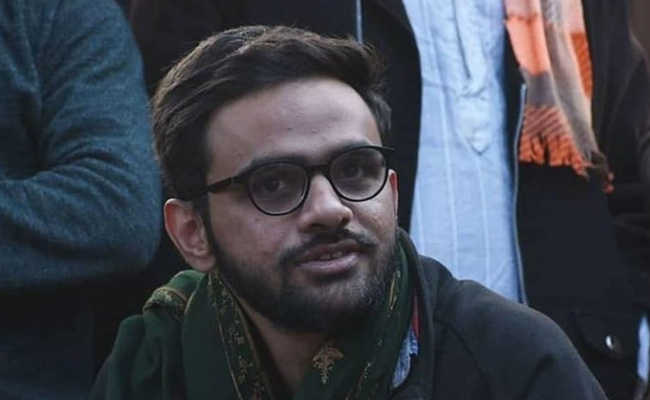
Bengaluru (PTI): Karnataka BJP on Monday petitioned Bengaluru Police Commissioner Seemant Kumar Singh to cancel an event supporting activist Umar Khalid.
A delegation of BJP leaders led by Bengaluru Central MP P C Mohan met the Commissioner and submitted a memorandum in this regard.
According to sources, the editors of the book "Umar Khalid and His World" will read excerpts from the book on April 28 in Bengaluru, followed by a discussion in which some "historians and intellectuals" are likely to participate.
Khalid is in jail in connection with allegations of conspiracy behind the 2020 Delhi riots.
ALSO READ: Karnataka: Woman delivers baby on train after emergency halt in Dakshina Kannada
"In Bengaluru city, an event has been organised under the platform "Umar Khalid Prapancha" to express support for Khalid, who is currently under arrest under anti-terrorism laws," the BJP said in its memorandum.
"Across the country, the Central Government has taken strict action against Naxalites. However, urban Naxal elements are still active and are indirectly supporting anti-national activities," it alleged.
Further stating that Khalid is facing very serious charges, the memorandum said, the fact that courts have denied him bail for the past three years stands as an indication of his alleged criminal activities.
"Glorifying such an individual would amount to encouraging criminal elements. It is shocking that such an event is being held in our city. It is also a matter of serious concern that pro Umar Khalid slogans and wall writings have already appeared across the city, indicating the spread of such networks," it said.
"In the interest of maintaining peace in the city, we request that the permission granted for this event be withdrawn. If the event proceeds and any law and order situation arises, the BJP will not be responsible for it. We urge you to consider our request in the interest of the city and cancel the event," it added.
The Supreme Court on April 20 dismissed activist Khalid's plea seeking a review of a verdict denying him bail, while observing that there are reasonable grounds to believe the allegations levelled against him in connection with a conspiracy behind the 2020 Delhi riots.
There was a prima-facie case against Khalid and Sharjeel Imam (another accused) under the Unlawful Activities (Prevention) Act (UAPA), the top court had earlier said, noting that prosecution material suggests that they were involved in the "planning, mobilisation and strategic direction" of the riots.
The February 2020 riots in northeast Delhi broke out during protests against the Citizenship (Amendment) Act (CAA) and the National Register of Citizens (NRC), leaving 53 people dead and more than 700 injured.