I love Indian media, says Donald Trump Jr
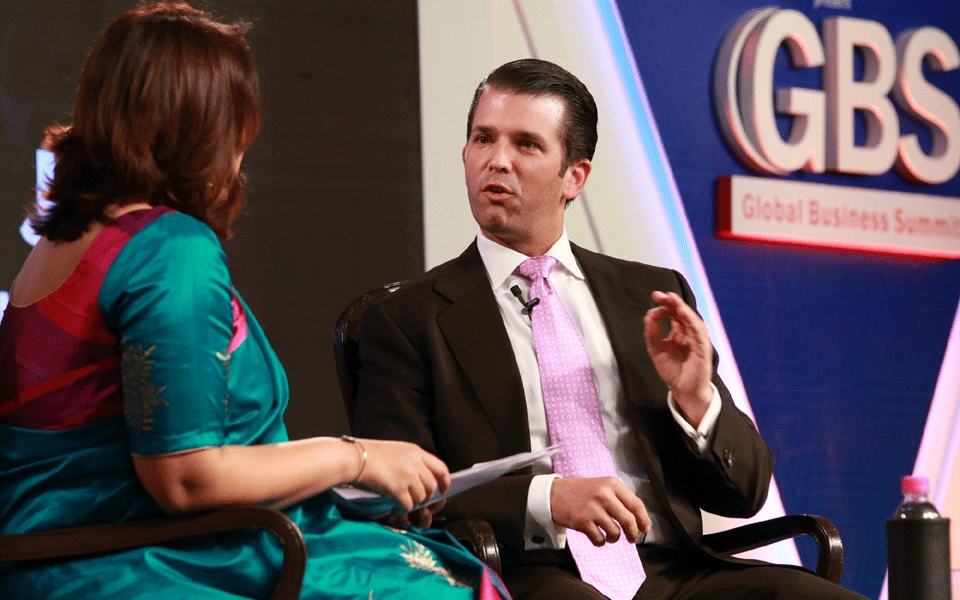
New Delhi: Donald Trump Jr, son of US President Donald Trump, on Friday said he loves the Indian media as it is "mild and nice" compared to the "aggressive and brutal" American media.
Speaking at the Global Business Summit here, Trump Jr said: "I am the first person in the history of India to say I love the Indian media. They are so mild and nice."
He related to an incident when he said that Indians have smiling faces despite the hardships.
"It wasn't me coming here for first time. It was me coming here (India) after 10 years. So everybody understood what I meant. But the 'Washington Post' the next day said -- 'Donald Trump Jr likes poor people because they smile'," he said.
Speaking about the changing business scenario in India as compared to around a decade ago, Trump Jr said he sees a lot of energy and has been able to strike up good deals over the years and was now willing to invest 10 times more.
Taking a dig at some local businessmen's working style, Trump Jr said when he first came to India (for real estate business), he ran into a businessman who claimed to have a "great piece of land" at a prime location but was unwilling to strike a deal.
"So I said, okay let's talk business. He was like 'well it is not exactly my land, it's my cousins' land'... well, it's not my cousin's land it is my friend's uncle's daughter's land'," he said to a laughing audience.
Let the Truth be known. If you read VB and like VB, please be a VB Supporter and Help us deliver the Truth to one and all.
Congress using hijab issue to pacify minority anger, alleges Karnataka LoP R Ashoka
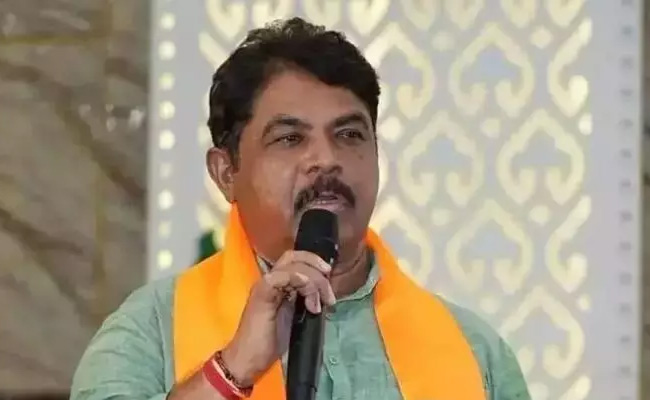
Bengaluru: Leader of Opposition in the Assembly R. Ashoka has accused the Congress government of using the hijab issue to placate what he described as discontent among minority voters after the Davanagere by-election.
In a post on X on Wednesday, Ashoka alleged that the state government, instead of addressing issues such as price rise, corruption, farmers’ distress and law and order, was attempting to retain its minority vote base by reviving the hijab issue.
Referring to the 2022 dress code introduced by the BJP government, which prohibited hijab in schools and colleges, Ashoka said the Karnataka High Court had upheld the policy and emphasised the importance of discipline in educational institutions.
He questioned the Congress government’s move to revisit the issue and asked whether setting aside the court-backed policy to benefit one community could be described as secularism.
Ashoka further alleged that while the government was willing to permit hijab, it continued to prohibit saffron shawls.
He accused the government of dividing students on religious lines rather than treating schools and colleges as spaces of equality.
Drawing a comparison with Mamata Banerjee’s government in West Bengal, Ashoka claimed that excessive appeasement politics had harmed the state and warned that the Congress in Karnataka could face a similar political response.
He said voters in Karnataka would teach the Congress a lesson for what he termed “vote-bank politics” and for compromising constitutional and judicial principles.