I share Trump's vision of prosperity for India, US: PM Modi
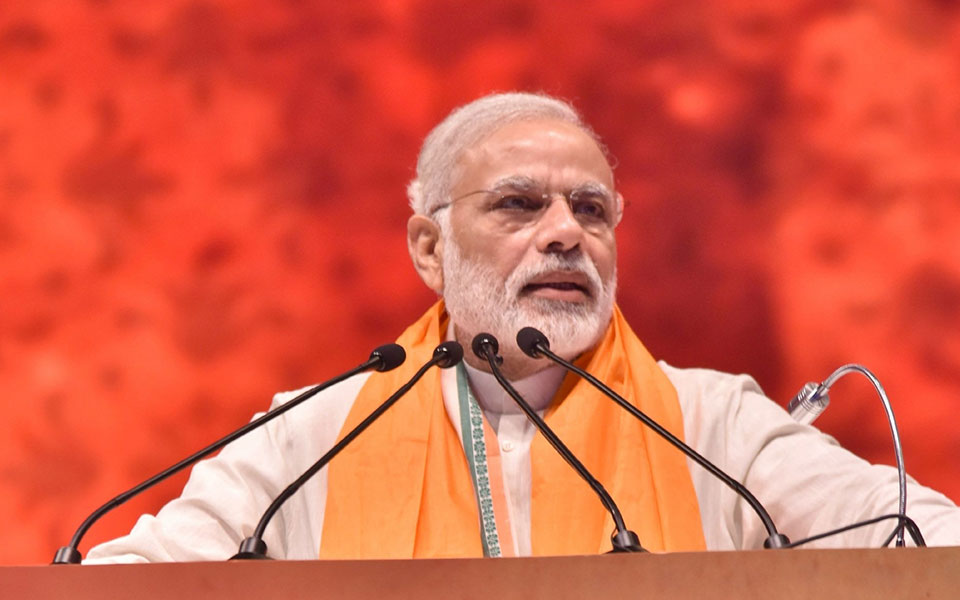
New Delhi, Aug 12 : Amid uncertainties regarding US President Donald Trump's trade and visa policies, Prime Minister Narendra Modi has said that he shares Trump's vision of prosperity for India and the US.
"I share with him the vision of prosperity of our peoples through a strong India-US partnership, based on important convergences, inter alia, in combating terrorism and promoting stability and development in the Indo-Pacific," Modi said.
"I have met President Trump a few times," Modi said in an interview to the Times of India ahead of this year's Independence Day. "We have also been in touch through several conversations."
India and the US, apart from Japan and Australia, are part of a quad that was revived last year to work for peace in the Indo-Pacific, a geostrategically important region.
Modi's comments come ahead of the India-US 2+2 Dialogue next month in New Delhi involving External Affairs Minister Sushma Swaraj and Defence Minister Nirmala Sitharaman and their US counterparts Mike Pompeo and Jim Mattis.
In February, the Trump administration came up with a new visa policy that makes the procedure for issuing H-1B visas tougher.
According to the new policy, the hiring company would have to prove that its H-1B employee at a third-party worksite has specific and non-qualifying speculative assignments in speciality occupation.
In March, US President Donald Trump slapped import tariffs of 25 per cent on steel and 10 per cent on aluminium, unfolding the prospect of an all-out global trade war.
In retaliation, India raised customs duty on 29 products, including on iron and steel products imported from the US.
Stating that India and the US were two important engines of growth in the world, Modi said: "The focus of President Trump and our own priority in India on innovation and entrepreneurship has the potential to take this relationship to new heights."
He stressed that the India-US Strategic Partnership had "deepened in an unprecedented manner in the past few years".
India and the US share a Global Strategic Partnership based on shared democratic values and increasing convergence of interests on bilateral, regional and global issues.
Let the Truth be known. If you read VB and like VB, please be a VB Supporter and Help us deliver the Truth to one and all.
'Red' alert for severe thunderstorms, hailstorms issued in Delhi
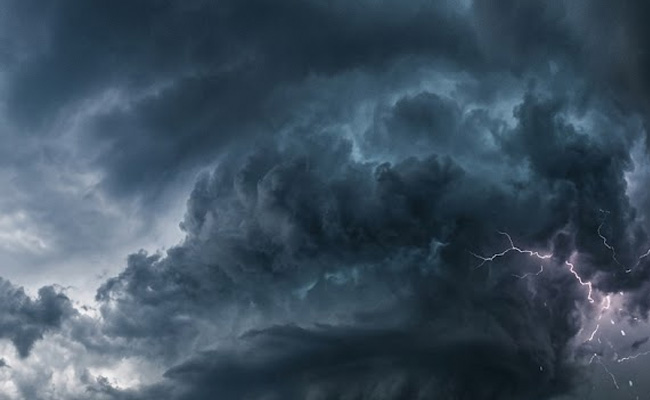
New Delhi (PTI): A "red" alert for severe thunderstorms and hailstorms was issued for Delhi late on Sunday evening, with some parts of the national capital placed under an "orange" alert, as residents were advised to be prepared for potentially-disruptive weather conditions.
A "red" alert stands for "take action", indicating severe weather conditions.
According to the India Meteorological Department (IMD), severe thunderstorms accompanied by lightning, hailstorms, dust storms and moderate rainfall, along with gusty winds reaching speeds of up to 80 kmph, are very likely over the city, with some areas expected to witness moderate thunderstorm activity.
The IMD said a "red" alert has been issued for Outer North Delhi, Northwest Delhi, West Delhi, Southwest Delhi, parts of North Delhi, Central Delhi, Northeast Delhi and Shahdara, while South Delhi, Southeast Delhi and parts of North Delhi remain under an "orange" alert. Similar thunderstorm conditions are also likely at isolated places across various locations in Delhi-NCR.
The weather office warned of likely impacts, including the breaking of large tree branches, uprooting of weak or old trees, lightning strikes at vulnerable locations, such as tall trees and electric poles, and disruption of municipal services.
"Damage to kutcha houses, huts and weak structures, partial collapse of boundary walls, difficult driving conditions and possible road accidents are also likely. Vehicles may also be damaged due to falling branches or debris," it said.
Residents have been advised to move to safe buildings, avoid weak structures and stay away from windows during the storm.
Authorities have cautioned against taking shelter under trees or going near water bodies and advised people to unplug electrical equipment and avoid contact with metallic objects, water taps and pipes. People have also been asked to park vehicles in safe locations and, if caught during the storm while driving, to pull over safely and remain inside the vehicle.
They have further been advised to stay away from electric poles and power lines and remain alert to flying debris, officials said.