IAF demonstrated operational capability along northern border, says IAF chief
Commends air warriors for quick response in Ladakh row
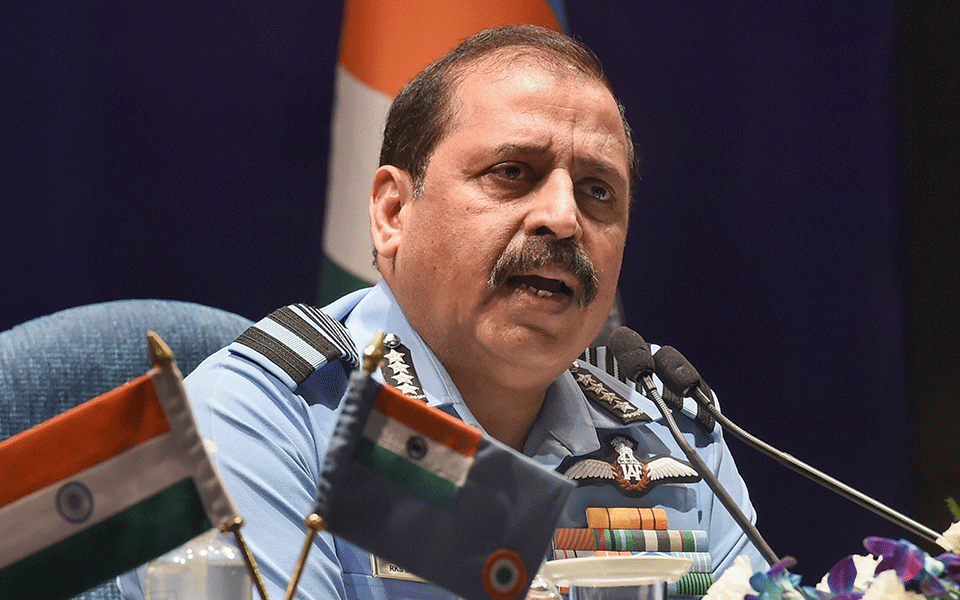
Hindon (Ghaziabad): The Indian Air Force has clearly demonstrated its resolve, operational capability and will to effectively engage with the adversary whenever the need arises, Air Chief Marshal RKS Bhadauria said on Thursday, and commended the air warriors for their prompt response in the recent standoff on the northern frontier in view of the bitter border row with China.
In an address on the occasion of the 88th anniversary of the IAF, Bhadauria also assured the nation that the force will evolve and be ever ready to safeguard India's sovereignty and interests in all circumstances.
Talking about security challenges in eastern Ladakh, the Chief of Air Staff commended the air warriors for their prompt response in the recent standoff, and talked about rapid deployment of combat assets at short notice to handle any eventuality.
"We have clearly demonstrated our resolve, operational capability, and the will to effectively engage the adversary, should the need arise," he said after inspecting the Air Force Day parade at the Hindon air base .
"I would like to commend all warriors for the quick response, in the recent standoff on our northern frontiers, when we deployed our combat assets at short notice to handle any eventuality, and provided proactive support to all the requirements of deployment and sustenance for the Indian Army," Bhadauria said.
The Indian and Chinese troops are engaged in a bitter border row for the past five months in eastern Ladakh and the IAF has made significant deployment in the region.
Defence Minister Rajnath Singh greeted the IAF on its foundation day, and said the government is committed to enhance its combat capability of the force.
"The nation is proud of its men and women in blue and salutes the prowess of the IAF as it stands ready to face challenges and deter adversaries. We remain committed to enhancement of IAF's combat capability through modernisation and indigenisation," he said.
In his address, the Chief of Air Staff also cautioned of the evolving "threat matrix" in the region, and said it mandates a greater need to have a strong air force to fight across domains and the entire spectrum of warfare.
"The evolving threat matrix in our region is becoming complex, ranging from aspirational adversaries with huge investments in military arsenal, to those collusively supported by nonstate actors, apart from growing sub-conventional threats emanating from terrorism and cyber space," he said.
Bhadauria said disruptive technologies and easy access to low cost options like drones are increasingly demanding greater attention to the sub-conventional domain.
The IAF also carried out a spectacular air display at the event, showcasing its vintage aircraft and modern fleet including the recently-inducted Rafale jets.
The IAF chief said notwithstanding the coronavirus pandemic, the force has maintained its capacity to undertake full scale operations as it took proactive measures to counter the spread of COVID-19.
"The tenacity and resolve of our air warriors ensured that the IAF continued to retain its capability and capacity to undertake full scale operations, throughout this period," he said.
Bhadauria also talked about the IAF's culture and ethos of team work and told the air warriors that "it will help you to overcome temptation if any to seek personal glory, while in service or beyond."
He also called creation of the post of Chief of Defence Staff and Department of Military Affair as "landmark step" towards increasing tri-service effectiveness, coordination and overall combat capabilities of the armed forces.
"We are working proactively towards setting up joint command structures.
The formation of air defence command is spearheading the envisaged tri-service commands, and it will further optimise all available air defence resources and be supported with a robust decision making structure, and this is at an advanced stage," he said.
On modernisation of the IAF, he said the vision is to continue to comprehensively scale up the combat capability, and be a force to reckon with across the entire sphere of influence through careful force structuring and acquisition of indigenous equipment.
"The recent induction of state of the art Rafale, Chinook and Apache aircraft, have added significantly to our combat capability over our adversaries on the battlefield," Bhadauria said.
"Our offensive strike capability has been honed further, with upgrades of our aircraft with weapons and sensors, ably supported by a networked decision making matrix," he added.
The Chief of Air Staff also talked about the IAF's full support towards the government's self-reliance initiative, and said the force is rapidly shifting to indigenous equipment and platforms.
He also mentioned induction of a large number of indigenously developed platforms like Light Combat Aircraft Tejas, Netra airborne early warning and control system, Akash surface-to-air missile systems and BrahMos missiles.
The Chief of Air Staff also mentioned the introduction of an electronic maintenance management system in the IAF for all its flying platforms and combat assets.
"This is virtually the world's largest such maintenance monitoring system, across various types of platforms and the numbers," he added.
On future requirements, he highlighted efforts to develop an indigenous combat system with sixth generation technologies, and mentioned plans to develop directed energy weapons, optionally manned combat platforms, swarm drones and hypersonic weapons.
"The space domain is likely to become increasingly important in future years, and is being given the required thrust. I want all air warriors to understand the importance of the decade ahead, and work proactively towards making Indian Air Force the engine of growth of our indegenous aerospace industry," he said.
Let the Truth be known. If you read VB and like VB, please be a VB Supporter and Help us deliver the Truth to one and all.
POCSO Act case filed against Harihara Panchamasali Gurupeetha ex-pontiff for sexually harassing boy
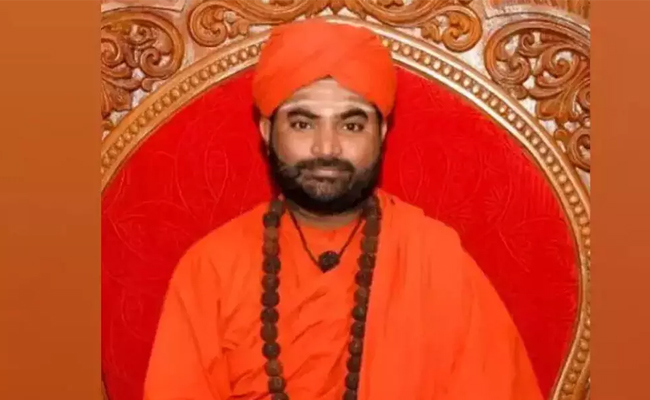
Davanagere: A POCSO Act case has been registered against Vachanananda Swami of Harihara Veerashaiva Lingayat Panchamasali Gurupeetha under charge of sexual harassment of a boy, following his dethroning as pontiff of the Mutt.
The Zero FIR, which had been filed at the Lakshmeshwara Police Station in Gadag district, has been handed over to the Harihara Rural Police Station under whose jurisdiction the place of crime is located. The investigation team from the Harihara Rural Police Station has taken the taken statement of the complainant.
The mother of the boy had complained to the Lakshmeshwara Police that the seer often used to get her son, who studied at the Mutt, to give him a massage. Harihara Police, who are currently probing the matter, will take the boy’s statement, Superintendent of Police Dr. HT Shekhar has said.
The seer was dethroned as pontiff of the Mutt recently, after a complaint of sexual harassment of the boy was filed against him. The dethroning also brought the matter of sexual harassment to public knowledge.
District Children’s Welfare Committee officers visited the Gurupeetha and collected statements of various people, including that of the seer.