IAF to formally induct indigenously-built Light Combat Helicopter on Monday

New Delhi, Oct 2: The Indian Air Force (IAF) will induct on Monday the first batch of indigenously-developed Light Combat Helicopter (LCH), in a boost to its combat prowess as the multi-role platform is capable of firing a range of missiles and other weapons.
The LCH, developed by state-run aerospace major Hindustan Aeronautics Ltd (HAL), has been primarily designed for deployment in high-altitude regions.
It will be inducted into the IAF at a ceremony in Jodhpur in the presence of Defence Minister Rajnath Singh and Chief of Air Staff Air Chief Marshal VR Chaudhari, officials said on Sunday.
In a Twitter post, the defence minister said the induction of the new helicopters will be a "big boost" to the IAF's "combat prowess".
The 5.8-tonne twin-engine helicopter has already completed various weapons firing tests, they said.
In March, Prime Minister Narendra Modi-led Cabinet Committee on Security (CCS) approved the procurement of 15 indigenously developed Limited Series Production (LSP) LCH at a cost of Rs 3,887 crore.
The defence ministry had said 10 helicopters would be for the IAF and five will be for the Indian Army.
The LCH has similarities with Advanced Light Helicopter Dhruv. It has a number of stealth features, armoured-protection systems, night attack capability and crash-worthy landing gear for better survivability, officials said.
"I would be in Jodhpur, Rajasthan tomorrow, 3rd October, to attend the Induction ceremony of the first indigenously developed Light Combat Helicopters (LCH). The induction of these helicopters will be a big boost to the IAF's combat prowess. Looking forward to it," Singh tweeted.
The LCH is equipped with requisite agility, manoeuvrability, extended range, high altitude performance and all-weather combat capability to perform a range of roles including combat search and rescue (CSAR), destruction of enemy air defence (DEAD) and counter-insurgency (CI) operations.
The helicopter can also be deployed in high-altitude bunker-busting operations, counter-insurgency operations in the jungles and urban environments as well as for supporting ground forces.
The helicopter can also be used against slow-moving aircraft and remotely piloted aircraft (RPAs) of adversaries.
Officials said it would be a potent platform to meet the operational requirements of the IAF and the Indian Army.
They said state-of-the-art technologies and systems compatible with stealth features such as reduced visual, aural, radar and IR signatures and crashworthiness features for better survivability have been integrated into the LCH for deployment in combat roles.
Several key aviation technologies like a glass cockpit and composite airframe structure have been indigenised, they said.
The future series-production version will consist of further modern and indigenous systems, they said.
Four LCH helicopters have already been accepted by the IAF. The officials said IAF plans to procure more LCH in the near future.
"We are already working with DRDO and HAL to integrate new weapons on the helicopter," said one of the officials.
The helicopter has been tested under stringent operating conditions including at sea level, in desert regions and in Siachen. In February 2020, it was declared ready for production.
The Army has a plan to acquire 95 LCH largely for a combat role in the mountains.
I would be in Jodhpur, Rajasthan tomorrow, 3rd October, to attend the Induction ceremony of the first indigenously developed Light Comat Helicopters (LCH). The induction of these helicopters will be a big boost to the IAF’s combat prowess. Looking forward to it. pic.twitter.com/L3nTfkJx5A
— Rajnath Singh (@rajnathsingh) October 2, 2022
Let the Truth be known. If you read VB and like VB, please be a VB Supporter and Help us deliver the Truth to one and all.
Sujit Nair raises concerns over speculation of DMK-AIADMK understanding to block TVK
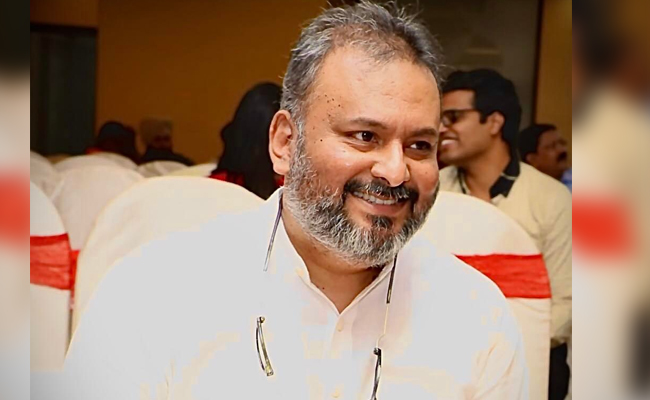
Chennai: Journalist and political commentator Sujit Nair has expressed concern over speculation that the Dravida Munnetra Kazhagam and the All India Anna Dravida Munnetra Kazhagam could explore a post-poll understanding to prevent Vijay-led Tamilaga Vettri Kazhagam from forming the government in Tamil Nadu.
In a social media post, Sujit Nair said the election verdict in Tamil Nadu reflected a clear public demand for political change and argued that the mandate should be respected irrespective of political preferences.
Referring to reports and political discussions surrounding a possible understanding between the DMK and AIADMK, he said he hoped such developments remained only speculative conversations and did not turn into reality.
Nair stated that if such an alliance were to take shape, it would raise serious questions about ideological politics in the country. He said TVK had emerged through a democratic electoral process and that the legitimacy to govern in a parliamentary democracy comes from the people’s verdict.
According to him, attempts to prevent an electoral winner from forming the government through unexpected political arrangements may be constitutionally valid, but many people could view them as politically opportunistic.
He further said that such a move could particularly affect the political image of the DMK, which has historically projected itself around ideology, social justice and opposition politics. Nair said that in ideological terms, the DMK appeared closer to TVK than to the AIADMK, and joining hands with its long-time political rival only to remain in power could weaken its broader political narrative.
He added that the same questions would apply to the AIADMK as well, as the party had spent decades positioning itself against the DMK and such an arrangement could create discomfort among its cadre and supporters.
Drawing a comparison with Maharashtra politics in 2019, Nair said he had expressed similar views when the Shiv Sena formed an alliance with the Indian National Congress and the Nationalist Congress Party after the Assembly elections.
He said post-poll alliances between long-standing political rivals often create a public perception that ideology and electoral mandates become secondary when political power equations come into play.
Nair also said such developments increase public cynicism towards politics and reinforce the belief among voters that ideology is often sidelined after elections.
He maintained that the Tamil Nadu verdict was emphatic and said respecting both the spirit and substance of the mandate was important for the credibility of democratic politics.