I&B minister says NYT 'spreading lies' about India
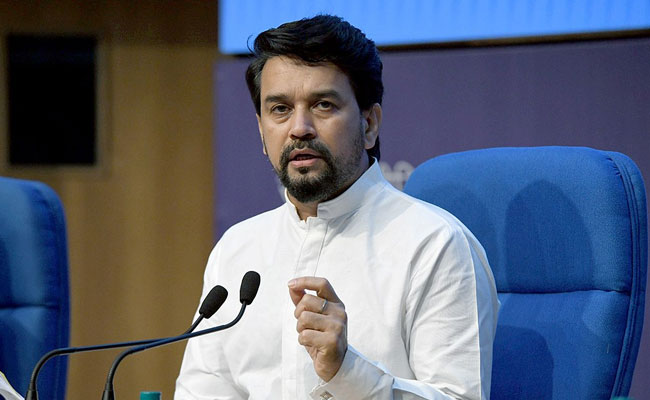
New Delhi (PTI): Information and Broadcasting Minister Anurag Thakur on Friday accused The New York Times of "spreading lies" about India, describing an opinion piece published in it on the freedom of press in Kashmir as "mischievous and fictitious".
"New York Times had long back dropped all pretensions of neutrality while publishing anything about India. NYT's so-called opinion piece on freedom of press in Kashmir is mischievous and fictitious, published with a sole motive to spread a propaganda about India and its democratic institutions and values," Thakur said on Twitter.
"This is in continuation with what NYT and a few other link-minded foreign media have been spreading lies about India and our democratically elected Prime Minister Shri Narendra Modiji. Such lies can't last long," the minister said.
The strong rebuttal by Thakur came after the US-based newspaper published an opinion piece on alleged curbs on information flow in Kashmir.
"Some foreign media nourishing a grudge against India and our Prime Minister Shri Narendra Modi have long been systematically trying to peddle lies about our democracy and pluralistic society," Thakur said.
He said freedom of press in India is as sacrosanct as other fundamental rights.
"Democracy in India and We the people are very mature and we don't need to learn grammar of democracy from such agenda driven media," he said.
Thakur said the "blatant lies" spread by NYT about press freedom in Kashmir is condemnable.
"Indians will not allow such mindsets to run their decisive agenda on India soil," the minister said.
Let the Truth be known. If you read VB and like VB, please be a VB Supporter and Help us deliver the Truth to one and all.
No unannounced load shedding in Kerala, outages due to overload, says Minister
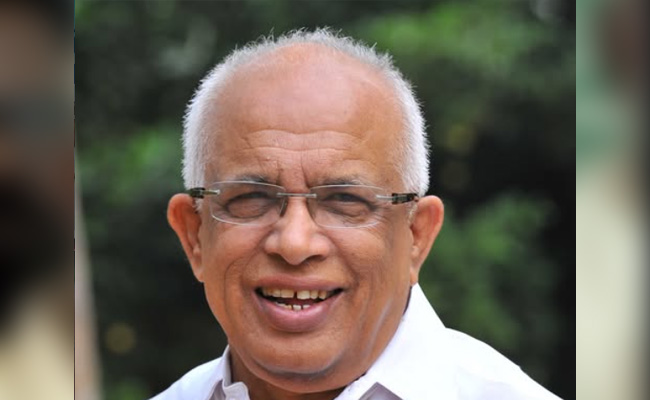
Palakkad (PTI): Kerala Electricity Minister K Krishnankutty on Saturday said there was no unannounced load shedding in the state, attributing recent power interruptions to temporary overload caused by high consumption.
Clarifying concerns raised from various parts of the state, the minister said the disruptions are not deliberate but occur when demand peaks, particularly between 10 pm and 11 pm.
"It is not being done intentionally. Power consumption has risen sharply, and when there is excessive and indiscriminate usage, the system experiences overload, leading to natural supply interruptions," he told reporters here.
His remarks come amid complaints that several areas have been witnessing frequent power cuts, often lasting around 15 minutes and occurring multiple times during the night.
Krishnankutty said the state's power demand has crossed 6,195 MW, putting pressure on the supply system. He added that around 70 per cent of Kerala's electricity is procured from outside, and existing power banking arrangements have been exhausted.
"We have approached the Regulatory Commission seeking permission to purchase more power. However, this will come at a higher cost," he said.
The minister said the government is trying to avoid increasing electricity tariffs and urged consumers to exercise restraint in usage to help manage the situation.
Responding to opposition criticism over the ruling LDF's earlier claims of a decade without power cuts, he said the current situation is not unique to Kerala.
A power crisis is emerging across the country, he said, and sarcastically asked the Opposition to take note of the role of natural factors in this.
Krishnankutty expressed confidence that the situation would improve within two days, while cautioning that long-term energy security would depend on enhancing in-state power generation.
He also warned that future generations could face serious challenges if adequate electricity production capacity is not developed within Kerala.