ICMR prepares India's first national rare blood donor registry
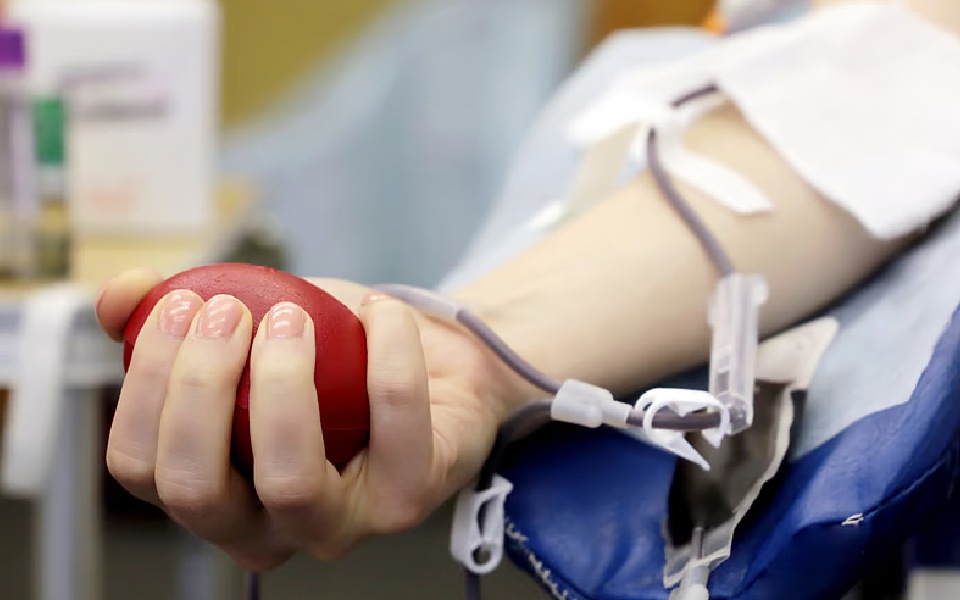
New Delhi, Jun 21 (PTI): The National Institute of Immunohaematology in Mumbai under the India Council of Medical Research has for the first time created a national 'rare blood donor registry' for patients with rare and uncommon blood types who need frequent transfusion especially in conditions such as thalassemia and sickle cell disease.
The ICMR-NIIH is now in talks with the Director General of Health Services (DGHS) so that the rare donor registry portal can be integrated with e-Raktakosh, a platform which currently provides information about blood availability, Dr Manisha Madkaikar, Director of ICMR-Centre for Research Management and Control of Haemoglobinopathies (CRHCM) in Nagpur said.
The integration will help people with rare blood groups easily trace blood banks and procure blood. It will also assist the blood banks manage their stock and donors through a centralised system.
India, with a population of more than 142 crore, has over 4,000 licensed blood banks, according to the Central Drug Standard Control Organisation (CDSCO).
India relies heavily on transfusions due to a higher prevalence of blood diseases and complications during pregnancy, Dr Madkaikar said.
"Thalassemia itself contributes to 1 to 1.5 lakh patients who require recurrent transfusions," she said.
Additionally, with more than 1,200 road accidents occurring every day in India, and with every year 60 million surgeries, 240 million major operations, 331 million cancer-related procedures, and 10 million pregnancy complications, a serious call for blood transfusion is recognised, she said.
In majority of blood banks in India, only ABO and RhD are antigens matched prior to cross-matching for issuing of red blood cell components. However, the International Society of Blood Transfusion (ISBT) has recognised more than 360 antigens in 47 blood group systems. Blood banks do not perform testing of these minor blood group antigens routinely, explained Dr Madkaikar.
"As a result, a mismatch of minor antigens between donor and patient blood group (BG) profiles can lead to red cell alloimmunization (1-3 per cent in the general population, 8-18 per cent in thalassaemic patients). About 25 per cent of all immunized patients have been reported to receive unsatisfactory transfusion support due to presence of multiple antibodies or antibodies to high frequency antigens (HFA)," she said.
Rare blood groups are those which lack HFA (1:1000 or less), or are negative for a combination of common antigens, or have a null phenotype.
"Meeting a demand for rare blood supply is challenging and time consuming for such patients. The need of a patient for rare blood can be the start of a series of events that may extend beyond the local blood centre and become a national or even an international search," Dr Madkaikar said.
To overcome this challenge, an inventory of extensively typed blood donors and rare blood type donors is required, she said.
For this, internationally 27 countries have operational national rare donor registry programmes. India, however, is not a contributor country, she said.
In 2019, however, ICMR-NIIH was granted Centre of Excellence project under the aegis of ICMR, where an initiative was taken to screen 4,000 'O' group regular blood donors for all clinically important antigens using high throughput molecular assays, from four different regions of India in collaboration with the big blood banks from KEM Hospital Mumbai, PGIMER Chandigarh, MCH Kolkatta and JIPMER Puducherry.
"More than 600 donors negative for combination of antigens were identified along with 250 very rare blood group donors. The registry also includes 170 Bombay blood group donors, which is the commonly required rare blood type in India (approx 120-150 units/year). To access this inventory (ICMR-Rare Donor Registry of India (RDRI)), a web-based portal has been developed for systematic requisition and provision of blood to patients on time," Dr Madkaikar said.
"There is a plan to integrate this rare donor registry with e-Raktakosh of DGHS so that all the blood banks can contribute their rare donors and help in expansion of the registry. Last month we held a meeting with the DGHS," she said.
Let the Truth be known. If you read VB and like VB, please be a VB Supporter and Help us deliver the Truth to one and all.
4 workers die after being buried under coal slurry in Jharkhand's Dhanbad
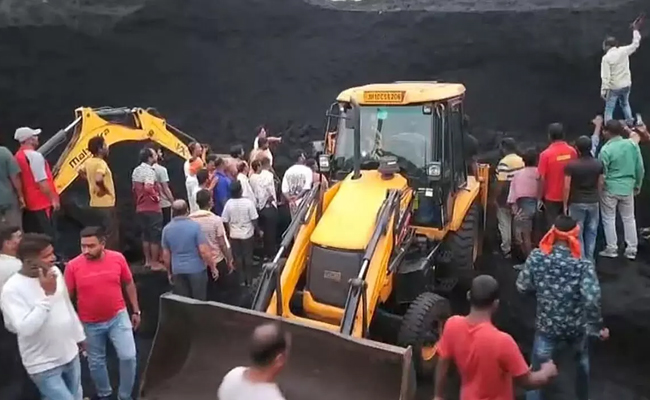
Dhanbad (Jharkhand) (PTI): At least four workers died after being buried under coal slurry in Jharkhand's Dhanbad district on Saturday, a police official said.
The incident took place at Moonidih coal washery in the command area of Bharat Coking Coal Limited (BCCL).
"Bodies of all four workers were dug out of debris during a rescue operation," Putki police station in-charge Waqar Hussain told PTI.
The incident took place when coal slurry was being loaded into trucks by workers, during which a large chunk of slurry fell and trapped several workers underneath, officials said.
The deceased have been identified as Manik Bauri, Dinesh Bauri, Deepak Bauri, and Hemlal Gope.
Meanwhile, the family members of the deceased and local villagers placed the bodies in front of the washery gate and began a protest.
They demanded compensation, jobs for dependents and action against those responsible for the incident.
Police and administration officials are trying to pacify the protesters, an official said.