If Pak attacks India, should Delhi buy its own weapons: CM Kejriwal on vaccine procurement
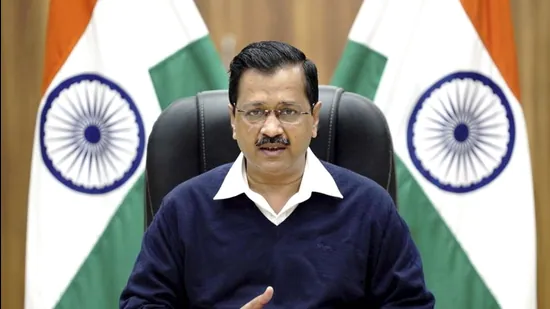
New Delhi, May 26: Citing "massive" vaccine shortage in the country, Delhi Chief Minister Arvind Kejriwal on Wednesday said India will lose the COVID battle if the Centre and states fail to combat the fatal virus together.
Kejriwal appealed to the Centre and states to join hands as Team India to procure vaccines while he "assured" the prime minister that all chief ministers were ready to take any responsibility given to them.
"Why is the country not buying vaccines? India is battling the COVID-19 pandemic, and in such a situation, state governments cannot be asked to look out for themselves. If tomorrow, Pakistan declares war on India, should UP buy its own tanks and Delhi its own weapons? Kejriwal said in an online briefing.
"In past many months, several big mistakes were made. At a time when other countries were vaccinating their citizen, we were exporting vaccines. Vaccination is already delayed by six months in the country," he said.
Claiming India developed the first vaccine against Covid, Kejriwal expressed disappointment that the urgency towards vaccination was still missing.
India cannot lose this battle. If the central government loses, the BJP will not lose, India will lose. If the Delhi government loses, the Aam Aadmi Party will not lose, India will. If the Maharashtra government loses, the Shiv Sena would not lose, India will," he said.
This is the time to work harmoniously and not engage in competition with state governments. This is the time when the governments of 36 states and Union Territories, along with the central government should work together as Team India, he stated.
"I would like to assure the prime minister that all the CMs are with you and are ready to take any responsibility, but the Centre should also fulfill its responsibilities. The states cannot fulfill the responsibilities of the Centre," Kejriwal stated.
The central government has assigned the responsibility of buying vaccines to the states but not a single state has been successful in procuring the doses, Kejriwal said citing his interaction with other chief ministers.
"The Centre cannot abdicate its responsibilities and leave it to the state governments. It is responsible for procuring the vaccines and supplying them to the states," he said.
Kejriwal claimed the country lacked a plan for vaccine distribution and mass-scale vaccination, saying many other countries in the world have successfully accomplished it and brought Covid under control.
Citing vaccine shortage in Delhi, Kejriwal said the doses for 18-44 years age group have finished and Covaxin stock for those aged 45 years and above has also run out.
"This is not just the case with Delhi but across the country. In a pandemic situation, we should ideally be opening new centres every day, but that's not happening. We're facing a massive shortage of vaccines in the country," he said.
If the people in India had been vaccinated at the right time, then possibly the effect of the second wave could have been reduced and many lives could have been saved, he said.
The second wave has proved to be extremely deadly for the country. Barely any family has remained untouched by COVID," he said.
Despite all-out efforts, the states have so far failed to get even an extra dose of vaccine from any company while many of them issued global tenders but failed, claimed the chief minister.
Kejriwal said foreign vaccine manufacturers have made it clear that they will deal with the Centre and not entertain the demands from individual states.
Let the Truth be known. If you read VB and like VB, please be a VB Supporter and Help us deliver the Truth to one and all.
Sujit Nair raises concerns over speculation of DMK-AIADMK understanding to block TVK
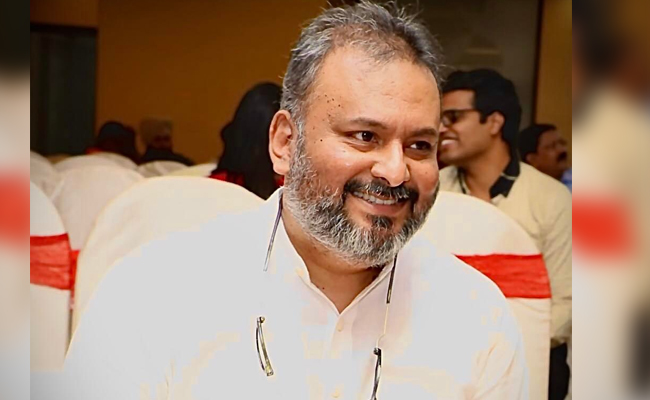
Chennai: Journalist and political commentator Sujit Nair has expressed concern over speculation that the Dravida Munnetra Kazhagam and the All India Anna Dravida Munnetra Kazhagam could explore a post-poll understanding to prevent Vijay-led Tamilaga Vettri Kazhagam from forming the government in Tamil Nadu.
In a social media post, Sujit Nair said the election verdict in Tamil Nadu reflected a clear public demand for political change and argued that the mandate should be respected irrespective of political preferences.
Referring to reports and political discussions surrounding a possible understanding between the DMK and AIADMK, he said he hoped such developments remained only speculative conversations and did not turn into reality.
Nair stated that if such an alliance were to take shape, it would raise serious questions about ideological politics in the country. He said TVK had emerged through a democratic electoral process and that the legitimacy to govern in a parliamentary democracy comes from the people’s verdict.
According to him, attempts to prevent an electoral winner from forming the government through unexpected political arrangements may be constitutionally valid, but many people could view them as politically opportunistic.
He further said that such a move could particularly affect the political image of the DMK, which has historically projected itself around ideology, social justice and opposition politics. Nair said that in ideological terms, the DMK appeared closer to TVK than to the AIADMK, and joining hands with its long-time political rival only to remain in power could weaken its broader political narrative.
He added that the same questions would apply to the AIADMK as well, as the party had spent decades positioning itself against the DMK and such an arrangement could create discomfort among its cadre and supporters.
Drawing a comparison with Maharashtra politics in 2019, Nair said he had expressed similar views when the Shiv Sena formed an alliance with the Indian National Congress and the Nationalist Congress Party after the Assembly elections.
He said post-poll alliances between long-standing political rivals often create a public perception that ideology and electoral mandates become secondary when political power equations come into play.
Nair also said such developments increase public cynicism towards politics and reinforce the belief among voters that ideology is often sidelined after elections.
He maintained that the Tamil Nadu verdict was emphatic and said respecting both the spirit and substance of the mandate was important for the credibility of democratic politics.