If Ram was king today, he would take care of people of all faiths, not just Hindus: Justice Katju
Former SC judge slams "bigoted people" who compel minorities to say 'Jai Shri Ram'
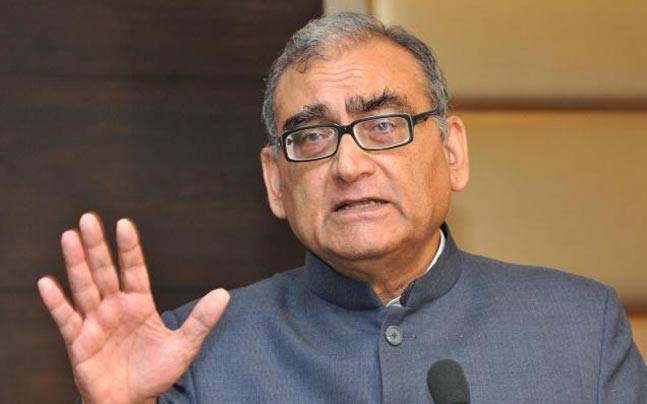
New Delhi: Former Judge of the Supreme Court of India, Justice Markandey Katju in an article published on Indicanews.com has slammed the fringe right-wing groups and people who compel minorities to say ‘Jai Shri Ram’ in India.
In the article titled “Lord Ram treated all citizens as his children” which was published on the website on Wednesday, Justice Katju has termed people “bigoted” who try to compel persons of the minorities to say Jai Shri Ram, a Hindu war cry.
“Some bigoted people try to forcibly compel persons of the minority community in India to say ‘Jai Shri Ram.' But do such people really know about Ram?” Justice Katju has questioned in the article.
“If Ram had been the king of India today, he would have taken care of not only Hindus, but also Muslims, Sikhs, Christians, and others, and he would have severely punished those who oppressed or committed atrocities on minorities.” Justice Katju’s article read.
“Recently, some bigoted people have forced some members of the minority community to say ‘Jai Shri Ram’, and often beaten those who do not. These people have defamed Ram, who would never have approved of their actions, and would instead have punished them.” He further added.
“The misfortune is that most of these votaries of Lord Ram have not even read the original Ramayan of Valmiki, and they know little of his great qualities.”
ALSO READ: UP CM Adityanath meets RSS chief Bhagwat; population issue 'discussed', say sources
He has also recounted a part of Valmiki’s Ramayan when the King of Ayodhya Dashrath intended to hand over his throne to his eldest son Ram when he himself became old. “Before doing so, he invited Ayodhya’s citizens to weigh in on Ram being fit to be their next king.” It added.
“The citizens replied: “Oh king! We shall tell you the various virtues of your wise son, listen to them. His qualities are excellent. He is liked by all. He gives happiness to all.”
“Thus, far from being an oppressor, Ram was like a father to the people. A good father takes care of all his children. He is not selective. He does not take care of only some while oppressing others.” The article further added along with several other qualities of Ram the citizens counted before King Dashrath.
The original article can be read by clicking here.
Let the Truth be known. If you read VB and like VB, please be a VB Supporter and Help us deliver the Truth to one and all.
Youngsters should be made aware of UP's condition before 2017: Adityanath
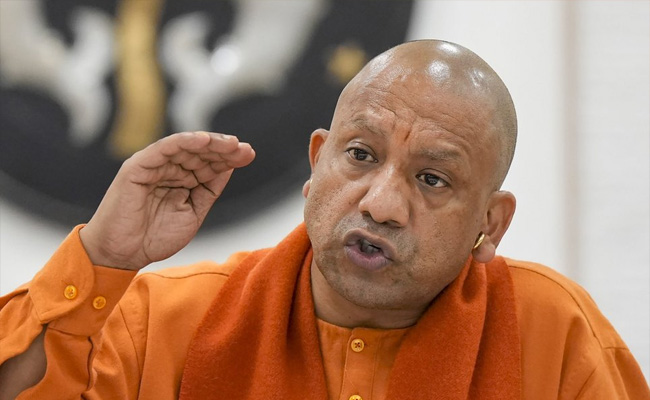
Gorakhpur (UP) (PTI): Uttar Pradesh Chief Minister Yogi Adityanath on Friday urged intellectuals and opinion makers to educate the younger generation about the condition of the state before 2017 and the transformation witnessed in recent years.
Addressing the "Prabuddh Samvad" programme organised by the BJP's Rapti Nagar Mandal at a marriage hall in Gorakhpur, Adityanath said youngsters must be made aware of the "era of riots, curfews, lawlessness and appeasement politics", so that such a situation does not return.
He said many youngsters today were too young to understand the condition of Uttar Pradesh 10 years ago. "If we do not tell the present generation what the state faced earlier, they will forget the consequences of misgovernance and appeasement politics," he said.
The chief minister alleged that before 2017, the state suffered from "goondaism, corruption, anarchy and exploitation by regional parties". He claimed that traders were forced to pay the "goonda tax", women felt unsafe and employment opportunities were limited, forcing many to migrate.
Highlighting the changes under the present government, Adityanath said Uttar Pradesh now offers development, security and employment opportunities.
Referring to Gorakhpur, he said the fertiliser plant has resumed operations, the All India Institute of Medical Sciences (AIIMS) is functioning smoothly and the Baba Raghav Das (BRD) Medical College has improved healthcare services.
The chief minister added that industrial projects worth Rs 15,000 crore have generated jobs for nearly 50,000 youngsters in eastern Uttar Pradesh.
Praising Prime Minister Narendra Modi, Adityanath said India has emerged as a global inspiration under his leadership.
Referring to global tensions and rising fuel prices, he appealed to people to conserve fuel and adopt alternatives, such as solar energy, public transport, electric vehicles and carpooling.
Calling intellectuals the "opinion makers of the society", he said teachers, doctors, lawyers and entrepreneurs have a responsibility to guide people in the right direction. He also urged citizens to remain balanced during both favourable and challenging times.
Local MP Ravi Kishan and Bharatiya Janata Party (BJP) MLC Dharmendra Singh also addressed the programme. Mayor Manglesh Srivastava and several BJP leaders, professionals and social workers were present.