If SP ties up with small parties, BJP won't get one seat in eastern UP: Om Prakash Rajbhar
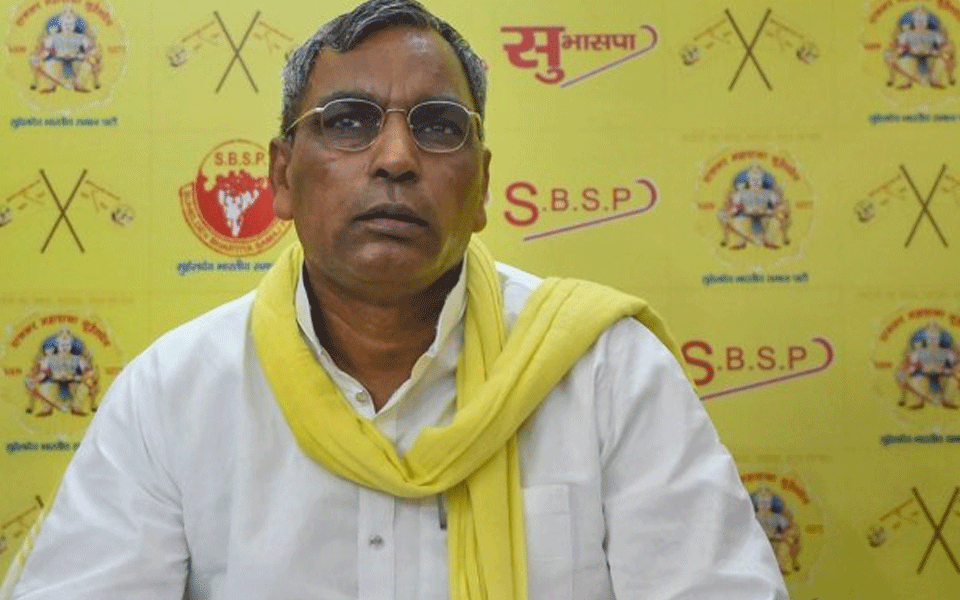
Lucknow(PTI): Suheldev Bharatiya Samaj Party (SBSP) chief Om Prakash Rajbhar on Sunday claimed that if the Samajwadi Party ties up with small parties, then the BJP will not get even one seat in eastern Uttar Pradesh in next year's assembly elections.
Speaking to PTI, Rajbhar said, "The public is angry with the BJP. If the Samajwadi Party comes forward, and ties up with smaller parties and regional parties, then the election results can change."
"If the SP ties up with the SBSP, then the BJP will not get even a single seat in Mau, Ballia, Ghazipur, Azamgarh, Jaunpur, Ambedkar Nagar and other districts. There will be fight (with the BJP) on only two seats in Varanasi," the former UP minister added.
The SBSP chief claimed that of the total 403 seats in the assembly, there are 150 seats in eastern UP.
When asked as to which party in the state can defeat the BJP, he said, "People of the state feel that it is only the SP that can challenge the BJP in UP. The BSP too has started making moves, but the craze of the BSP is not as intense as that of the SP".
On being asked whether the SBSP has been unable to take forward the agreements with other parties since its formation in 2002, Rajbhar said, "When there is a clash of vested interests, people tend to go away. The smaller parties face financial hardships, and it is because of this reason that the bigger parties lure them. Coalitions have been breaking because of this."
Rajbhar had on Wednesday said he will not enter into an alliance with the BJP if the saffron party decides to contest the assembly polls under CM Yogi Adityanath's leadership.
Earlier on Tuesday, the SBSP chief had met BJP state president Swatantra Dev Singh fuelling speculations that he may again join hands with the saffron party.
The SBSP leader, who leads the Bhagidari Sankalp Morcha as a political front of small parties, had earlier said his outfit could again ally with the BJP if it picks a backward caste leader as its chief minister candidate for next year's elections.
The party had contested the 2017 assembly polls in alliance with the BJP but parted ways before the 2019 Lok Sabha elections.
The Rajbhar-led party won four seats in the previous assembly polls. Rajbhar, who was cabinet minister, resigned before the Lok Sabha polls.
Let the Truth be known. If you read VB and like VB, please be a VB Supporter and Help us deliver the Truth to one and all.
Trump says EU has until July 4 to approve last year's trade deal or it will face higher tariffs
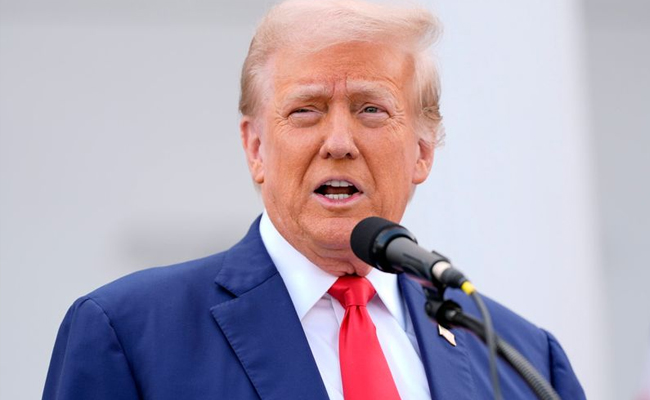
Washington (AP): President Donald Trump has said in a social media post that goods from the European Union would face higher tariff rates if the 27-member bloc fails to approve last year's trade framework by July 4.
The announcement on Thursday appeared to be a deadline extension after the president said last Friday that EU autos would face a higher 25 per cent tariff starting this week. Trump made the updated announcement after what he described as a "great call" with European Commission President Ursula von der Leyen.
Still, the US president was displeased that the European Parliament had yet to finalize the trade arrangement reached last year, which was further complicated in February by the US Supreme Court ruling that Trump lacked the legal authority to declare an economic emergency to impose the initial tariffs used to pressure the EU into talks.
"A promise was made that the EU would deliver their side of the Deal and, as per Agreement, cut their Tariffs to ZERO!" Trump posted. "I agreed to give her until our Country's 250th Birthday or, unfortunately, their Tariffs would immediately jump to much higher levels."
It was unclear from the post whether Trump was implying that the tariff rates would jump on all EU goods or the increase would only apply to autos.
His latest statement indicates he might be backing away from his earlier threat on EU autos by giving the European Parliament several more weeks to approve the agreement.
Under the original terms of the framework, the US would charge a 15 per cent tax on most goods imported from the EU.
But since the Supreme Court ruling, the administration has levied a 10 per cent tariff while investigating trade imbalances and national security issues, aiming to put in new tariffs to make up for lost revenues.