IIT Bombay campus placements: 85 students secure packages of Rs 1 cr each
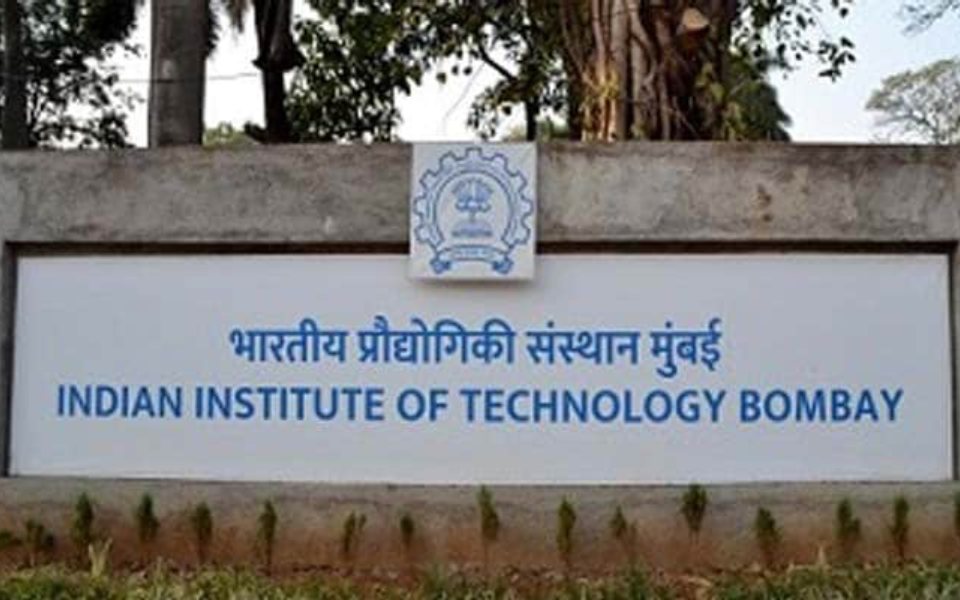
Mumbai, Jan 4: Eighty-five students of the prestigious Indian Institute of Technology Bombay secured Rs 1 crore package in campus placements, while 63 have received international offers.
The institute said some of the top recruiters who have visited the campus this season are Accenture, Airbus, Air India, Apple, Arthur D. Little, Bajaj, Barclays, Cohesity, Da Vinci, DHL, Fullerton, Future First, GE-ITC, Global Energy and Environ and Google.
Firms also include Honda R&D, ICICI-Lombard, ideaForge, IMC Trading, Intel, Jaguar Land Rover, JP Morgan Chase, JSW, Kotak Securities, Marsh McLennan, Mahindra Group, Micron, Microsoft, Morgan Stanley, Mercedes-Benz, L&T, NK Securities, OLA, P&G, Qualcomm, Reliance group, Samsung, Schlumberger, Strand Life Sciences, Tata group, Texas Instruments, TSMC, TVS Group and Wells Fargo, it said.
The sectors having highest number of offers rolled out are Engineering & Technology, IT / Software, Finance / Banking / Fintech, Management Consulting, Data Science and Analytics, Research and Development and Design.
"International offers with locations in Japan, Taiwan, South Korea, Netherlands, Singapore and Hong Kong were 63. Accepted job offers with CTC greater than Rs 1 crore per annum were 85," the institute said.
The phase-I of placement season 2023-24 at IIT Bombay ended with 388 domestic and international organisations participating, with the number including companies making pre-placement offers (PPOs) as well as participating public sector units (PSUs).
IIT Bombay slots companies in a way to ensure firms are maximally spread out to reduce stress on students and also minimize cross offers, it pointed out.
Firms have interacted with candidates in-person or through virtual meeting platforms, with all the students appearing for the interviews from the venue itself.
It said 1,340 offers had been made till December 20 2023, which resulted in 1,188 students getting placed.
This includes the seven students placed in PSUs as well as 297 PPOs via internships, of which 258 were accepted, the IITB said.
Let the Truth be known. If you read VB and like VB, please be a VB Supporter and Help us deliver the Truth to one and all.
ED cracks down on suspected interstate liquor racket, raids 9 sites in Arunachal

Itanagar (PTI): The Enforcement Directorate has carried out coordinated searches at nine locations across Arunachal Pradesh in connection with a suspected large-scale interstate liquor smuggling and money laundering network, officials said on Monday.
The action, taken under the Prevention of Money Laundering Act (PMLA), is part of an expanding probe that points to a syndicate exploiting tax differentials among states.
Officials said liquor designated for sale within Arunachal Pradesh was allegedly diverted and supplied illegally to markets in Assam and other states.
The searches, conducted earlier this week, spanned multiple towns such as Itanagar, Naharlagun, Seppa, Ziro, Daporijo, Namsai and Roing, targeting wholesale liquor businesses suspected of being linked to the network.
According to officials, the investigation stems from a series of FIRs registered by Assam Police over the illegal transportation of liquor from Arunachal Pradesh into Assam.
Inputs from the Assam Excise Department further strengthened the case. An Enforcement Case Information Report (ECIR) was registered on October 17, 2024, and later widened through an addendum incorporating 173 additional FIRs.
Earlier searches conducted on February 4 last year, at premises linked to three alleged key operators, believed to be major liquor manufacturers, had revealed indications of a well-coordinated operation.
Investigators suspect that the network functioned through a chain of manufacturers, bonded warehouses and wholesalers, while masking real ownership using proxy arrangements such as tribal partnerships and dummy licence holders.
During the latest ED operations, the agency found that several wholesale units were operating under proxy licences issued in the names of local individuals, while actual control remained with the suspected masterminds.
Financial scrutiny revealed that between 51 and 90 per cent of total credits in certain bank accounts comprised unexplained cash deposits.
Investigators also flagged a pattern of invoice splitting, with transactions deliberately kept below Rs 2 lakh to avoid scrutiny. In one instance, more than 200 invoices of identical value of Rs 1,99,554 were generated within a single month at one location.
On-ground staff reportedly confirmed that records, including stock registers and daily cash collections, were being routed to offices associated with the alleged controllers.
The ED said it seized approximately Rs 40 lakh in unaccounted cash during the searches.
In a significant finding, 14 seals, some purportedly belonging to the Excise Department of the Arunachal Pradesh government, were recovered from one of the premises. These are suspected to have been used to create fake transport permits to facilitate the unauthorised movement of liquor.
Further investigation is underway, officials added.