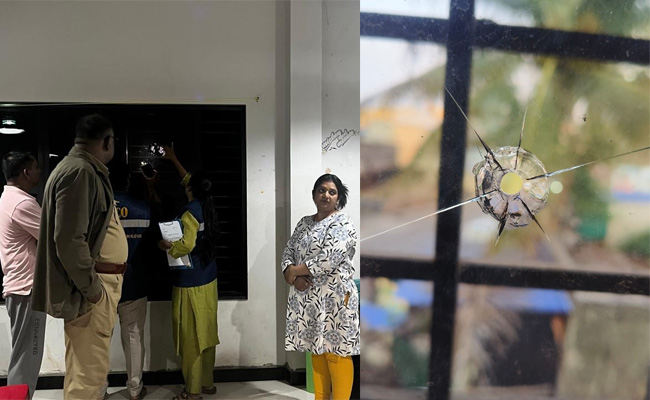
IIT Bombay student death: Handwriting analysis confirms 'suicide note' written by deceased, say cops
Mumbai (PTI): The Mumbai police's SIT, which is probing the death of IIT Bombay student Darshan Solanki, has received a report from a handwriting expert, which says the handwriting in the purported suicide note recovered from the institute' hostel matched the writing samples of the deceased, confirming that it was written by him, an official said on Friday.
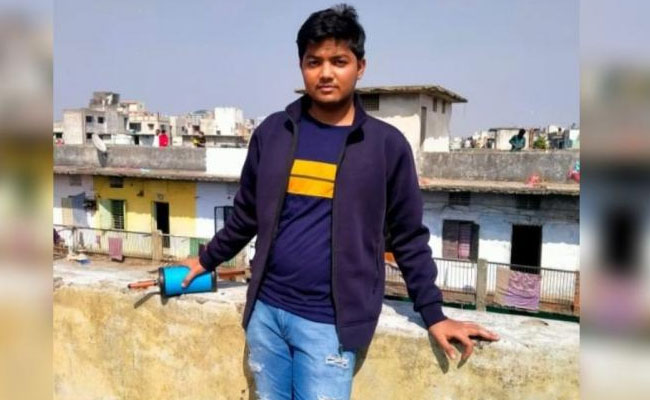
Solanki, who hailed from Ahmedabad in Gujarat and was a first-year student of the B Tech (Chemical) course, allegedly committed suicide by jumping off the seventh floor of a hostel building located on the Indian Institute of Technology Bombay (IITB) campus in suburban Powai on February 12 this year.
The Maharashtra government has formed a special investigation team (SIT) to probe his death. His family has claimed that he faced discrimination at the premier institute for belonging to a Scheduled Caste (SC) community and suspected foul play in his death. However, the inquiry committee set up by the IITB has ruled out caste-based discrimination and hinted at deteriorating academic performance as a possible cause of suicide.
"We have received the report of handwriting analysis conducted by an expert, which confirmed that the handwriting of Darshan Solanki matches that in the suicide note found in his hostel room," an official said.
"The suicide note recovered by the SIT on March 3, mentioned the name of Solanki's hostel mate and blamed him for the death," he said.
Let the Truth be known. If you read VB and like VB, please be a VB Supporter and Help us deliver the Truth to one and all.
Two children drown in farm pond in Karnataka

Tumakuru (Karnataka) (PTI): Two children died after slipping and falling into a farm pond near Benakanahalli on Sunday, police said.
The deceased have been identified as Suchitra (11) and her brother Ravindra (9) from Kasapura village in Midigeshi hobli.
According to police, preliminary information suggests that the children had gone to graze goats.
They are believed to have slipped and fallen into the farm pond while attempting to drink water.
The bodies have been sent to Madhugiri Public Hospital for post-mortem.
A case has been registered at the Midigeshi police station.