Image of `Singham' cop delivering instant justice sends out dangerous message: Bombay HC judge
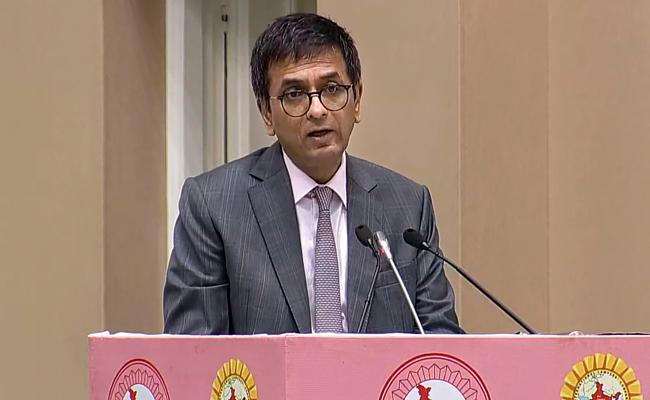
Mumbai (PTI): The cinematic image of a "hero cop" delivering quick justice without bothering about the due process of law, as shown in blockbuster films like "Singham", sends out a very harmful message, Justice Gautam Patel of the Bombay High Court said here on Friday.
Speaking at a function organised by the Indian Police Foundation to mark its annual day and Police Reforms Day, he also questioned people's "impatience" with the process of law.
Talking about police reforms, the judge said that the Supreme Court's judgement in the Prakash Singh case was an "opportunity missed", and also noted that the law enforcement machinery can not be reformed unless we reform ourselves.
The image of police as "bullies, corrupt and unaccountable" is a populist one and the same can be said about anyone in the public life including judges, politicians and journalists, he said.
When the public thinks that the courts are not doing their job, it celebrates when the police step in, the judge said.
"This is why when a rape accused is killed in an encounter while allegedly trying to flee, people think it is not just alright but it is celebrated. Justice has been served, they feel, but has it?" he said.
This view is deeply pervasive and reflected strongly in our popular culture, especially in Indian cinema, Justice Patel noted.
"In movies, police rail against judges who are shown as docile, timid, thickly-spectacled and often very badly dressed. They accuse courts of letting the guilty go. The hero cop delivers justice single-handedly," he said.
"Singham movie has especially shown in its climax scene where the entire police force descends on the politician played by Prakash Raj...and shows that justice has now been served. But I ask, has it," Justice Patel said, adding that we should think "how dangerous that message is."
"Why this impatience? It has to go through a process where we decide innocence or guilt. These processes are slow...they have to be...because of the cardinal principle that the liberty of an individual is not to be confiscated," he added.
If this process was abandoned in favour of "shortcuts", then "we subvert the rule of law," Justice Patel said.
Singham (2011), an action film directed by Rohit Shetty, is a remake of the 2010 Tamil film of the same title and stars Ajay Devgn in the lead role as a police officer.
Earlier, talking about police reforms, Justice Patel said that when going through the apex court's 2006 judgement on police reforms in the Prakash Singh case, he comes away "with a distinct feeling that this was an opportunity missed".
"....The focus was perhaps too narrow...only on police reforms...there is a much wider dialogue...a broader conversation that we must have," he said.
Police reforms cannot be seen in isolation and there are other significant reforms that are necessary, Justice Patel said.
He salutes Prakash Singh -- the former Uttar Pradesh Director General of Police who had filed a PIL in the Supreme Court seeking reforms in the way the police machinery functions -- for his undaunted and untiring efforts in making police reforms a reality, the judge added.
Let the Truth be known. If you read VB and like VB, please be a VB Supporter and Help us deliver the Truth to one and all.
Anbumani asks PM Modi to ban sale of cigarettes for those born after 2009
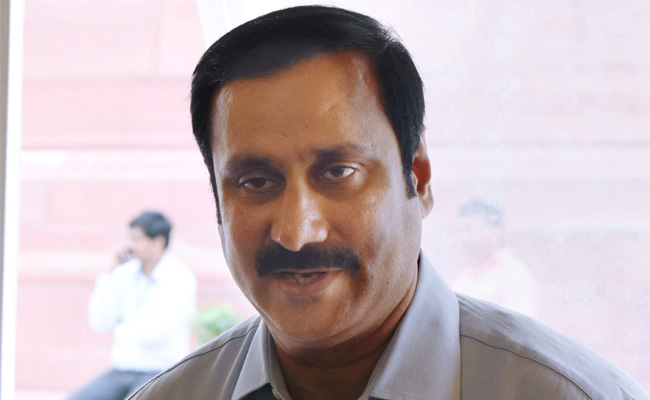
Chennai (PTI): PMK leader Anbumani Ramadoss on Saturday urged Prime Minister Narendra Modi to take legislative measures to prohibit smoking and the sale of cigarettes to individuals born on or after January 1, 2009, thereby creating a smoke-free generation.
Anbumani, former Union minister for health and family welfare, said, "Once implemented, it (ban on cigarettes) will ensure that future generations are legally prevented from ever accessing tobacco products", he said in a letter to Modi.
"I write to you with a deep sense of urgency and responsibility, drawing your kind attention to a critical public health issue that continues to endanger the lives of millions of Indians, particularly among the younger generation who are affected by cigarette smoking", he claimed.
Stating that India unfortunately bears a disproportionately high burden of tobacco-related morbidity and mortality, he said, adding that, according to global health estimates, nearly 267 million Indians, approximately one in five citizens, use tobacco.
"Each year, tobacco consumption directly accounts for over 1.35 million deaths, while exposure to second-hand smoke contributes to a total of approximately 2.3 million deaths annually", he said, adding, "these figures are alarming and reflect a public health crisis of immense magnitude".
He pointed out that Scientific evidence unequivocally establishes tobacco use as a leading cause of cancer and numerous non-communicable diseases, including cardiovascular ailments, chronic respiratory diseases such as COPD, and multiple forms of malignancies. "In India alone, tobacco is responsible for nearly 40–50 per cent of all cancer cases, with over 4.7 lakh deaths annually attributed to tobacco-induced cancers", he added.
"In this context, I strongly urge the Union government to consider enacting a transformative law similar to that of the United Kingdom, that permanently prohibits the sale and consumption of tobacco products for individuals born on or after a specified year (such as 2009). Such a generational ban would mark a decisive step towards eliminating tobacco use in India over time", he said.