IMF expects India's role to expand in Indo-Pacific region
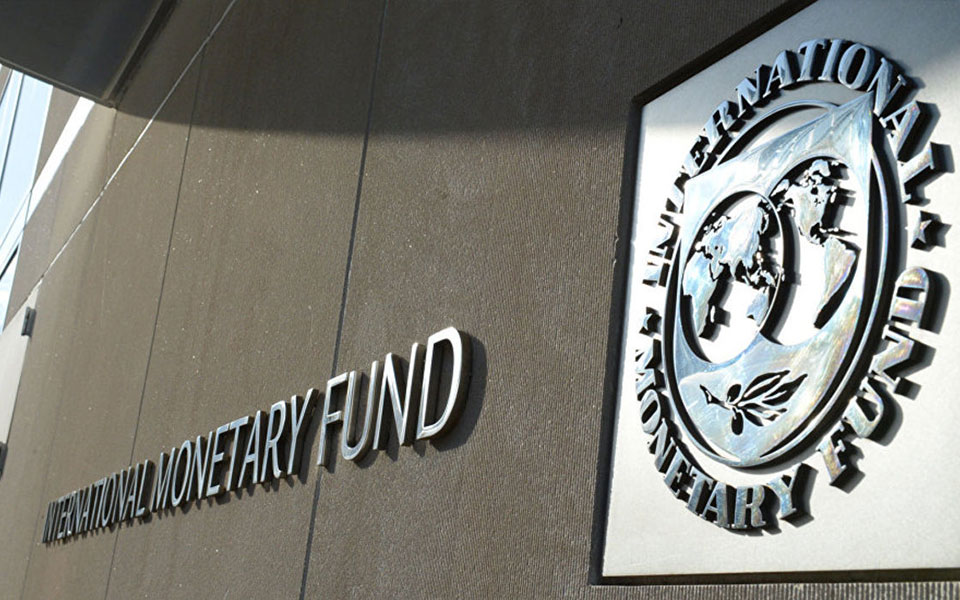
United Nations, April 21: The International Monetary Fund expects India's role in the Indo-Pacific region's development to continue to expand because of its robust growth, but it has to carry out more trade reforms, Ken Kang, the deputy director in IMF's Asia Pacific Department said on Friday.
"Given our robust growth forecast where we see India's growth rising from 7.4 per cent in 2017-18 to 7.8 per cent in 2019, we do expect India's role in the region to continue to expand," he said at a news conference in Washington.
"That being said, India does have room to expand its export orientation and to reduce further trade and non-trade barriers," he added.
"The statutory tariff rate in India is relatively high at about 15 per cent, and higher than those in the rest of the region," he added. "So there is room to do more on trade reform."
Let the Truth be known. If you read VB and like VB, please be a VB Supporter and Help us deliver the Truth to one and all.
Bihar has 'failed' on all parameters during 21 years of NDA rule: Tejashwi
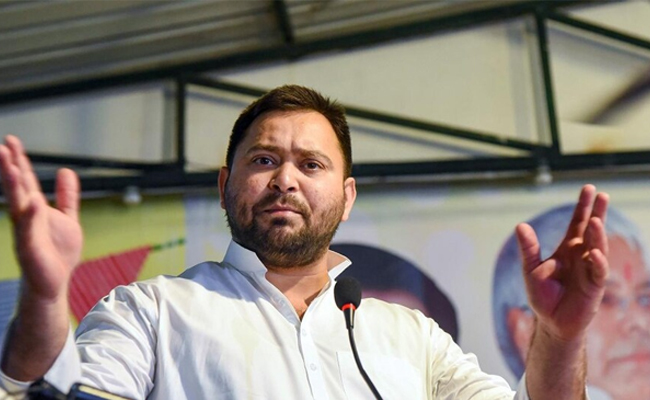
Patna (PTI): Launching a frontal attack on the Bihar government, RJD's national working president, Tejashwi Yadav, on Thursday, alleged that the state has "failed" on all parameters during the 21 years of NDA rule.
His remarks came four days ahead of the Rajya Sabha polls in Bihar on March 16. Six candidates—five from the ruling NDA and one from the RJD are in the fray for five Rajya Sabha seats in Bihar.
In a post on X on Thursday, Yadav wrote, "The NDA government failed on all parameters despite years of a double-engine government. Bihar continues to rank at the bottom of most development indicators even after 21 years of NDA rule."
"Bihar is a unique state where the NDA's double-engine government has been in power for decades, yet the state still performs poorly across several socio-economic indicators. Bihar is the poorest state in the country, has the highest migration, the highest levels of crime and corruption, the highest unemployment, the highest level of multidimensional poverty and highest school dropout rate in the country, lowest literacy rate in the country, and the state has the lowest per capita income in the country," he wrote.
He further claimed that Bihar is the state where farmers' income is lowest in the country, lowest per capita consumption in the country, lowest computer literacy in the country, lowest electricity consumption in the country, lowest basic infrastructure in the country, lowest quality education in the country and the lowest industrial units in the country.
Yadav, who is also Leader of Opposition in the state assembly, said the state is lagging in almost every development indicator. He accused the government of avoiding accountability while running the administration through bureaucratic control, state resources and caste politics.
Ironically, despite being lowest on all development parameters, Bihar is leading in buying expensive gas, leading in buying expensive electricity, leading in buying expensive petrol-diesel, and here buying property is more expensive than in Delhi and Mumbai, he alleged.
State BJP spokesperson, Neeraj Kumar, refuted the charges levelled by Yadav and told PTI, "RJD leader should have compared the current situation in Bihar with the period between 1990 and 2005 when the state was governed by Lalu Prasad and Rabri Devi. The condition improved only after the NDA government led by Nitish Kumar came to power in 2005."