Imminent need to re-look at mandatory attendance norms in colleges, varsities: Delhi HC
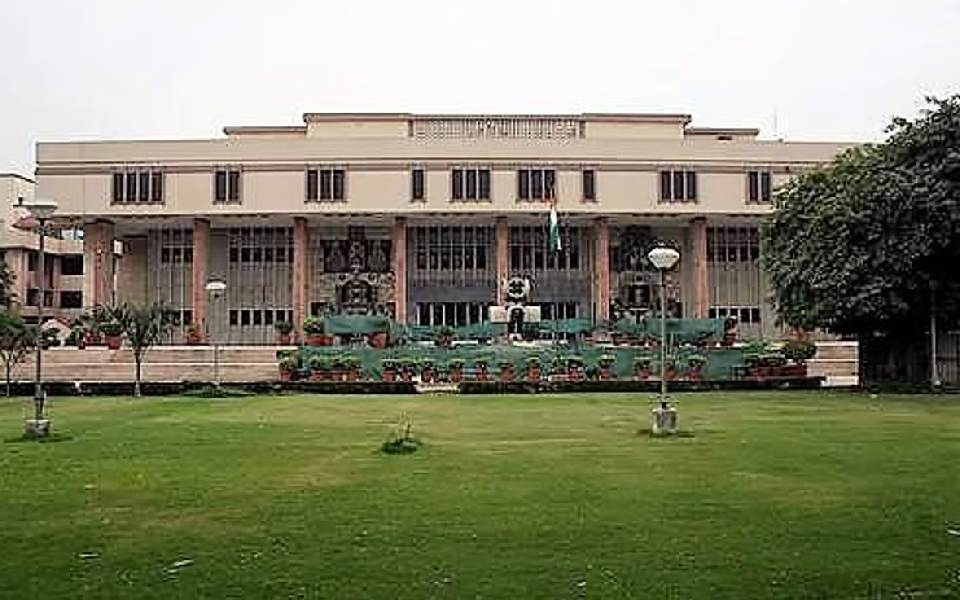
New Delhi, Aug 21: The Delhi High Court on Wednesday observed that there is an imminent need to re-look at mandatory attendance norms in colleges and universities as the teaching methods have substantially changed post the COVID-19 pandemic.
The court said the mental health of students, which is also affected, needs to be borne in mind while considering attendance requirements and the role of grievance redressal mechanism and support system in educational institutions is required to be streamlined.
A bench of Justices Prathiba M Singh and Amit Sharma said the issue, whether attendance requirements ought to be made mandatory in undergraduate and postgraduate courses, deserves to be addressed at a much higher level rather than restricting it to any specific course, college, university or institution.
The bench said instead of penalising students for low attendance, there should be some encouragement to attend classes.
The court said it was inclined to form a committee to study all these factors and to place a report before it so that certain uniform practices can be evolved for UG and PG courses and the attendance requirements therein.
The high court was hearing a plea, initiated by the Supreme Court in September 2016, on the alleged suicide by a student of Amity Law University. The matter was transferred to the Delhi High Court in March 2017.
Sushant Rohilla, a third-year law student of Amity had hanged himself at home here on August 10, 2016 after the university allegedly barred him from sitting for the semester exams due to lack of requisite attendance. He left behind a note saying he was a failure and did not wish to live.
Dealing with the issue, the high court noted that the regulatory bodies as also some universities, in their statutes and ordinances, have historically prescribed mandatory attendance requirements.
“In the opinion of this court, the same may require a re-look, especially bearing in mind the teaching methods which have substantially changed post the COVID-19 pandemic.
“In recent times, it is not unusual for colleges and universities to hold classes, examinations virtually or on online platforms. The issue of mandatory attendance is also a cause for concern in the younger generation which looks at education in a completely different manner. Education is no longer restricted to classroom teaching and in fact extends to more practical areas,” the bench said.
It said there is an imminent need to have a re-look at norms for attendance, whether attendance ought to be made mandatory at all, what should be the required attendance, should attendance be encouraged rather than penalties being imposed for lack of attendance.
“There may be a need for making a distinction in professional and non-professional courses as far as attendance standards are concerned. Global practices followed by legal educational institutions around the world would also need to be studied to see whether mandatory attendance requirements are even needed,” the court said.
It added that wide consultations would be required to be undertaken to have a re-look at attendance norms.
It is not uncommon for youngsters who finish school to also be employed and also pursue education to support themselves and their families, and such instances also need to be borne in mind, the court said.
“Further, the attendance requirement may or may not be the same in urban and rural areas where technology may have not fully formulated. In the opinion of this court, teachers and students need to be consulted in order to consider what should be the standards of attendance,” it said.
The court said now it is not uncommon for students to learn subjects which could be extremely complex and scientific through online videos.
“These and some more factors have to be considered in order for education to be made more meaningful in the modern world,” it said.
On this issue, the court heard several counsels appearing in the case during the day and asked others, including Union of India, National Medical Commission (NMC) and All India Council for Technical Education (AICTE), to address the matter on September 9.
Let the Truth be known. If you read VB and like VB, please be a VB Supporter and Help us deliver the Truth to one and all.
Maharashtra sets up state vaccination task force to strengthen immunisation programme

Mumbai (PTI): The Maharashtra government has set up a State Vaccination Task Force to strengthen the regular immunisation programme and review the progress of related campaigns, a health department official said on Monday.
The State Vaccination Task Force will comprise at least 29 members and will be headed by the administrative head of the health department, he informed.
The government has also constituted separate district-level and municipal vaccination task forces to improve implementation and address challenges at the grassroots level, he said.
Municipal task forces, chaired by respective civic commissioners, have been constituted in view of the vast urban population in Maharashtra and the role of civic bodies in implementing different health programmes.
The district-level task forces will function under the chairmanship of collectors.
"Complete immunisation of children at the appropriate age is an extremely simple, cost-effective and highly effective measure to reduce child mortality and the prevalence of diseases among kids. Immunisation is a powerful tool for reducing illness in children," maintained the official.
To ensure full vaccination of all children, the state government implements various campaigns from time to time as per the central government guidelines, he pointed out.
"Active participation and cooperation of other relevant government departments are essential (in making these campaigns successful)," according to the official.
The state-level body will review the regular immunisation programme, associated campaigns and vaccine-preventable diseases in detail. It will also conduct focused assessments of high-risk districts and municipal corporations, including vacancies at district, municipal and sub-district levels, availability of cold chain equipment, resource gaps and training requirements, he noted.
The state task force will review allocation and utilisation of funds for immunisation and ensure timely action by officers concerned based on reports from district and municipal task forces and state-level monitoring mechanisms, the official said.
It will also ensure active coordination and participation of other government departments in immunisation drives, while district and municipal task forces will carry out similar functions at their respective levels, the official added.