In a first, Indian-origin blind man to get guide horse in UK
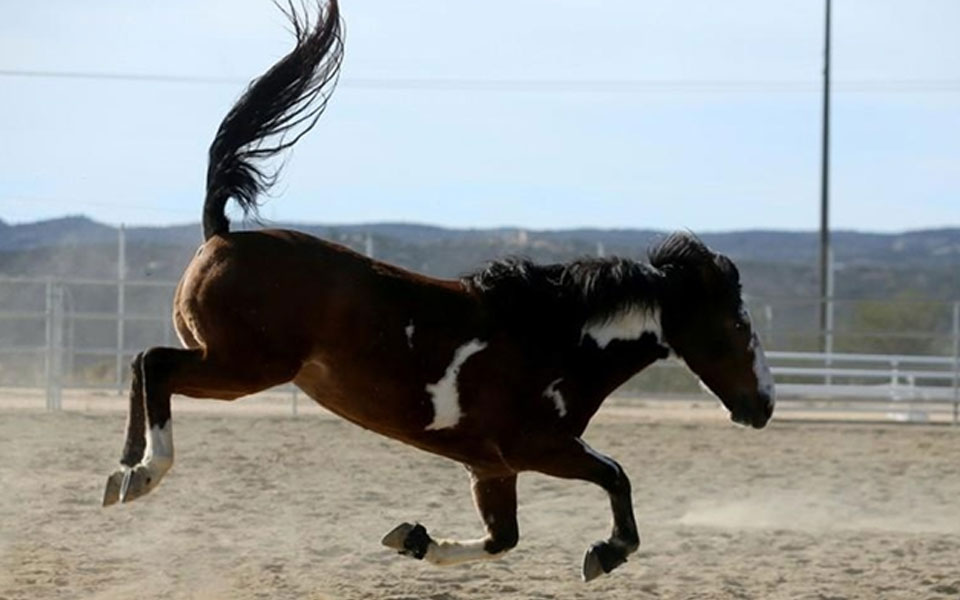
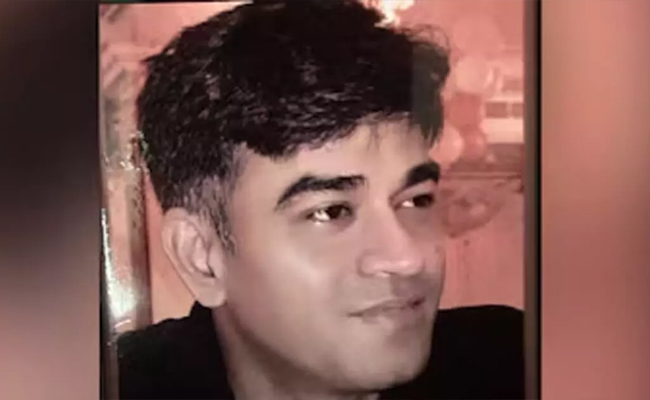
London, Oct 14: An Indian-origin man based in north-west England, who suffers from a degenerative eye condition, is set to become the first person in the UK to get a guide horse to assist him with daily tasks once he loses his vision completely.
Mohammed Salim Patel, a journalist based in Blackburn at Lancashire, suffers from a condition called Retinitis Pigmentosa, due to which he is left with a very small amount of sight in his right eye and will eventually become totally blind.
The 24-year-old, who suffers from a deep-seated fear of dogs since a scary childhood encounter, could not rely on the more commonly used guide dogs for the blind and that is how the concept of a miniature guide horse came to his attention.
"Digby (guide horse) is still a baby and will be two years old in May 2019. His training will take around two more years, so I expect to be able to bring him home to Blackburn once he's finished his training," Patel told PTI.
"There is no rush though, as there would be for a guide dog. Digby will be able to work into his 40s, whereas a guide dog has to retire at the age of eight," he said.
After spending some time with his companion-to-be, Patel believes a guide horse has many added benefits over guide dogs, including a much longer working life, 350-degree vision and ability to see in the dark.
"Guide horses can work for a lot longer, therefore even if his training takes longer than two years, it doesn't matter too much as once he's trained, I will have decades with him as my assistant animal," Patel explained.
The story of Digby caught the attention of the annual Amplifon Awards for Brave Britons, where the horse is among the finalists in the Hero Pet category aimed at honouring animals who have transformed the life of their owners.
"It's very nice to have Digby recognised for his great work, despite still being in training. He is a star," said Patel, in reference to the awards, which will be announced on Tuesday.
The BBC journalist began working with his local station, BBC Radio Lancashire, before moving on to BBC North West Tonight TV after completing a Journalism Trainee Scheme.
"I fancied being a TV presenter and decided to give media studies a go. I found myself making documentaries on taboo subjects, and essentially creating journalistic pieces. This is when I strongly considered pursuing a career in journalism, as a journalist rather than a TV presenter," he said.
However, it was not an easy journey, being told that a broadcast journalism course would be too difficult for a blind person to complete.
"I used my time at university to get as much broadcasting experience as I could. I loved radio. I was fortunate to achieve a First Class BA Honours in International Journalism and got a job as a reporter at my local BBC radio station," said Patel, whose family has their roots in Gujarat.
"My mother was born in India but then came to the UK to marry my dad. He has family in Gujarat too," he said.
"I love visiting India as it's a beautiful country that fascinates me. I take every opportunity I can to visit my cousins who live there and to also visit the many different cities in India," he added.
It remains to be seen if Digby might join him on one of these visits in the future.
Let the Truth be known. If you read VB and like VB, please be a VB Supporter and Help us deliver the Truth to one and all.
Sujit Nair raises concerns over speculation of DMK-AIADMK understanding to block TVK
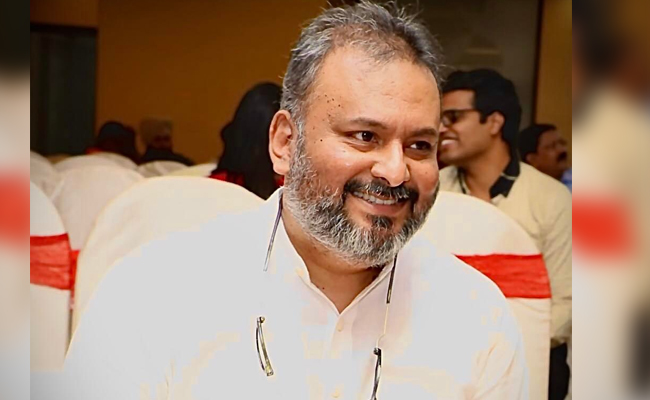
Chennai: Journalist and political commentator Sujit Nair has expressed concern over speculation that the Dravida Munnetra Kazhagam and the All India Anna Dravida Munnetra Kazhagam could explore a post-poll understanding to prevent Vijay-led Tamilaga Vettri Kazhagam from forming the government in Tamil Nadu.
In a social media post, Sujit Nair said the election verdict in Tamil Nadu reflected a clear public demand for political change and argued that the mandate should be respected irrespective of political preferences.
Referring to reports and political discussions surrounding a possible understanding between the DMK and AIADMK, he said he hoped such developments remained only speculative conversations and did not turn into reality.
Nair stated that if such an alliance were to take shape, it would raise serious questions about ideological politics in the country. He said TVK had emerged through a democratic electoral process and that the legitimacy to govern in a parliamentary democracy comes from the people’s verdict.
According to him, attempts to prevent an electoral winner from forming the government through unexpected political arrangements may be constitutionally valid, but many people could view them as politically opportunistic.
He further said that such a move could particularly affect the political image of the DMK, which has historically projected itself around ideology, social justice and opposition politics. Nair said that in ideological terms, the DMK appeared closer to TVK than to the AIADMK, and joining hands with its long-time political rival only to remain in power could weaken its broader political narrative.
He added that the same questions would apply to the AIADMK as well, as the party had spent decades positioning itself against the DMK and such an arrangement could create discomfort among its cadre and supporters.
Drawing a comparison with Maharashtra politics in 2019, Nair said he had expressed similar views when the Shiv Sena formed an alliance with the Indian National Congress and the Nationalist Congress Party after the Assembly elections.
He said post-poll alliances between long-standing political rivals often create a public perception that ideology and electoral mandates become secondary when political power equations come into play.
Nair also said such developments increase public cynicism towards politics and reinforce the belief among voters that ideology is often sidelined after elections.
He maintained that the Tamil Nadu verdict was emphatic and said respecting both the spirit and substance of the mandate was important for the credibility of democratic politics.