In address to nation, Prez Murmu bats for 'One Nation One Election'
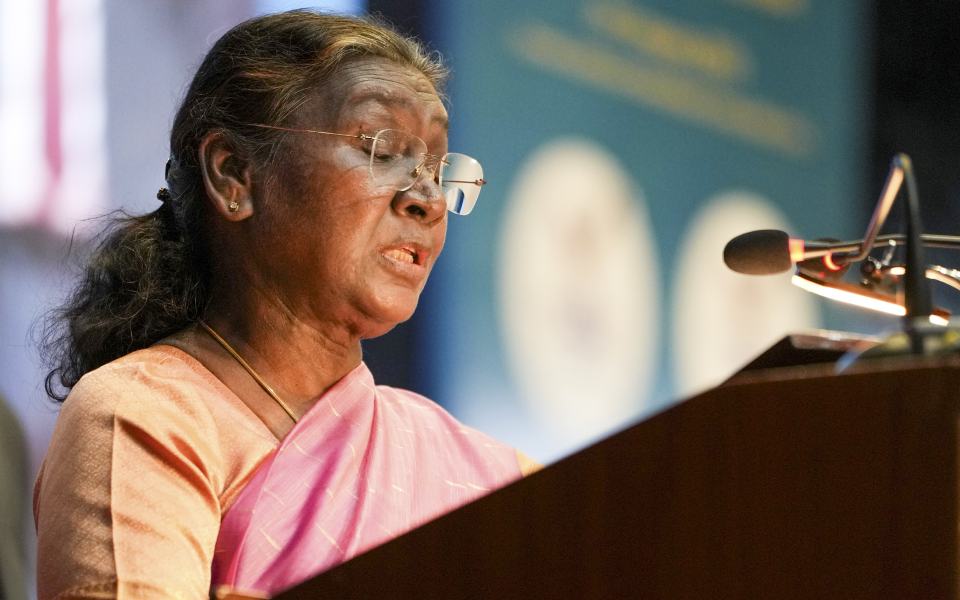
New Delhi, Jan 25 (PTI): President Droupadi Murmu on Saturday advocated for the "One Nation One Election" initiative, asserting it has the potential to redefine "good governance" in the country by promoting consistency in governance, preventing policy paralysis, mitigating resource diversion, and alleviating financial burdens on the state.
In her address to the nation ahead of the 76th Republic Day, she emphasised the government's ongoing efforts to "eliminate remnants of a colonial mindset that have lingered in the country for decades" and cited the replacement of the British-era criminal laws with three new modern laws.
"We have been witnessing concerted efforts to change that mindset... Reforms of such magnitude require an audacity of vision," she said.
Highlighting the significance of the proposed bill aimed at synchronising election schedules across the country, Murmu noted, "The 'One Nation One Election' plan can offer numerous benefits, including enhanced governance and reduced financial strain."
In discussing legal reforms, she pointed out the need to replace the Indian Penal Code, the Code of Criminal Procedure, and the Indian Evidence Act with new laws reflective of Indian traditions.
She mentioned the introduction of the Bharatiya Nyaya Sanhita, the Bharatiya Nagarik Suraksha Sanhita, and the Bharatiya Sakshya Adhiniyam, which prioritise the delivery of justice over mere punishment and place a strong emphasis on addressing crimes against women and children.
Reflecting on the significance of the Constitution, the President highlighted the progress achieved over the past 75 years.
"At the time of Independence, many parts of the country faced extreme poverty and hunger. However, we maintained a belief in ourselves and created conditions for growth," she said.
Noting the contributions of farmers and labourers, she said India's economy now plays a pivotal role in global economic trends, asserting that this transformation is rooted in the framework established by the Constitution.
The President also pointed to the persistently high economic growth rate in recent years, which has generated job opportunities, increased income for farmers and labourers, and lifted many out of poverty.
She underscored the importance of inclusive growth and the government's commitment to welfare, making basic necessities such as housing and access to clean drinking water entitlements for citizens.
Efforts to support marginalised communities, particularly those belonging to Scheduled Castes (SC), Scheduled Tribes (ST), and Other Backward Classes (OBC), were also highlighted.
Murmu mentioned various initiatives, including pre-matric and post-matric scholarships, national fellowships, and dedicated schemes aimed at the socio-economic development of these communities, such as the Pradhan Mantri Anusuchit Jaati Abhyuday Yojana and the Pradhan Mantri Janjati Adivasi Nyaya Maha Abhiyan.
The President's address underscored the government's commitment to fostering inclusive growth and redefining governance standards in the country, creating a vision for a more equitable and prosperous future for all citizens.
She emphasised that this occasion is a collective celebration of joy and pride for all citizens and remarked that while 75 years may seem like a brief moment in the life of a nation, it has been a significant period for India, marked by the revival of its long-dormant spirit and its journey to reclaim its rightful status among the world's civilisations.
Reflecting on India's historical journey, she urged citizens to remember the brave souls who sacrificed their lives for the nation's freedom, highlighting the 150th birth anniversary of Bhagwan Birsa Munda, whose contributions to the freedom movement are now receiving due recognition.
The President praised the early 20th-century freedom fighters for uniting the nation in a well-organised independence movement and credited iconic figures like Mahatma Gandhi, Rabindranath Tagore, and Babasaheb Ambedkar for helping India rediscover its democratic values.
"Justice, liberty, equality, and fraternity are not just modern concepts; they have always been integral to our civilisational heritage," she asserted, noting that skeptics of the Constitution's future were proven wrong.
Murmu highlighted the inclusive nature of the Constituent Assembly, which represented diverse communities across the nation, including 15 women members who played pivotal roles in shaping the country's democratic framework.
"When women's equality was a distant goal in many parts of the world, Indian women were actively engaged in the nation's destiny," she said.
The Constitution, according to the President, has evolved into a living document that serves as the foundation of India's collective identity and has guided the nation's progress over the past 75 years.
Shifting focus to present-day advancements, she highlighted the government's emphasis on physical infrastructure development, which has laid the groundwork for sustained growth.
She commended the innovative use of technology in finance, noting that digital payment systems and direct benefit transfers have enhanced inclusion and transparency in the economy.
The health of the banking system has improved due to reforms like the Insolvency and Bankruptcy Code, which significantly reduced non-performing assets in commercial banks.
Looking towards the future, the President underscored the importance of education in shaping the next generation.
The government has increased investments in the education sector, resulting in substantial improvements in learning quality and digital inclusion, especially in regional languages.
Murmu noted that women teachers have played a crucial role in this educational transformation, with over 60 percent of new teachers being women
As India marches confidently towards the future, the President affirmed that the dreams of today's youth, particularly young women, will shape the nation by the time it celebrates a century of independence.
She expressed hope that future generations will recognise the pivotal role of the Constitution in guiding their journey.
Quoting Mahatma Gandhi, she reiterated the importance of morality in governance and civic life, stating, "If Swaraj was not meant to civilize us, it would be nothing worth."
The President called for a renewed commitment to Gandhiji's ideals of truth, nonviolence, and compassion - not just towards fellow humans but also towards nature.
She urged all citizens to reaffirm their dedication to realising the dreams of a prosperous, inclusive, and morally conscious India as the country looks forward to its future.
Let the Truth be known. If you read VB and like VB, please be a VB Supporter and Help us deliver the Truth to one and all.
Lakhimpur Kheri violence case: SC expresses disappointment over non-production of witnesses in trial
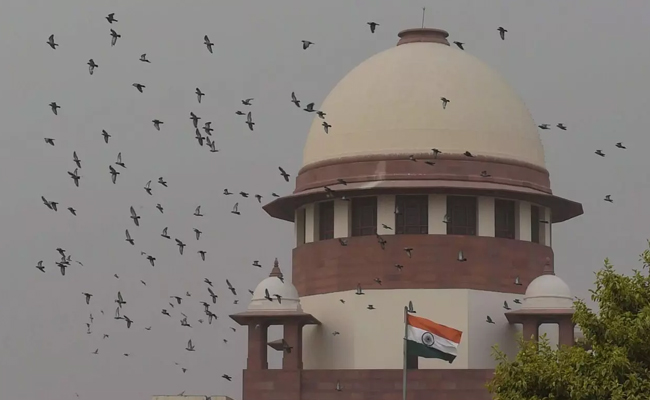
New Delhi (PTI): The Supreme Court on Friday expressed disappointment over the non-production of witnesses in the ongoing trial against Ashish Mishra, son of former Union minister Ajay Mishra, and others in the 2021 Lakhimpur Kheri violence case.
A bench of Chief Justice Surya Kant and Justice Joymalya Bagchi said the status report filed before it by the Uttar Pradesh government has not assigned any reason whatsoever for the non-production of witnesses.
It noted that no witnesses have been examined in the trial for the last two months.
"We direct the presiding judge to take lawful measures to secure the presence of witnesses," the bench said.
It asked the trial judge to make an endeavour to conclude the trial in a time-bound manner, and also to file a status report before it.
The trials in two cases related to the incident are going on before a court in Uttar Pradesh.
The bench noted that in the first case, out of 131 witnesses to be examined, 44 have been examined, 15 have been discharged and 72 are still to be produced.
In the second FIR, out of 35 witnesses, 26 have been examined and nine were left, it said.
Senior advocate Siddharth Dave, appearing for Ashish Mishra, said that as per the latest status report filed by Uttar Pradesh, 44 witnesses have been examined so far in the first FIR.
"No witnesses have been examined in the last two months," Dave said.
He argued that the last status report filed by the state in March also said that 44 witnesses had been examined.
"What have you done from March till today?" the bench asked the counsel appearing for Uttar Pradesh.
The state's counsel said that 3-4 witnesses were summoned for the recording of their deposition during the trial.
The bench said at least 7-8 witnesses should be summoned instead of three or four for a day, so that even if some of them do not turn up, the trial court could proceed with the recording of statements of those appearing before it.
The top court also wondered how official witnesses can remain absent during the trial.
"We are disappointed to note that the so-called status report does not assign any reason whatsoever for non-production of witnesses...," the bench said.
Advocate Prashant Bhushan, appearing for the relatives of the farmers who were allegedly mowed down in the incident, said the apex court will have to do something regarding the manner in which the trial was going on.
The bench noted that besides the two FIRs, another FIR was registered in October last year concerning alleged witness intimidation.
It said that, as per the state's status report, the chargesheet was filed against the main accused in that case.
The bench noted that the status report reveals that, as far as Ashish Mishra is concerned, his alleged role in the third case is still being investigated.
The top court directed the investigating officer of the third case to conclude the pending probe and ensure that the appropriate report is filed before the concerned court within four weeks.
The bench posted the next hearing in the Lakhimpur Kheri violence case for July.
On October 3, 2021, eight people, including four farmers, were killed in Tikunia in Lakhimpur Kheri district during a protest by farmers against Deputy Chief Minister Keshav Prasad Maurya's visit to the area.
Four farmers were mowed down by a sports utility vehicle. A driver and two BJP workers were then allegedly lynched by angry farmers. A journalist also died in the violence.
In one of the cases, the trial court in December 2023 framed charges against Mishra and 12 others for alleged murder, criminal conspiracy and under other penal laws in the case of the farmers' deaths, paving the way for the trial.