In open letter, RJD MP appeals to parliamentarians to oppose VB-G RAM G Bill
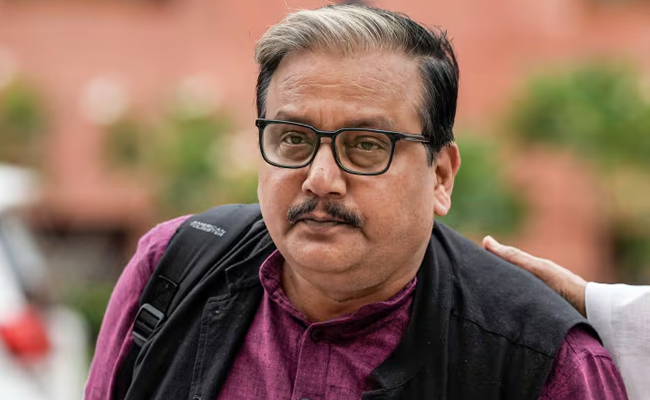
New Delhi (PTI): Invoking Gandhi's Talisman of remembering the face of the poorest person while taking decisions, RJD MP Manoj Jha on Thursday wrote an open letter to fellow lawmakers appealing to them to defend the MGNREGA, and opposed the VB-G RAM G Bill that seeks to replace it.
Jha shared the letter on X,and said, "Appeal to fellow members in Parliament to save MGNREGA, which was not merely a government programme but a moral commitment made by the Indian Republic to its poorest citizens. It embodies the constitutional promise of dignity, livelihood, and social justice."
The Rajya Sabha MP invoked Gandhi's talisman to make his case.
ALSO READ:Indian Army transports heavy armour to Kashmir Valley via Military Special Train
"He urged us to remember the face of the poorest and weakest person we have seen, and to ask whether the action we are about to take would be of any use to that person whether it would restore to them control over their own life," Jha said.
"He believed that if our action met that test, all doubts would dissolve. That talisman was meant to guide every decision in public life. I write to you today with that principle in mind," he said.
He urged MPs to oppose the Viksit Bharat Guarantee for Rozgar and Ajeevika Mission (Gramin) Bill, 2025, in the Lok Sabha.
"While the Lok Sabha has held discussion till late night yesterday, I urge you to oppose this move in our House," he said, adding that the appeal is "non-partisan".
"MGNREGA (Mahatma Gandhi National Rural Employment Guarantee Act) was enacted in 2005 with the support of all major political parties. The House then acknowledged a shared constitutional obligation: that the right to work with dignity is integral to our democracy," he said.
He also quoted Article 41 of the Constitution, stating that it directs the State to secure the right to work and to provide public assistance in cases of unemployment and undeserved want. "MGNREGA translated this directive into a justiciable legal guarantee. The proposed bill dismantles that guarantee."
He said while the government claims that the new framework will provide 125 days of work instead of 100, the claim is misleading.
"Unlike MGNREGA, which was demand-driven, the new Bill makes employment dependent on central allocations and administrative discretion. Its coverage is no longer universal but limited to areas notified by the central government," he said.
"At a time when even MGNREGA workers received only 50-55 days of work annually due to inadequate funding, the promise of additional days without assured resources lacks credibility," he added.
Jha also objected to the provision that the cost would be shared 60:40 between the Centre and the state, and said it will place an unsustainable burden on many states, leading to exclusion and contraction.
"MGNREGA has its shortcomings, but they arise from failures of implementation, not from the law itself. Over two decades, it has provided crucial support during periods of distress, enhanced women's participation in the workforce, and upheld the principle of work as a right. not a favour".
Jha said the law should be strengthened, and "repealing it" without consultation or consensus is not reform but a "retreat from constitutional responsibility".
"I appeal to you, as fellow legislators, to defend a law born of democratic consensus and moral clarity. Let us stand by the principle that every hand deserves work and every worker deserves dignity," he said. "The poorest citizens of our country are watching our choices."
The Viksit Bharat Guarantee for Rozgar and Ajeevika Mission (Gramin) (VB-G RAM G) Bill, 2025, that seeks to replace the existing rural employment law MGNREGA was introduced in the Lok Sabha on Tuesday. It provides for 125 days of work and aims to establish a rural development framework.
Opposition parties and activists have opposed the Bill. Several opposition MPs have said the Bill, which will have far-reaching implications for rural employment, should be sent to a parliamentary panel.
Appeal to fellow members in Parliament to save MGNREGA, which was not merely a government programme but a moral commitment made by the Indian Republic to its poorest citizens. It embodies the constitutional promise of dignity, livelihood, and social justice.
— Manoj Kumar Jha (@manojkjhadu) December 18, 2025
Jai Hind pic.twitter.com/qOjRGHugcY
Let the Truth be known. If you read VB and like VB, please be a VB Supporter and Help us deliver the Truth to one and all.
EAM Jaishankar meets Jamaican PM, gifts over 10 BHISHM Cubes
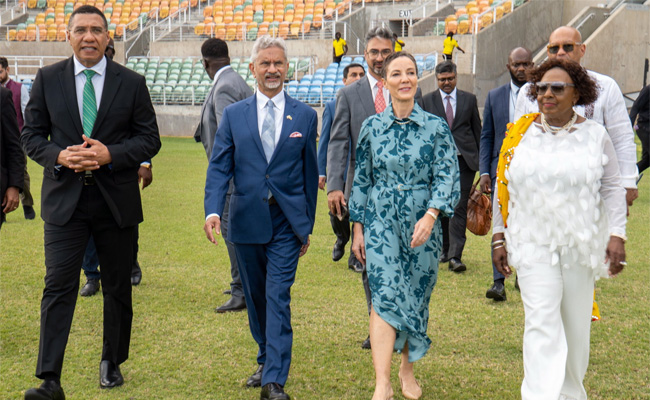
Kingston (PTI): External Affairs Minister S Jaishankar on Monday met Jamaican Prime Minister Andrew Holness and discussed ways to further deepen "political, economic and people-to-people cooperation."
Jaishankar also conveyed greetings from Prime Minister Narendra Modi to Holness.
"Pleased to call on Prime Minister @AndrewHolnessJM in Kingston. Conveyed the greetings of PM @narendramodi," Jaishankar posted on X.
"Discussed deepening our political, economic and people-to-people cooperation. Value his commitment towards further strengthening India-Jamaica relations," the post further read.
Also, the external affairs minister handed over 10 BHISHM (Bharat Health Initiative for Sahyog Hita & Maitri) Cubes as a gift to Jamaica.
"Formally handed over 10 BHISHM Cubes as a gift from India to Jamaica, in the presence of PM @AndrewHolnessJM, Health Minister @christufton and FM @kaminajsmith," Jaishankar posted on X.
"The BHISHM Cube mobile hospital system, designed for rapid deployment, will help Jamaica during disasters and emergencies. The gift of these cubes is a statement of friendship, a commitment to disaster preparedness, and an outcome of innovation," the post said.
Jaishankar arrived in Kingston on Saturday evening, marking the first leg of his nine-day tour of Jamaica, Suriname, and Trinidad and Tobago, aimed at further strengthening India's strategic and cultural ties with the Caribbean nations.
Earlier in the day, he interacted with the Indian diaspora and discussed India's ongoing transformation in infrastructure, human development and technology-driven governance and entrepreneurship with them.
He also highlighted the cricket bond between both countries as India gifted a scoreboard to Jamaica.
A scoreboard was dedicated at Sabina Park in Kingston. It is the home of the Jamaica cricket team and is the only Test cricket ground in the Caribbean island nation.
The minister expressed hope that the new scoreboard would witness many memorable innings, including those symbolising the enduring friendship between the two countries.
Cricket has long been a strong cultural bridge between India and Jamaica, which is part of the West Indies cricket team.
Jamaican players, including Chris Gayle, Courtney Walsh and Michael Holding, have played a major role in shaping the legacy of West Indies cricket in the international arena, contributing to its dominance in earlier decades and its continued global appeal.