India abstains from voting on UNHRC resolution to probe alleged crimes during Gaza conflict
New Delhi: India was among 14 countries that abstained from voting on a resolution at the UN Human Rights Council to launch an investigation into alleged violations and crimes during the 11-day conflict between Israel and Hamas in Gaza.
The resolution was adopted as 24 countries voted in favour of it while nine opposed it at the end of an all-day special session of the 47-member UN body at its headquarters in Geneva on Thursday.
According to official details, India abstained from voting together with 13 other member nations of the grouping. China and Russia were among those voting in favour.
"The Human Rights Council this afternoon adopted a resolution on ensuring respect for international human rights law and international humanitarian law in the occupied Palestinian territory, including East Jerusalem, and in Israel," the UN body said in a statement.
It said the international commission of inquiry has been established to investigate violations of international humanitarian law and all alleged violations and abuses of international human rights during the recent conflict.
The special session of the Council was called to discuss the grave human rights situation" in the Palestinian territory including East Jerusalem.
India's permanent representative to the UN in Geneva Indra Mani Pandey said at the special session that New Delhi welcomes the diplomatic efforts of the international community and regional countries that have resulted in bringing ceasefire between Israel and armed groups in Gaza.
"India calls on all parties to show extreme restraint, desist from actions that aggravate tensions and refrain from any further attempts to unilaterally change the existing status-quo, including in East Jerusalem and its neighbourhoods," he said.
In a statement, Pandey also expressed concern at the continuing violence in Jerusalem, especially at Haram Al Sharif and other Palestinian territories.
"We remain concerned about the continuing violence in Jerusalem, especially at Haram Al Sharif/Temple Mount and other Palestinian territories, and about the possible eviction process in Sheikh Jarrah and Silwan neighbourhoods in East Jerusalem," he said.
Pandey said the indiscriminate rocket firings from Gaza targeting the civilian population in Israel, and the retaliatory airstrikes into Gaza have caused immense sufferings.
"We deeply mourn the loss of civilian lives resulting from the violence, and urge the international community's immediate attention to providing humanitarian assistance to the Palestinian civilian population, particularly in Gaza," he said.
"India continues to provide developmental and humanitarian assistance to the Palestinian Authority, including COVID-19 related assistance, bilaterally, and through our dedicated contribution to the UN," he added.
Both Israel and Hamas agreed on a ceasefire that has come into effect on last Friday after 11 days of intense fighting in which around 230 people were killed in Gaza and 12 in Israel.
Pandey said India was firmly convinced that dialogue remains the only viable option that can effectively address the issues confronting the region and its people.
"Recent developments have once again underscored the need for immediate resumption of dialogue between Israel and Palestine, aimed at realising the establishment of two States living side by side in peace within secure and recognised borders," he said.
Let the Truth be known. If you read VB and like VB, please be a VB Supporter and Help us deliver the Truth to one and all.
Sujit Nair raises concerns over speculation of DMK-AIADMK understanding to block TVK
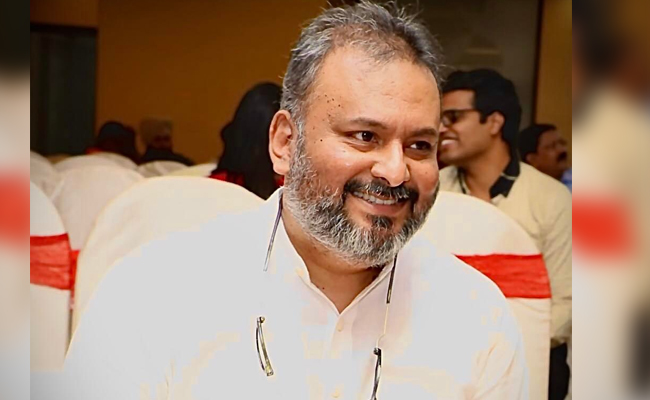
Chennai: Journalist and political commentator Sujit Nair has expressed concern over speculation that the Dravida Munnetra Kazhagam and the All India Anna Dravida Munnetra Kazhagam could explore a post-poll understanding to prevent Vijay-led Tamilaga Vettri Kazhagam from forming the government in Tamil Nadu.
In a social media post, Sujit Nair said the election verdict in Tamil Nadu reflected a clear public demand for political change and argued that the mandate should be respected irrespective of political preferences.
Referring to reports and political discussions surrounding a possible understanding between the DMK and AIADMK, he said he hoped such developments remained only speculative conversations and did not turn into reality.
Nair stated that if such an alliance were to take shape, it would raise serious questions about ideological politics in the country. He said TVK had emerged through a democratic electoral process and that the legitimacy to govern in a parliamentary democracy comes from the people’s verdict.
According to him, attempts to prevent an electoral winner from forming the government through unexpected political arrangements may be constitutionally valid, but many people could view them as politically opportunistic.
He further said that such a move could particularly affect the political image of the DMK, which has historically projected itself around ideology, social justice and opposition politics. Nair said that in ideological terms, the DMK appeared closer to TVK than to the AIADMK, and joining hands with its long-time political rival only to remain in power could weaken its broader political narrative.
He added that the same questions would apply to the AIADMK as well, as the party had spent decades positioning itself against the DMK and such an arrangement could create discomfort among its cadre and supporters.
Drawing a comparison with Maharashtra politics in 2019, Nair said he had expressed similar views when the Shiv Sena formed an alliance with the Indian National Congress and the Nationalist Congress Party after the Assembly elections.
He said post-poll alliances between long-standing political rivals often create a public perception that ideology and electoral mandates become secondary when political power equations come into play.
Nair also said such developments increase public cynicism towards politics and reinforce the belief among voters that ideology is often sidelined after elections.
He maintained that the Tamil Nadu verdict was emphatic and said respecting both the spirit and substance of the mandate was important for the credibility of democratic politics.