India asks citizens to avoid all non-essential travel to Venezuela
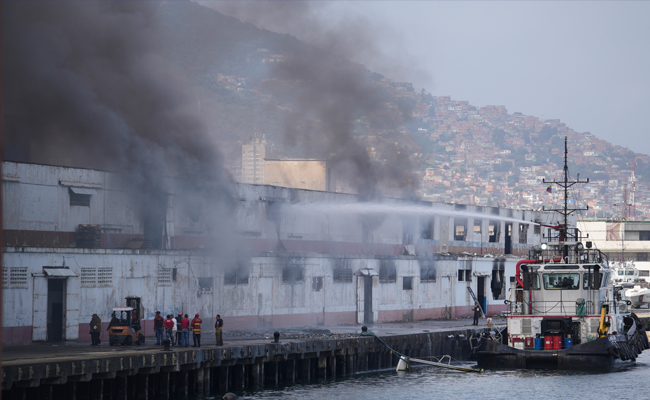
New Delhi (PTI): India on Saturday night advised its nationals to avoid all non-essential travel to Venezuela in view of the situation arising out of the capture of the oil-rich country's president by the US.
The Ministry of External Affairs also asked all Indians who are in Venezuela to exercise extreme caution and restrict their movements.
Venezuelan President Nicolás Maduro was captured in a large-scale US strike on the capital city of Caracas, according to President Donald Trump.
ALSO READ: Congress and NCP (SP) to contest separately in Nagpur civic polls
The US action has triggered political uncertainty in the South American country, with many leading powers, including Russia and China, slamming Washington for the operation and capture of Maduro and his wife.
"In view of recent developments in Venezuela, Indian nationals are strongly advised to avoid all non-essential travel to Venezuela," the external affairs ministry said
"All Indians who are in Venezuela for any reason are advised to exercise extreme caution, restrict their movements, and remain in contact with the Embassy of India in Caracas," it said.
The ministry asked Indians to get in touch with the embassy through phone number +58-412-9584288 (also for WhatsApp calls) as well as email.
There are around 50 Non-Resident Indians and 30 Persons of Indian Origin in Venezuela.
Hours after the operation in Caracas, Trump posted a photo of Maduro aboard the US warship USS Iwo Jima.
Maduro is being brought to New York, where he will face charges relating to supporting drug cartels, according to US authorities.
Let the Truth be known. If you read VB and like VB, please be a VB Supporter and Help us deliver the Truth to one and all.
Mangaluru: Man sentenced to 20 years rigorous imprisonment in POCSO case

Mangaluru: A court in Mangaluru has sentenced a 44-year-old man to 20 years of rigorous imprisonment in connection with a case under the Protection of Children from Sexual Offences (POCSO) Act.
According to Deccan Herald, the Additional District and Sessions Judge, FTSC-II (POCSO), Maanu K S, delivered the judgment.
The convict has been identified as Dayanand Moolya (44).
According to Special Public Prosecutor Sahana Devi Boloor, the incident occurred on November 16, 2025, when a seven-year-old girl was studying alone at home and the accused illegally entered the house and raped her. He threatened to kill her and throw her into a well if she revealed it to anyone.
The survivor later informed her mother, following which a complaint was registered at Mulki Police Station on November 22. Police Inspector Manjunath B S investigated the case and submitted the charge sheet to the court.
For the rape, under POCSO Section 6, along with Bharatiya Nyaya Sanhita (BNS) Act 65(2) and POCSO 4(2), the man has been sentenced to 20 years of rigorous imprisonment and a fine of Rs 30,000. For illegal entry into the house, under BNS Section 332(B), the convict has been sentenced to three years of simple imprisonment and a fine of Rs 5,000. For issuing death threats, under BNS Section 351(3), he has been sentenced to two years of simple imprisonment and a fine of Rs 5,000.
The court also directed payment of Rs 4 lakh as compensation to the survivor, including Rs 40,000 from the fine amount, and instructed the District Legal Services Authority to provide the remaining Rs 3.60 lakh.