India Covid-19: PM Modi 'did not consult' before lockdown
This report was first published in www.bbc.com and has been posted here without any alterations or editing. To read the original report, CLICK HERE
Indian Prime Minister Narendra Modi's government did not consult key ministries and states while imposing the world's strictest coronavirus lockdown a year ago, according to an investigation by the BBC's Jugal Purohit and Arjun Parmar.
The BBC filed more than 240 right to information applications with various Indian government departments - health, finance, disaster management - to find out if and how much they were consulted ahead of the lockdown.
The responses revealed that there is no evidence of key experts or government departments being consulted prior to the lockdown being implemented.
The home ministry, which played a key role in executing the lockdown, repeatedly rejected our request for information. It said the answers we sought were related to "strategic and economic interest and it also contains information which is held under fiduciary relationship and thus exempt from disclosure of information under section 8(1)(a) and (e) of Right to Information Act, 2005."
The government has also denied a BBC request for a statement explaining why concerned departments were not consulted ahead of time.
The world's 'strictest' lockdown
On 24 March last year, Mr Modi announced a complete lockdown across India to stem the spread of coronavirus cases.
India went into a lockdown early - it had confirmed just 519 cases and nine deaths at the time. Experts hoped that forcing people to stay home would halt the virus' spread and give officials time to ramp up test and trace efforts as well as medical facilities.
But the 68-day shutdown - which the University of Oxford termed the world's strictest - proved devastating for the poor, costing them jobs and, in some cases, their lives.
All services, expect hospitals, pharmacies and groceries, closed. Offices, schools, colleges and all public transport was suspended. Flights in and out of India were stopped.
The poor, especially undernourished children and pregnant women who rely on government programmes, found it difficult to access benefits. Immunisation programs were halted. People suffering from serious illnesses struggled to access crucial health services even in urban areas such as Mumbai and Delhi.
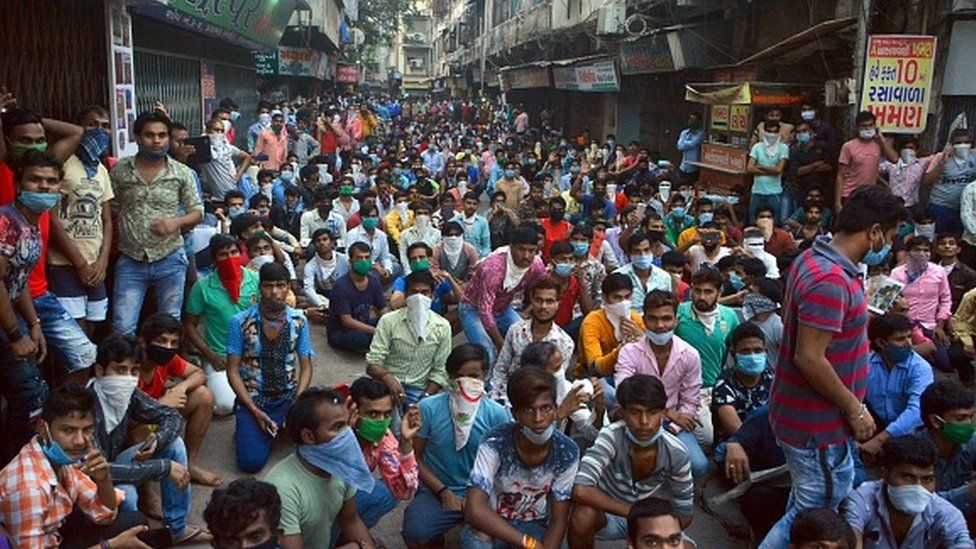
But the hardest hit were informal workers, who make up the bulk of India's workforce - from domestic helps to street vendors to construction workers. They were suddenly left out of work and with no guarantee of when they would start earning again.
Experts believe the lack of consultation ahead of the lockdown led to local governments being ill-prepared for the exodus of migrant workers from cities to villages. Without any public transport, millions of them began walking them home and many died on the way in accidents or due to hunger and exhaustion.
On the other hand, some epidemiologists believe that India's lockdown saved tens of thousands of lives, and bought time to beef up medical infrastructure and capabilities.
But when the country began to reopen in June last year, cases began to spike. India now has the world's third-highest number of infections after the United States and Brazil.
It has so far reported more than 12 million cases and 160,000 deaths.
'No consultations, no meetings'
Even before the national lockdown was imposed, 30 states and federally administered territories had already declared local lockdowns, according to government data. Many of them were in effect until 31 March, 2020.
But the federal government said a nationwide lockdown was necessary "for consistency in the application and implementation of various measures across the country".
"The prime minister acted only after consultations with everyone," said Rajiv Kumar, vice chairman of the Niti Ayog, a government think tank. "To say that it was done out of nowhere would be wrong."
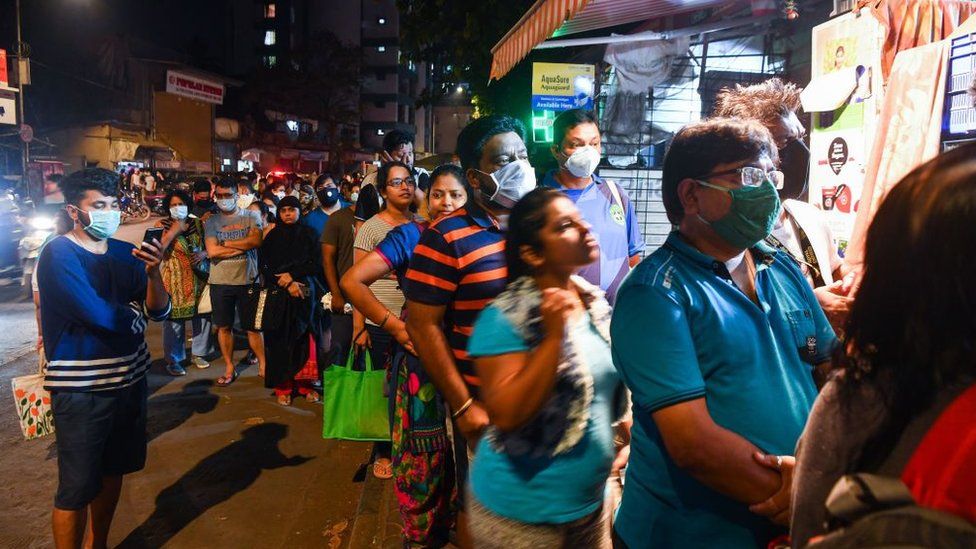
The sudden lockdown announcement triggered panic buying in cities | GETTY IMAGES
But queries to the National Disaster Management Authority (NDMA) revealed that no consultations or meetings were held with Mr Modi in attendance about Covid-19 or the need for a lockdown.
The offices of the chief ministers in Delhi, Assam and Telangana, as well as those of the governors of Punjab, Gujarat and Uttar Pradesh replied to the BBC's request saying they did not have any evidence indicating prior consultations on the lockdown.
"The kind of responses you have received are unacceptable," says Anjali Bhardwaj who works to promote transparency and accountability in government.
""The coronavirus infections and India's response began from early January and we locked down after 20 March. It was not like there was an overnight development akin to a flood or an earthquake. So the expectation was that when the prime minister declared there would be a lockdown, it was a decision arrived at after consultations from all quarters."
The lockdown also hobbled India's economy and its GDP recorded the sharpest contraction in its history.
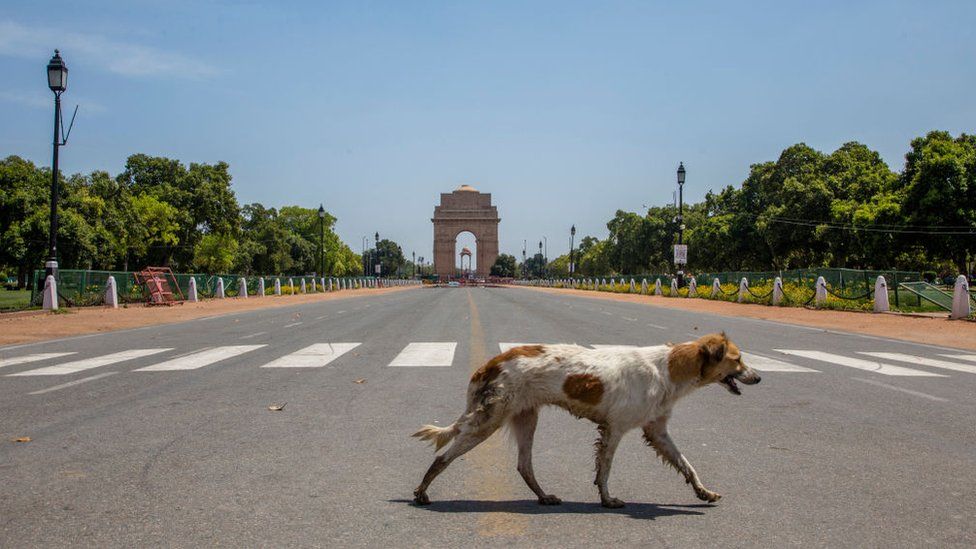
Bustling cities like Delhi became ghost towns overnight | GETTY IMAGESBoth economic and health experts believe localised lockdowns would have had better results and allowed state governments more flexibility.
"There was scope to plan better. It needed to be a decentralised decision, depending on states and districts. A complete lockdown was not required. What has happened now is a huge shock because the Indian economy was performing poorly anyway," says Priya Ranjan Dash, a public policy analyst.
Recollecting the events of last year, Sima Kumari says, makes heart pound.
She was working as a nurse at a care home in Goa state when the lockdown was announced.
"Our employer denied us our salary and wanted us to work without Personal Protective Equipment (PPE). We had no option but to quit," she says.
She says she was finally forced to go home to Jharkhand on the special trains the government organised for migrant workers. They were crowded and she says was terrified.
"One man would keep shouting at us, asking us to maintain distance even as they packed us in like sheep. I would prefer death over reliving a situation like that again."
Courtesy: www.bbc.com
Let the Truth be known. If you read VB and like VB, please be a VB Supporter and Help us deliver the Truth to one and all.
CM Siddaramaiah alleges ‘criminal conspiracy’ in Sringeri recount, vows legal action
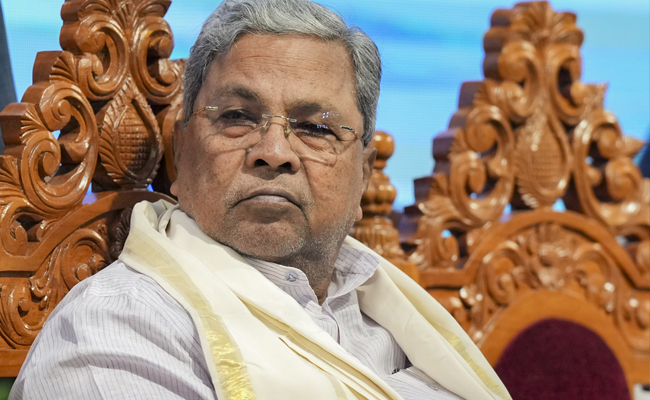
Bengaluru (PTI): Alleging a “criminal conspiracy” by BJP candidate D N Jeevaraj in the Sringeri Assembly poll recounting, Karnataka CM Siddaramaiah on Tuesday said the outcome was manipulated after valid postal ballot votes in favour of Congress leader T D Raje Gowda were tampered with during the recounting process.
Following a Karnataka High Court order on an election petition filed by Jeevaraj, challenging Raje Gowda’s election, the reverification and recounting were conducted on Saturday.
After the reverification and recount of postal ballots for the Sringeri Assembly constituency, votes polled in favour of Raje Gowda were reduced by 255, the returning officer said.
A report on the matter has been submitted to the Election Commission of India for further action, the officer added.
Congress leader Raje Gowda had won the 2023 Assembly polls from Sringeri by 201 votes, defeating his nearest rival Jeevaraj.
Addressing a press conference in Bengaluru, Siddaramaiah said the High Court had directed the recounting of postal ballots and that irregularities were noticed during the exercise conducted on May 2.
“This is a clear case of criminal conspiracy,” Siddaramaiah said, alleging that valid votes cast in favour of Raje Gowda were altered after being accepted by counting agents of all parties, including Congress, BJP, and JD(S).
He claimed that during the recounting of postal ballots, 255 votes were initially accepted as valid by all agents but were later tampered with by subordinate officials.
“There is a second mark on the votes polled in favour of Raje Gowda. They had accepted these as valid votes. Subsequently, another mark was made by officials. This is a clear case of criminal conspiracy,” he said.
When asked who was behind the alleged conspiracy, the CM replied, “It was hatched by Jeevaraj and others. It is planned.”
Siddaramaiah further alleged that the returning officer acted improperly by declaring the result despite the presence of an Election Commission observer during the recounting.
“Immediately after the counting, the returning officer announced the result. He should not have done so; this is against the law,” he said.
He pointed out that Raje Gowda had originally won by 201 votes, but after the recounting, the BJP candidate was declared the winner by 52 votes.
“The BJP has committed a criminal act of conspiracy. This is not vote chori but vote dacoity,” he alleged.
The CM said a police complaint had already been filed by Raje Gowda’s election agent, Sudhir Kumar, and emphasised the need for electoral integrity.
“We want transparency and free and fair elections. That is what our Constitution mandates,” he added.
Stating that the government would pursue legal remedies, Siddaramaiah said, “We are preparing an appeal challenging the returning officer’s announcement in a court of law.”
Responding to a separate query on elections in other states, the CM said there appeared to be an anti-incumbency factor in West Bengal, while results in Tamil Nadu were “surprising,” adding that Vijay’s party was emerging as the largest there.
Following the victory of party candidates in Bagalkote and Davanagere South, Siddaramaiah expressed confidence about future electoral prospects in Karnataka.
“Even in 2028, we will win the Assembly elections. We will come back,” the CM said.
Siddaramaiah added that he would order a forensic examination into the alleged tampering of postal ballots.