India crosses $ 400 bn milestone in exports
New Delhi, Mar 23: The country's exports for the first time crossed the USD 400 billion mark in a fiscal on healthy performance by sectors such as petroleum products, engineering, gems and jewellery, and chemicals, according to the commerce ministry's data released on Wednesday.
The merchandise exports rose by by 37 per cent to USD 400.8 billion in 2021-22 until March 21 against USD 292 billion in 2020-21. Previously, the outbound shipments had touched a record of USD 330.07 billion in 2018-19.
Imports during the period stood at USD 589 billion, leaving a trade deficit of about USD 189 billion.
Hailing the country's success in achieving its goods export target, Prime Minister Narendra Modi said that this is a key milestone in India's 'Aatmanirbhar Bharat' journey.
The highest ever goods export target was achieved nine days ahead of the March 31 deadline.
"India set an ambitious target of USD 400 billion of goods exports and achieves this target for the first time ever. I congratulate our farmers, weavers, MSMEs, manufacturers, exporters for this success. This is a key milestone in our Aatmanirbhar Bharat journey. #LocalGoesGlobal," Modi tweeted.
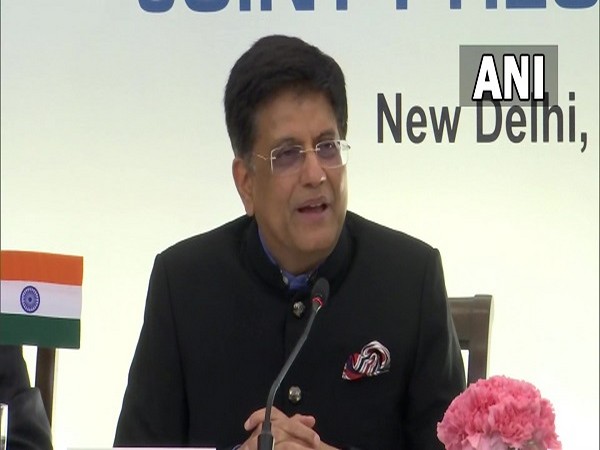
Briefing media, Commerce and Industry Minister Piyush Goyal said that despite all adversities including Covid-19 pandemic, and Russia-Ukraine war, India has achieved this milestone.
"First time in history, India has crossed USD 400 billion in merchandise exports...if this was a movie like The Kashmir Files, it would be called a Make in India blockbuster," Goyal told reporters here.
He added that closer interaction with states and districts; engagement with exporters; faster resolution of their issues; actively engaging with different export promotion councils, industry associations and other stakeholders have helped in reaching this milestone.
On average, goods worth about USD 33 billion were shipped every month and about USD 1 billion every day.
The key export sectors, which contributed to record healthy growth include petroleum products, engineering, gems and jewellery, chemicals and pharmaceuticals. The top five export destinations are the US, the UAE, China, Bangladesh, and the Netherlands.
Director General of Foreign Trade (DGFT) Santosh Kumar Sarangi said that going by the trend, "we would be adding USD 10-12 billion in the remaining nine days", taking the exports by end of 2021-22 to over USD 410 billion.
Commenting on the data, Federation of Indian Export Organisations (FIEO) Director General Ajay Sahai said crossing USD 400 billion is a remarkable achievement as exporters have added over USD 110 billion in one year to reach here despite huge logistics challenges, including container shortage, skyrocketing freight and liquidity constraints.
"What is more important is to build on it, as we will have benefits of new free trade agreements and the PLI scheme (production linked incentive) backing us," he said.
FIEO Vice-President Khalid Khan termed the achievement as a "landmark" and said that despite the COVID-19 pandemic exports have "done so well".
Apparel Export Promotion Council (AEPC) Chairman Narendra Goenka said that India crossing USD 400 billion merchandise exports marks the beginning of an era of exponential growth and dominance in world trade.
"From here, the growth rates are going to be exponential," Goenka added.
Engineering goods exports have gone up by nearly 50 per cent so far this fiscal as compared to the last year. Agriculture exports too have recorded the highest ever export in 2021-22.
Higher engineering exports, apparel and garment export, etc. indicate that the misconception of India being a major exporter of primary commodities is gradually changing, Goyal said.
"We are now exporting more and more value-added and high-end exports and this effort by our technology-driven industries should continue. Export of Cotton Yarn/Fabrics/Made-ups, Handloom Products etc, Gems and Jewellery, Other Cereals and Man-Made Yarn/Fabrics./Made-up etc. have registered a growth rate between 50-60 per cent," he added.
Till March 21, export targets set for major countries such as Australia, Taiwan, Korea, Bangladesh, Poland, Brazil, Indonesia, Belgium, Saudi Arabia, Turkey, Italy, Japan, Canada, the US, South Africa, the Netherlands, Nigeria, Egypt and Mexico have been achieved.
The ministry said that a policy shift in the approach envisaged in the Districts as Exports Hub initiative has been adopted to boost local production and make Districts active stakeholders in driving export growth of local products/services.
India set an ambitious target of $400 Billion of goods exports & achieves this target for the first time ever. I congratulate our farmers, weavers, MSMEs, manufacturers, exporters for this success.
— Narendra Modi (@narendramodi) March 23, 2022
This is a key milestone in our Aatmanirbhar Bharat journey. #LocalGoesGlobal pic.twitter.com/zZIQgJuNeQ
Let the Truth be known. If you read VB and like VB, please be a VB Supporter and Help us deliver the Truth to one and all.
Nicobar Tribal Council Alleges FRA Violations in Great Nicobar Wildlife Sanctuaries
Sri Vijaypuram (Port Blair): The Tribal Council of Little and Great Nicobar has alleged fresh violations of the Forest Rights Act in the notification of three wildlife sanctuaries linked to the Centre’s ₹92,000-crore Great Nicobar Island project, even as the Calcutta High Court is set to hear petitions challenging the mega project over similar concerns next month.
The Union government had, in October 2022, notified three wildlife sanctuaries in parts of Little Nicobar Island, Menchal Island and Meroe Island for the conservation of leatherback turtles, megapodes and coral ecosystems. The move came after the government acknowledged that the proposed infrastructure project on Great Nicobar Island would affect coral colonies and nesting habitats of endangered species.
However, the tribal council has maintained that the sanctuaries were declared without consultation with the Nicobarese communities who traditionally inhabit and manage these islands.
In a letter dated April 23 addressed to the Assistant Conservator of Forests of the Nicobar Forest Division, the council reiterated its opposition to the sanctuaries and objected to the formation of a committee to determine eco-sensitive zones around the protected areas.
The council said its chairman had not been consulted before being included in the committee and was informed of his membership only a month after the committee was constituted.
The three notified sanctuaries include the Leatherback Turtle Sanctuary in parts of Little Nicobar Island, the Megapode Sanctuary covering the entire Menchal Island and the Coral Sanctuary spanning the whole of Meroe Island.
According to the council, Menchal and Meroe islands hold deep cultural and spiritual significance for the Nicobarese community, which believes the islands are inhabited by the spirits of their ancestors.
The council demanded that the sanctuary notifications be revoked and the eco-sensitive zone committee dissolved, alleging that both decisions were taken against the wishes of the indigenous community.
Meanwhile, Jairam Ramesh has written to Tribal Affairs Minister Jual Oram alleging violations of the Forest Rights Act in the process of obtaining consent for diversion of forest land for the Great Nicobar project.
Ramesh argued that consent should have been obtained through the Tribal Council representing the Nicobarese communities instead of through Gram Sabhas representing settler families. He also questioned how the government-controlled Andaman Adim Janjati Vikas Samiti could provide consent on behalf of the Shompen community, classified as a Particularly Vulnerable Tribal Group.
He urged the Tribal Affairs Ministry to intervene and seek withdrawal of clearances granted for the project under the Forest Rights Act.
Earlier, Ramesh had also written to Union Environment Minister Bhupender Yadav alleging that environmental impact studies for the project were conducted in haste and without the detailed seasonal assessments mandated under environmental laws.
The dispute dates back to 2022 when the Andaman and Nicobar administration initiated the process for notifying the three sanctuaries before holding Special Gram Sabhas for diversion of forest land linked to the Great Nicobar project.
In May that year, the administration invited objections and claims regarding the proposed sanctuaries. Subsequently, on July 19, the Nicobar Deputy Commissioner certified that no objections or claims had been received.
The tribal council later wrote to the district administration stating that the notification process was carried out without ensuring that residents of Little Nicobar Island were informed as required by law. It alleged that no public announcements seeking objections were made in villages such as Bahua, Muhincoihn and Kiyang, whose residents traditionally use and manage parts of the notified areas.
The council said the Nicobarese community had protected the islands and wildlife for generations through customary practices and traditional belief systems.
It further argued that the sanctuaries would interfere with long-standing rights over forests and coastal areas. They noted that these areas are used for rituals, plantations, collection of forest produce, construction of huts and canoes, harvesting medicinal plants and worship.
In November 2024, the council objected to draft Island Coastal Regulation Zone plans, demanding basic infrastructure, instead of proposed eco-tourism activities in the sanctuaries. The council demanded better public restrooms, jetties, water facilities, pathways, and mobile connectivity.
The Nicobar administration issued a clarification in May 2025, stating that the sanctuaries would not affect hunting rights available to Scheduled Tribes in the Nicobar Islands. The council, however, rejected the clarification, stating that their dependence on forests and coasts extended far beyond hunting activities.
Earlier this month, a Bench led by the Chief Justice of the Calcutta High Court dismissed preliminary objections raised by the Union government against petitions challenging the diversion of forest land for the Great Nicobar project. The matter has now been listed for final hearing in June.