India deploys indigenous ‘suicide drones’ in strikes on terror camps in Pakistan, PoK: Report
New Delhi: In a retaliatory move following the Pahalgam terror attack that claimed the lives of 26 civilians, the Indian Army reportedly carried out precision strikes on terror camps located in Pakistan and Pakistan-occupied Kashmir (PoK) using indigenously developed “suicide drones.”
Dubbed Operation Sindoor, the strikes signify a tactical evolution in India’s defence capabilities. According to defence sources, the operation marked the first known use of indigenously-manufactured loitering munition systems in an active combat scenario.
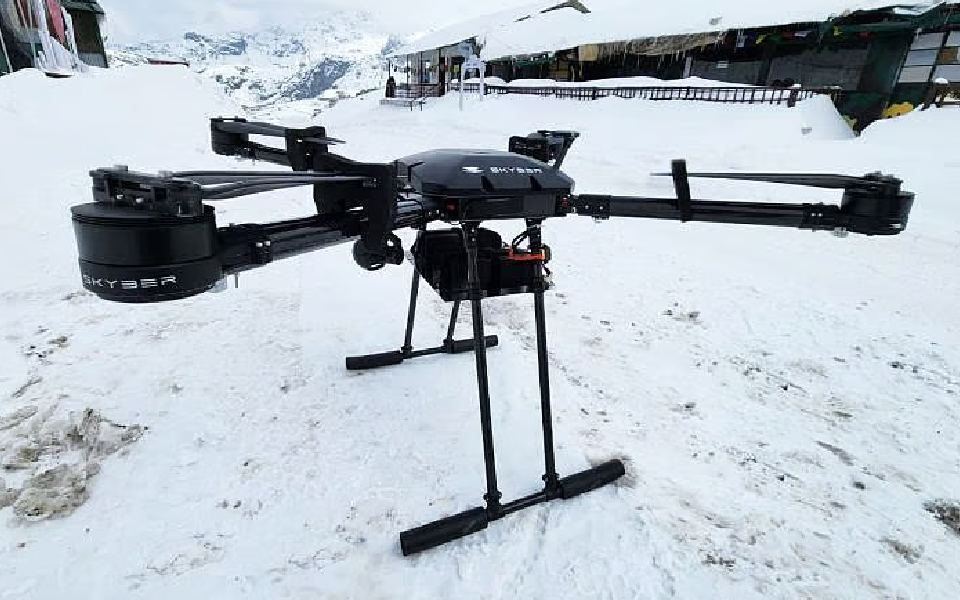
These drones, officially known as Low-Cost Miniature Swarm Drones or Loitering Munitions, are believed to be the SkyStriker variant, a product jointly developed by Bengaluru-based Alpha Design Technologies and Israel’s Elbit Systems.
Unlike traditional UAVs, loitering munitions hover over target areas, identify threats, and strike with precision, effectively blending the features of surveillance drones and guided missiles. Each SkyStriker unit can carry a 5 to 10 kg warhead, has a range of around 100 kilometers, and operates silently due to its electric propulsion, making it ideal for low-altitude, stealth missions.
Sources indicate that the Indian Army placed an emergency order for around 100 SkyStriker drones in 2021, with manufacturing taking place at a facility in western Bengaluru. These drones are considered cost-effective and efficient tools against unconventional threats, providing frontline forces with real-time reconnaissance and offensive capabilities without endangering personnel.
Although there is no official confirmation from the Indian government about the use of these drones, political leaders across party lines have praised the armed forces for the successful execution of Operation Sindoor.
Meanwhile, Pakistan has temporarily suspended flight operations at key airports including Karachi, Lahore, and Sialkot amid heightened tensions.
Let the Truth be known. If you read VB and like VB, please be a VB Supporter and Help us deliver the Truth to one and all.
EAM Jaishankar meets Jamaican PM, gifts over 10 BHISHM Cubes
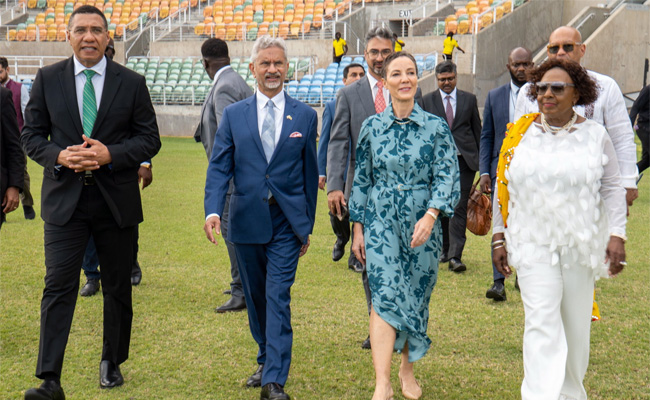
Kingston (PTI): External Affairs Minister S Jaishankar on Monday met Jamaican Prime Minister Andrew Holness and discussed ways to further deepen "political, economic and people-to-people cooperation."
Jaishankar also conveyed greetings from Prime Minister Narendra Modi to Holness.
"Pleased to call on Prime Minister @AndrewHolnessJM in Kingston. Conveyed the greetings of PM @narendramodi," Jaishankar posted on X.
"Discussed deepening our political, economic and people-to-people cooperation. Value his commitment towards further strengthening India-Jamaica relations," the post further read.
Also, the external affairs minister handed over 10 BHISHM (Bharat Health Initiative for Sahyog Hita & Maitri) Cubes as a gift to Jamaica.
"Formally handed over 10 BHISHM Cubes as a gift from India to Jamaica, in the presence of PM @AndrewHolnessJM, Health Minister @christufton and FM @kaminajsmith," Jaishankar posted on X.
"The BHISHM Cube mobile hospital system, designed for rapid deployment, will help Jamaica during disasters and emergencies. The gift of these cubes is a statement of friendship, a commitment to disaster preparedness, and an outcome of innovation," the post said.
Jaishankar arrived in Kingston on Saturday evening, marking the first leg of his nine-day tour of Jamaica, Suriname, and Trinidad and Tobago, aimed at further strengthening India's strategic and cultural ties with the Caribbean nations.
Earlier in the day, he interacted with the Indian diaspora and discussed India's ongoing transformation in infrastructure, human development and technology-driven governance and entrepreneurship with them.
He also highlighted the cricket bond between both countries as India gifted a scoreboard to Jamaica.
A scoreboard was dedicated at Sabina Park in Kingston. It is the home of the Jamaica cricket team and is the only Test cricket ground in the Caribbean island nation.
The minister expressed hope that the new scoreboard would witness many memorable innings, including those symbolising the enduring friendship between the two countries.
Cricket has long been a strong cultural bridge between India and Jamaica, which is part of the West Indies cricket team.
Jamaican players, including Chris Gayle, Courtney Walsh and Michael Holding, have played a major role in shaping the legacy of West Indies cricket in the international arena, contributing to its dominance in earlier decades and its continued global appeal.