India essential component of multipolar world: UN Secretary General
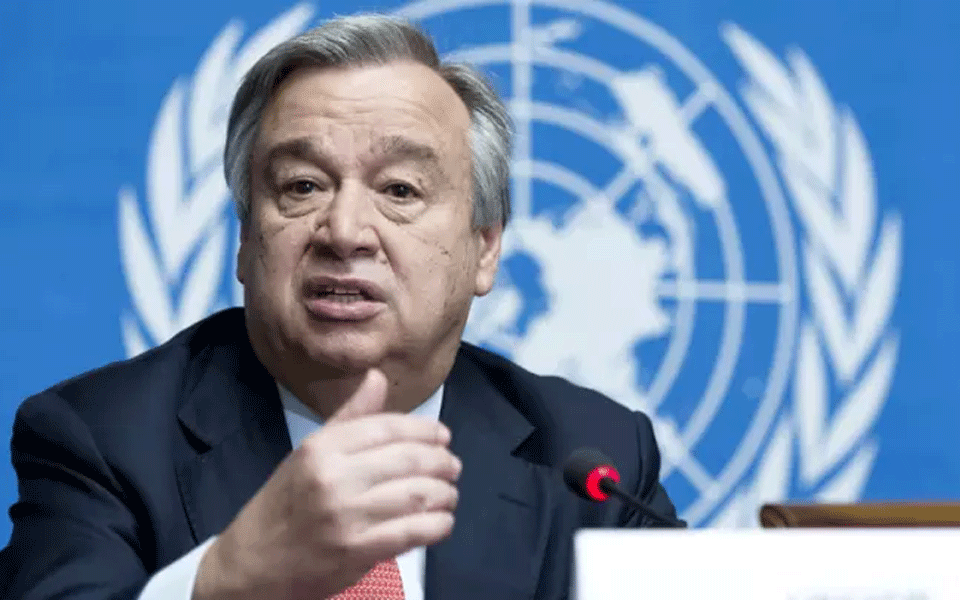
New Delhi, Oct 2 : Multilateralism has not been under so much fire as it is today and India will be the essential component if the world has to become multipolar, UN Secretary General Antonio Guterres said on Tuesday.
He called for a global response to climate change and terrorism, which he said were the two biggest challenges the world was facing.
A multilateral approach was needed to meet challenges and threats which were becoming more and more global in nature, Guterres said while delivering a lecture on "Global Challenges, Global Solutions" here.
"But the paradox is that never in recent times was multilateralism under so much fire and never, as in recent times, was a rule-based international community being put under fire," he said.
He said the world ceased to be bipolar after the end of the Cold War and turned unipolar, but today's world "is a kind of a chaotic world".
"The world has to be multipolar and India has a key role to play... No country is better placed for this than India," Guterres said.
He added that India's assertiveness on the global platform was a key element.
His remarks assume significance in the face of US President Donald Trump pulling out of the Paris Climate Agreement and withdrawal of international sanctions on Iran over its nuclear programme, and imposing new trade tariffs on countries like India and China.
Regarding the challenge of climate change, Guterres said India had already been impacted through droughts and floods.
He said if the targets of the Paris Climate Agreement, in which India played a key role, were not met, then the world would be in a catastrophic situation.
Stressing on the necessity for solar and wind energy, Guterres said India, despite its problems, had to play a key role in the fight against climate change and to meet the UN's Sustainable Development Goals by 2030.
India is targeting to generate 175 GW of electricity from renewable sources of energy by 2022, of which 100 GW will be from solar power. It has already achieved 20 GW installed solar power.
Asked about reforms in the UN, Guterres said it cannot happen till there were no reforms in the UN Security Council (UNSC), adding it was for the five permanent members to do so.
India, Japan, Germany and Brazil are seeking permanent membership in an expanded UNSC to reflect the face of today's world.
Guterres is on a visit to India to take part in a series of events on climate change and Mahatma Gandhi's birth anniversary celebrations.
Let the Truth be known. If you read VB and like VB, please be a VB Supporter and Help us deliver the Truth to one and all.
Gold, silver soar as US-Iran deal hopes lift bullion demand
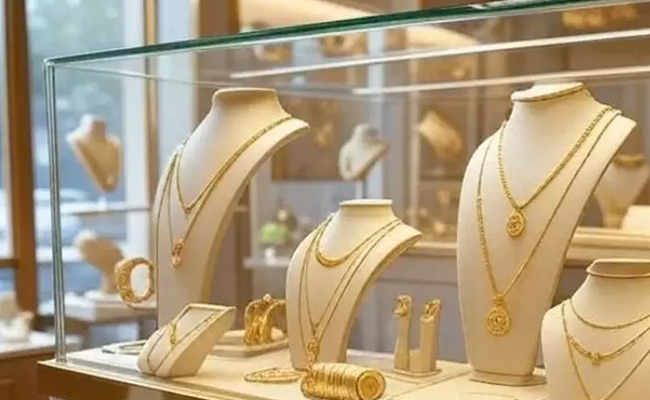
New Delhi (PTI): Gold prices rebounded by Rs 2,900 to Rs 1.55 lakh per 10 grams in the national capital on Wednesday, while silver climbed to Rs 2.54 lakh per kilogram as easing geopolitical tensions triggered a pullback in oil rates, boosting demand for precious metals.
According to the All India Sarafa Association, the yellow metal of 99.9 per cent purity jumped by Rs 2,900, or nearly 2 per cent, to Rs 1,55,400 per 10 grams (inclusive of all taxes) from Tuesday's closing level of Rs 1,52,500 per 10 grams.
Traders attributed the surge in bullion prices to reports that Washington and Tehran are close to finalising a framework agreement to end months of conflict, raising the prospects of smoother flows through the Strait of Hormuz and easing inflation concerns tied to energy markets.
"Gold rallied strongly on Wednesday as easing geopolitical tensions triggered a sharp reversal in key macro drivers that had recently pressured precious metals," Saumil Gandhi, Senior Analyst - Commodities at HDFC Securities, said.
Silver prices also advanced for the third straight session by rising Rs 3,500, or 1.4 per cent, to Rs 2,54,500 per kg (inclusive of all taxes). The metal had settled at Rs 2,51,000 per kg in the previous session, as per the Association.
"The prospect of a diplomatic breakthrough triggered a steep decline in oil prices and the US dollar, easing concerns about inflation while boosting demand for precious metals," Gandhi said.
Globally, spot gold increased by USD 106.15, or 2.33 per cent, to USD 4,663.70 per ounce while silver gained USD 3.40, or 4.68 per cent, to USD 76.24 per ounce.
"Gold witnessed a sharp rally as markets reacted positively to reports that the US and Iran are moving closer to a one-page agreement framework aimed at ending the conflict," Jateen Trivedi, VP Research Analyst - Commodity and Currency, LKP Securities, said.
Despite strong international gains, rupee strength limited the upside in domestic gold prices. The market is now highly focused on final confirmation and execution of the proposed deal, he added.
Any negative surprise or breakdown in negotiations could trigger a sharp sell-off in gold, while a successful agreement and sustained ceasefire could push the bullion prices higher in the near-term, Trivedi said.