India expects Saudi Arabia to keep in mind mutual interests, sensitivities: MEA on Saudi-Pak pact
New Delhi (PTI): India on Friday said it expects Saudi Arabia to keep in mind "mutual interests and sensitivities" in the wake of Riyadh sealing a strategic defence pact with Pakistan.
The agreement states that "any aggression against either of the two countries shall be considered as an aggression against both".
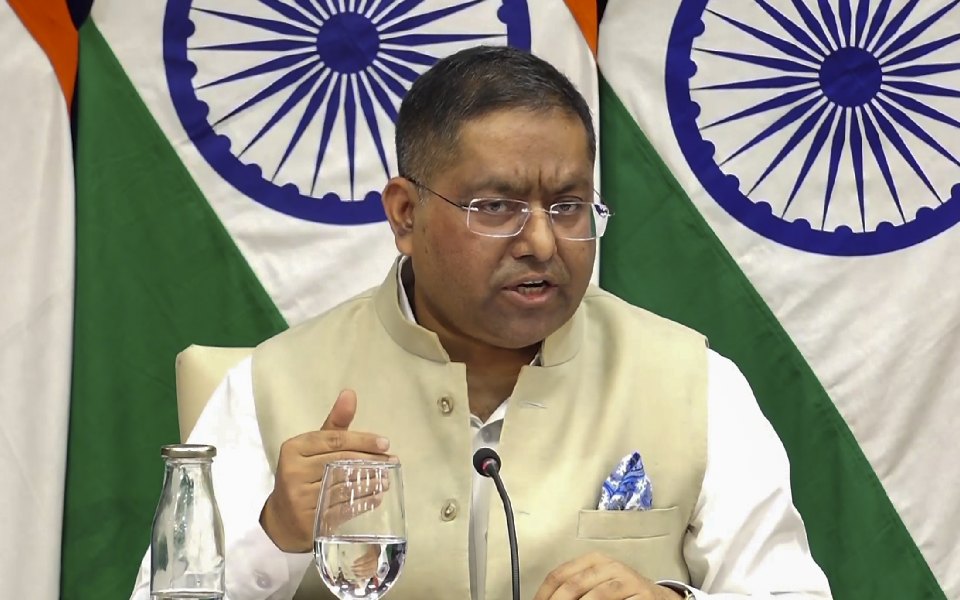
"India and Saudi Arabia have a wide-ranging strategic partnership that has deepened considerably in the last few years," External Affairs Ministry spokesperson Randhir Jaiswal said.
"We expect that our strategic partnership will keep in mind mutual interests and sensitivities," he said.
Jaiswal was responding to a question at his weekly media briefing.
The "Strategic Mutual Defence Agreement" was signed by Saudi Arabia's Crown Prince Mohammed bin Salman Abdulaziz Al Saud and Pakistan Prime Minister Shehbaz Sharif on Wednesday.
Sharif, accompanied by Pakistan Army chief Field Marshal Asim Munir and Defence Minister Khawaja Asif, was on a visit to Saudi Arabia.
The Pakistan-Saudi Arabia joint statement said the new defence agreement reflects the "shared commitment of both nations to enhance their security" and it "aims to develop aspects of defence cooperation between the two countries and strengthen joint deterrence against any aggression."
Pakistan has been a key ally of Saudi Arabia and both sides have a relationship in the defence sector.
Let the Truth be known. If you read VB and like VB, please be a VB Supporter and Help us deliver the Truth to one and all.
Blast at railway track in Patiala was attempted detonation, killed operator: Punjab Police
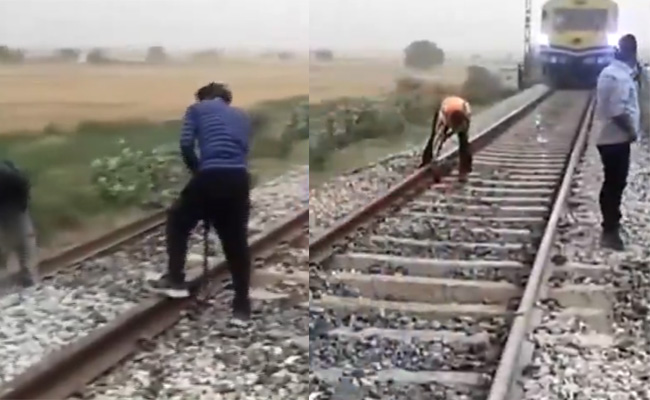
Chandigarh (PTI): A blast that took place at a railway track near the Shambhu area in Punjab's Patiala was an attempted detonation, a senior police officer said on Tuesday.
The person who was trying to carry out the detonation on Monday has died, Patiala SSP Varun Sharma said.
The blast took place near the Shambhu-Ambala rail track. Police earlier said that an unidentified body, which was blown into pieces, was recovered from the spot.
Initially, it was considered a low-intensity blast. However, investigation has revealed that it was an attempted detonation.
The explosion occurred at around 10 pm at the rail track dedicated for freight trains, police said.
The explosion also caused some damage to the track.
ALSO READ: All arrangements in place for second phase of polling in West Bengal on April 29: Poll official
"Late night, we had received information about a low intensity explosion at a railway track near Shambhu-Haryana border. Immediately, I, along with the deputy inspector general of police and other senior officials, rushed to the spot to take stock of the situation.
"We found that it was not a low intensity explosion but an attempted detonation," the SSP said.
During the attempt, the person who was trying to carry out the detonation died, and his body has been recovered, he said.
Police said they have recovered a SIM card from the spot.
"After getting whatever scientific evidence including a SIM card from the spot, police have launched technical investigation," Sharma said.
"We expect that we will soon unravel the whole conspiracy," he said.
He further said the Government Railway Police, the Railway Protection Force and other agencies are involved in investigation.
Earlier in January, a blast on a dedicated freight corridor railway track in the Fatehgarh Sahib district's Sirhind had damaged the engine of a train and left a loco pilot injured.