India harbouring big and bold dreams in space sector: Shubhanshu Shukla
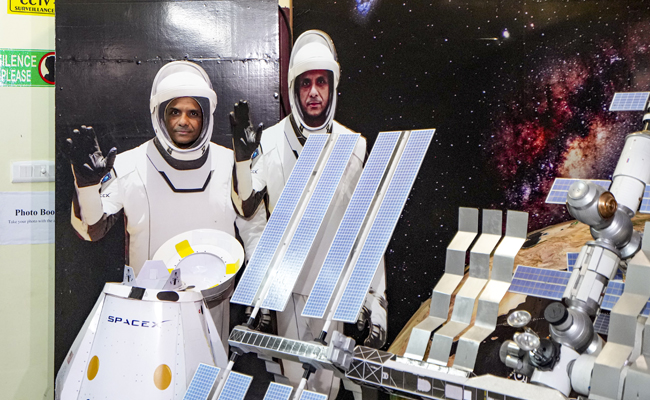
Kolkata (PTI): Air Force Group Captain Shubhanshu Shukla, the first Indian astronaut to go to the International Space Station, on Wednesday said the country is harbouring “big and bold dreams”, foraying into human spaceflight after a hiatus of 41 years.
Shukla was the first Indian to visit the International Space Station as part of the Axiom-4 mission. He returned to India from the US on August 17, 2025, after the 18-day mission.
The space is a “great place to be”, marked by deep peace and an “amazing view” that becomes more captivating with time, he said, interacting with schoolchildren at an event organised by the Indian Centre for Space Physics here.
“The longer you stay, the more you enjoy it,” Shukla said, adding on a lighter note that he “actually kind of did not want to come back”.
Shukla said the hands-on experience in space was very different from what he had learnt during training.
He said the future of India’s space science was “very bright”, with the country harbouring “very big and bold dreams”.
ALSO READ: Didn't answer any questions, completely defensive response': Rahul on Shah's speech in LS
Shukla described his ISS flight, undertaken with support from the US, as a crucial “stepping stone” towards realising India’s ‘Vision Gaganyaan’.
“The experience gained is a national asset. It is already being used by internal committees and design teams to ensure ongoing missions are on the right track,” he said.
Shukla said the country’s space ambitions include the Gaganyaan human spaceflight programme, the Bharatiya Station (India’s own space station), and eventually a human landing on the Moon.
While the Moon mission is targeted for 2040, he said these projects are already in the pipeline, and the field will evolve at a “very rapid pace” over the next 10-20 years.
He told the students that though these targets are challenging, they are “achievable by people like you”, urging them to take ownership of India’s aspirations.
The sector will generate “a lot of employment opportunities” as India expands its human spaceflight capabilities, he noted.
Echoing the iconic words of India’s first astronaut Rakesh Sharma, Shukla said that from orbit, “India is still the best in the world”.
Shukla also asserted that the achievement was not his alone, but that of the entire country.
“The youth of India are extremely talented. They must stay focused, remain curious and work hard. It is their responsibility to help build a developed India by 2047,” he said.
Highlighting a shift from Sharma’s era, Shukla said India is now developing a full-fledged astronaut ecosystem.
With Gaganyaan and future missions, children in India will be able to not only dream of becoming astronauts, but also achieving it within the country, he said.
“Space missions help a village kid believe he can go to space someday. When you send one person to space, you lift million hopes. That is why such programmes must continue... The sky is not the limit,” Shukla said.
“Scientists must prepare for systems that will last 20-30 years, while ensuring they can integrate technologies that will emerge a decade from now,” he said.
Shukla added that he looked forward to more space missions, and was keen to undertake a space walk, which will require him to "train for another two years".
Let the Truth be known. If you read VB and like VB, please be a VB Supporter and Help us deliver the Truth to one and all.
Bengaluru airport introduces AI-based system to enhance safety at vehicle-aircraft intersections
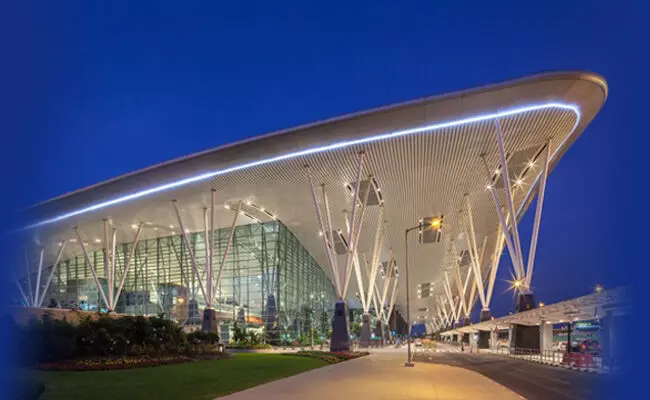
Bengaluru: Bangalore International Airport Limited (BIAL) has introduced an integrated smart airside safety system at Kempegowda International Airport to improve operational safety at key intersection zones.
According to The Hindu, the system has been designed to enhance safety at Cross Service Roads (CSRs), where aircraft and ground vehicle movements intersect.
According to BIAL, the system integrates AI-based computer vision, automation, and centralised monitoring to manage right-of-way movements and reduce the risk of human error.
“CRSs are among the most sensitive areas within airport operations, requiring precise and seamless coordination between aircraft and ground vehicles. Traditionally, right of way protection at these intersections relied on manual or semi-manual inset light activation, creating dependencies on human intervention, increasing the risk of delays and limiting operational visibility,” TH quoted BIAL as saying.
The new system uses real-time detection of vehicle movement, risk assessment, and automated signalling. AI-enabled cameras identify potential conflicts and trigger automated inset light signals to ensure aircraft priority. Normal operations resume once the area is confirmed clear.
“Based on these detections, the system triggers automated inset light activation to protect aircraft right‑of‑way and restores normal signalling once the intersection is confirmed clear. A centralised monitoring and analytics platform digitally logs all events, strengthening governance, compliance, and operational control,” BIAL said.
By embedding technology into operations, the system creates a data-driven separation layer between aircraft and ground vehicles, significantly reducing human error, especially during night and low-visibility conditions.
“Precision-led signal activation improves traffic flow, minimises unnecessary stoppage and enhances turnaround efficiency. It also establishes a scalable foundation for predictive safety analytics, enabling trend analysis, peak-hour optimisation, compliance mapping and risk forecasting to support continuous improvement and stronger airside governance,” BIAL said.