India has never been defensive about its stand on buying Russian oil: EAM Jaishankar
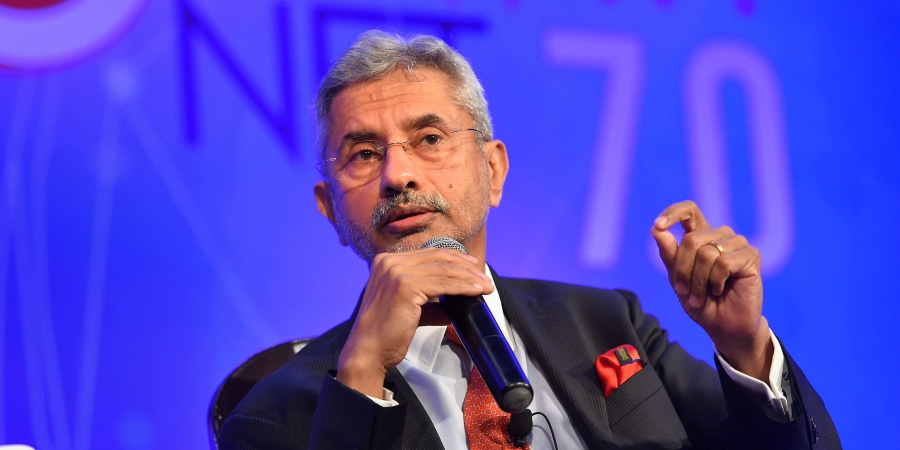
Bangkok (PTI): The US and other nations in the world may not appreciate India buying Russian oil, but they have accepted it as New Delhi has not been defensive about its stand but made them realise the obligation the government has to its people amidst "unreasonably high" oil and gas prices, External Affairs Minister S Jaishankar has said.
Jaishankar, who arrived here on Tuesday to attend the 9th India-Thailand Joint Commission Meeting, took part in an event where he met members of the Indian community.
In an interaction with the diaspora, Jaishankar defended India's decision to buy discounted Russian oil amid Moscow's ongoing war with Ukraine, saying many suppliers of India have diverted their supplies to Europe, which is buying less oil from Russia.
Oil prices are "unreasonably high" and so are the gas prices. A lot of traditional suppliers to Asia are diverting to Europe because Europe is buying less oil from Russia, he said.
"It is a situation today where every country will try to get the best deal possible for its citizens, to try to cushion the impact of these high energy prices. And that is exactly what we are doing," Jaishankar said in response to a question.
He said India is not doing it in a "defensive way".
"We are being very open and honest about our interests. I have a country that has a per capita income of two thousand dollars. These are not people who can afford higher energy prices," Jaishankar said.
He said it was his "obligation" and "moral duty" to ensure that the people in India get the best deal.
"I do see that -- not just in the United States but including the US -- that they know what our position is and they move on with that," he said when asked about the impact of buying Russian oil on India's ties with the US.
"Once you lay out very openly and honestly, people accept it," he added.
"They may not always appreciate it but once it is there and you are not trying to be too clever about it, you actually have laid out your interest in a very direct manner, my sense is that the world somewhat accepts that as reality, Jaishankar said.
The US and European nations have imposed heavy sanctions on Russia since Moscow sent troops into Ukraine on February 24.
India has raised oil imports from Russia after the Ukraine war despite criticism from the west and continues to engage with Moscow for business.
A senior Indian government official said in June that India's crude oil imports from Russia had jumped over 50 times since April.
In May, Russia overtook Saudi Arabia to become India's second-biggest supplier of oil behind Iraq as refiners snapped up Russian crude available at a deep discount following the war in Ukraine.
Indian refiners bought about 25 million barrels of Russian oil in May.
Earlier, addressing the Indian community, Jaishankar highlighted the various challenges faced by India.
"We have long been challenged by the...impact of cross-border terrorism. In the last two years, we also had a challenging situation on our northern borders," he said.
He said a situation has arisen at the northern border that went against understanding India had with its northern neighbour China.
He said there are a whole host of other issues, like pandemics, climate change, and maritime security that impact India, which is one-fifth of humanity.
Speaking on India-Thailand ties he said, for India, the ASEAN has been associated with a period of reforms.
"Among Association of Southeast Asian Nations (ASEAN) countries, Thailand has been particularly important for us. It is today a very major partner...I think trade today is in excess of 15 billion dollars," he said.
Thailand is a partner to India not only in ASEAN but other organisations like the Bay of Bengal Initiative for Multi-Sectoral Technical and Economic Cooperation (BIMSTEC) and Mekong-Ganga.
"I am here to take our relationship with Thailand forward," he said.
He said the objective of the joint commission is to build greater political comfort, to increase trade, to look at the barriers which stand in the way to promote more economic activity and more investments between our countries and to make it easier for the people to travel between the two nations.
"This really matters to us today because, in a much more volatile and uncertain world, both ASEAN and India...find each other a source of stability," he said.
He said the Indian community has a role in strengthening the bilateral relationship. PTI AKJ
Let the Truth be known. If you read VB and like VB, please be a VB Supporter and Help us deliver the Truth to one and all.
Rajnath to top commanders: Outmaneuver adversaries with strategic surprise
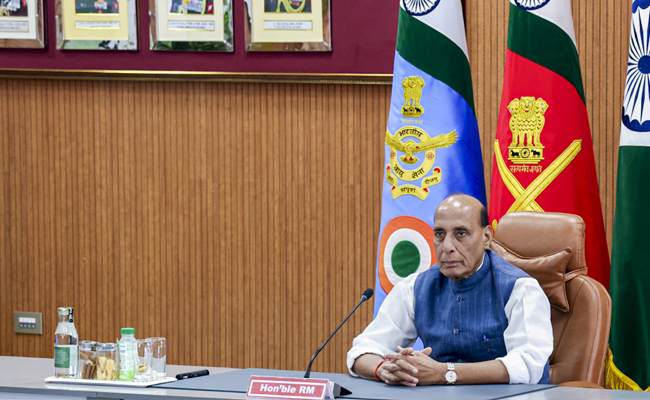
Jaipur/New Delhi (PTI): Defence Minister Rajnath Singh on Friday directed the top military commanders of the three services to integrate an "element of surprise" into modern warfare to outmaneuver India's adversaries and bolster strategic posture.
In his address at the joint commanders conference in Jaipur, Singh also described the Operation Sindoor as a testament to the "swift, precise, and joint response" of the Indian armed forces to safeguard national interests and called upon the military to remain ready to deal with any security challenges.
In their two-day deliberations, the commanders carried out a comprehensive review of the combat preparedness of the military in the wake of the evolving regional security situation.
Operation Sindoor was a demonstration of India's growing capabilities and a symbol of the nation's collective resolve and new military ethos, Singh said, a day after the first anniversary of Operation Sindoor.
He also unveiled a 'Joint Doctrine for Integrated Communication Architecture' that is aimed at strengthening doctrinal clarity, interoperability and integrated communications across the armed forces in future multidomain operations.
The joint commanders' conference, themed 'Military Capability in New Domains', brought together the top leadership of the defence ministry and the three services to deliberate on emerging security challenges and future readiness.
Comprehensive deliberations were held on future warfare, multidomain operations, technological transformation and joint capability development.
The conference witnessed extensive discussions on cognitive warfare, cyber resilience against evolving quantum and AI-enabled threats, military capability development in emerging domains, indigenous innovation and AI-enabled warfighting concepts.
It was attended by Chief of Defence Staff Gen Anil Chauhan, Chief of the Naval Staff Admiral Dinesh Kumar Tripathi, Chief of the Army Staff Gen Upendra Dwivedi, Chief of the Air Staff Air Chief Marshal AP Singh and Defence Secretary Rajesh Kumar Singh among others.
In his remarks, Singh asked the commanders to remain "future-ready" by learning from the operation as well as the current global security landscape.
He underscored the need to strengthen capabilities in artificial intelligence, autonomous systems, data analytics and secure communication networks to stay prepared in the rapidly evolving geopolitical security scenario. He emphasised that future conflicts will increasingly be shaped by hybrid threats, information dominance and operations conducted simultaneously across cyber, space, electromagnetic and cognitive domains, according to an official readout.
Highlighting the transformative impact of emerging technologies, Singh stressed on the importance of ensuring integrated national preparedness across all spectrums of conflict, it said.
Singh's remarks at the conference came a day after the first anniversary of Operation Sindoor.
The defence minister appreciated the progress achieved in enhancing jointness, integration and technological adoption across the three services, the readout noted.
Singh said that jointness constitutes a pivotal dimension within the transformative changes sweeping across the global defence sector.
"Future wars will not be won solely through weaponry, but through innovative thinking and enhanced synergy," he said.
The defence minister exhorted the commanders to cultivate the "element of surprise" to remain unpredictable to the nation's adversaries and secure a strategic edge in any given situation.
He, however, urged them to remain vigilant of the element of surprise of the enemy and always stay two steps ahead.
Singh also reiterated the Narendra Modi government's commitment to enhancing the capabilities of the defence forces through state-of-the-art weapons and platforms. He added that special focus is being laid on research in niche domains.
During the conference, he released a documentary film on Operation Sindoor.
The film reaffirms the nation's and defence forces' commitment to operational preparedness and decisive national response capabilities.
Demonstrations of advanced systems and platforms developed for intelligence fusion, operational planning and information management were also showcased during the conference reflecting growing integration of cutting-edge technologies into joint operational structures, according to the defence ministry.
The discussions will contribute significantly towards shaping India's future military transformation and integrated operational preparedness, it said.