India, Japan partnership holds immense potential to de-risk global economy: Jaishankar
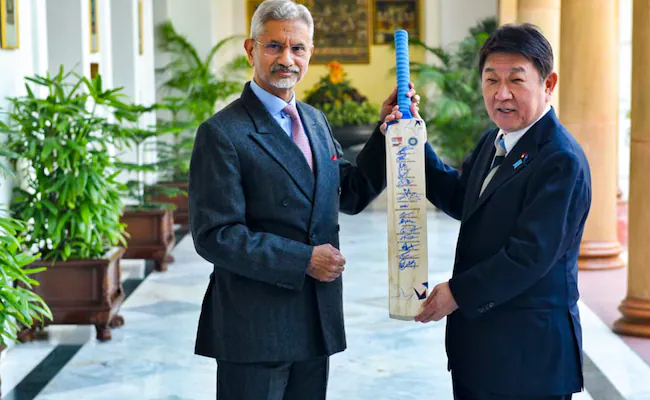
New Delhi (PTI): India and Japan on Friday agreed to ramp up cooperation in areas of trade, critical minerals, defence and high technologies with External Affairs Minister S Jaishankar saying that the partnership between the two sides holds immense potential to de-risk the global economy.
A meeting between Jaishankar and his Japanese counterpart Toshimitsu Motegi saw both sides agreeing to set up a joint working group on critical minerals and a dialogue mechanism on artificial intelligence.
The Japanese foreign minister met Prime Minister Narendra Modi ahead of his talks with Jaishankar.
"Our special strategic and global partnership is on an upward trajectory and holds immense potential for shaping the world order and de-risking the international economy," Jaishankar said on social media after the 18th India-Japan strategic dialogue.
He said the discussions on boosting cooperation in areas of economy supply chain, critical minerals, technology and people-to-people connections were reflective of "shared interests" between the two sides.
"Also had a useful exchange of perspectives on Indo-Pacific and regional and global developments," he said.
Toshihiro Kitamura, a spokesperson at the Japan foreign ministry said Jaishankar and Motegi deliberated extensively on various global issues to align their views and discussed the importance of Quad.
Kitamura said extensive deliberations were held on ensuring economic security in view of the current geopolitical developments, adding the two sides agreed to set up a joint working group on critical minerals.
External Affairs Ministry spokesperson Randhir Jaiswal said Jaishankar and Motegi underlined the importance of further strengthening the India-Japan special strategic and global partnership.
The two ministers launched the AI dialogue to give a fresh push to bilateral cooperation in this sector.
Both sides also decided to convene a joint working group on critical minerals under the economic security initiative to advance our collaboration in rare earths and other critical minerals, he said.
In his televised opening remarks at the meeting, Jaishankar said India's vision for the Indo-Pacific aligns closely with Japan's outlook for a 'Free and Open Indo-Pacific'.
"We are leading democracies, we are the major economies of the world, and we have today not just an opportunity, but also an obligation, a duty to shape the global order," he said.
"And in the current uncertain global situation, it's even more important that we work closely towards shared strategic goals," he added.
Jaishankar noted that economic security has become very important in the current global context.
"I think both our countries attach enormous importance to it, and how to de-risk our own economies, and how to de-risk the international economy are both very important." "So, we will be discussing resilient supply chains, critical minerals, how to address energy, health, and maritime security in our talks today," he added.
Let the Truth be known. If you read VB and like VB, please be a VB Supporter and Help us deliver the Truth to one and all.
Health Minister Dinesh Gundu Rao criticizes Centre for steep hike in commercial LPG price
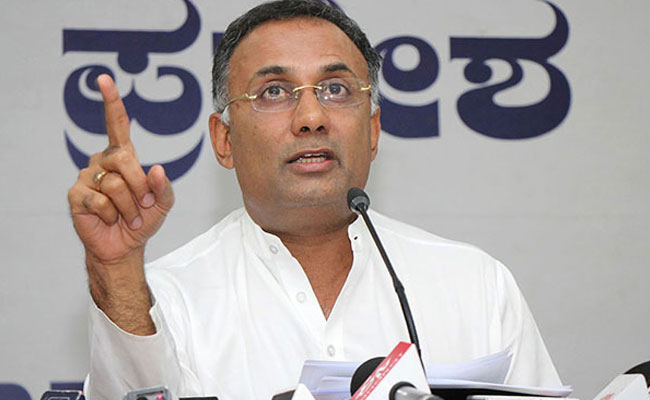
Bengaluru: Karnataka Health Minister Dinesh Gundu Rao has slammed the BJP government in the Centre for the hike in the price of commercial LPG, saying the sudden rise of the fuel rate by Rs 993 a cylinder has hit the common man hard.
Critically commenting that this was expected of the Centre after elections to five states, Rao posted in Kannada on his ‘X’ account on Saturday that the people have been shown only the trailer and, the real struggle is yet to begin.
“Since there is no election in any state, there will certainly be major hikes in the rates of petrol, diesel and domestic LPG in barely a few days,” he has predicted.
The minister has further tweeted, “The rate of commercial LPG has gone up to Rs 3,152 per cylinder, which will hit the hotel industry greatly. Ironically, the direct impact of the hike will be on customers of hotel.”
He pointed out that, earlier, the price used to be hiked by approximately Rs 50 and Rs 100 a cylinder. “This time, the rate has been shot up by Rs 993. What do we call this except daylight robbery? Can this be the ‘Acche Din’ that the BJP has been promising?” Rao asked mockingly.
He also questioned the cause for BJP members’ silence for the rate hike, reminding that the party always ‘threw a tantrum’ when a non-BJP government does so even at a minor level. “Does this reflect their fear of ‘Vishwaguru’ Modi? Is it the party’s sheer disregard for the welfare of the people?” he has questioned.
ಊಹಿಸಿದಂತೆಯೇ ಪಂಚರಾಜ್ಯ ಚುನಾವಣೆ ಬಳಿಕ ಕೇಂದ್ರ ಸರ್ಕಾರ ಬೆಲೆಯೇರಿಕೆಯ ಛಾಟಿ ಬೀಸಲು ಪ್ರಾರಂಭಿಸಿದೆ. ಕಮರ್ಷಿಯಲ್ ಸಿಲಿಂಡರ್ ಬೆಲೆಯನ್ನು ಏಕಾಏಕಿ ₹993 ಏರಿಸುವ ಮೂಲಕ ಮರ್ಮಘಾತ ನೀಡಿದೆ. ಚುನಾವಣೆ ಮುಗಿದ ಕೂಡಲೇ ಬೆಲೆಯೇರಿಕೆ ನಿರೀಕ್ಷಿತವಾಗಿತ್ತು. ಆದರೆ ಒಂದೇ ಭಾರಿ ₹993 ಹೆಚ್ಚಳ ಮಾಡಿರುವುದು ಅನಿರೀಕ್ಷಿತದ ಜೊತೆಗೆ ಆಘಾತ ತಂದಿದೆ.…
— Dinesh Gundu Rao/ದಿನೇಶ್ ಗುಂಡೂರಾವ್ (@dineshgrao) May 2, 2026